Is There a 4-Cylinder Jeep Wrangler? Complete Engine Guide

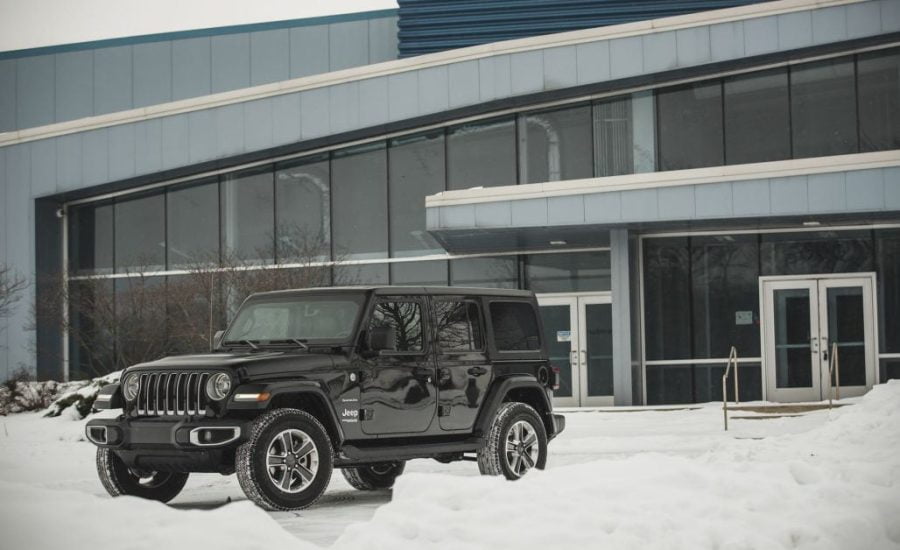
Yes, Jeep Wrangler has offered 4-cylinder engines across several generations. The option disappeared for over a decade during the JK era, then returned in turbocharged form for the current JL. Here’s what every buyer needs to know.
The Quick Answer
The 4-cylinder Wrangler is real — and it’s available right now. The current JL Wrangler offers a 2.0L turbocharged 4-cylinder alongside the standard 3.6L V6. If you’re researching the latest specs, check when the 2026 Jeep Wrangler comes out for confirmed engine lineup updates. About 25–30% of buyers choose the 4-cylinder option today.
That number surprised a lot of people.
4-Cylinder Wrangler Models by Generation
The 4-cylinder story spans nearly four decades. Not every generation offered one — and the gap in between confused many shoppers.
Early Wranglers: YJ and TJ 4-Cylinder Legacy
The YJ (1987–1995) came standard with a 2.5L 4-cylinder producing 120–130 hp and 155–162 lb-ft of torque. Fuel economy averaged around 18 mpg combined. It was modest. But it worked for light trail use.
The TJ (1997–2006) upgraded to a 2.4L 4-cylinder with 147 hp and 177 lb-ft of torque. Economy improved to roughly 19 mpg combined. Many YJ owners loved the simplicity of those early 4-cylinder setups — a fact worth considering if you’re restoring one and need best Jeep Wrangler YJ seats for a period-correct build.
The JK generation (2007–2018) dropped the 4-cylinder entirely. Jeep went V6-only. Off-road capability demands had grown, and buyers wanted more power. The 3.6L Pentastar V6 delivered 285 hp and 260 lb-ft — a massive jump from TJ numbers.
Modern Return: JL 2.0L Turbo 4-Cylinder
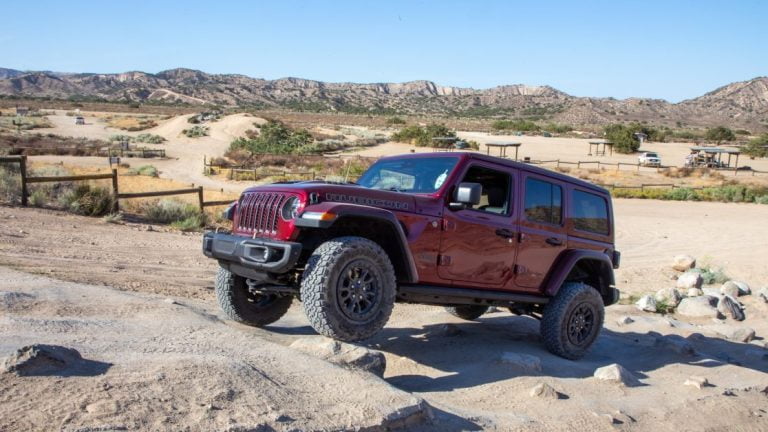
The JL Wrangler (2018–present) brought the 4-cylinder back. This time, it’s turbocharged. The 2.0L EcoBoost-style engine produces 270 hp and 295 lb-ft of torque — actually more torque than the V6. That’s the key difference. Turbocharging lets a smaller engine deliver big low-end grunt. Low-end torque matters for rock crawling. It’s exactly what off-roaders need.
EPA ratings for the 2.0L turbo hit approximately 22 mpg combined. That’s 2–3 mpg better than the V6 in most real-world conditions.
Engine Specs by Generation
| Generation | Engine | HP | Torque (lb-ft) | MPG (Combined) |
|---|---|---|---|---|
| YJ (1987–95) | 2.5L 4-cyl | 120–130 | 155–162 | ~18 |
| TJ (1997–06) | 2.4L 4-cyl | 147 | 177 | ~19 |
| JK (2007–18) | 3.6L V6 | 285 | 260 | ~18 |
| JL (2018–now) | 2.0L Turbo 4-cyl | 270 | 295 | ~22 |
| JL (2018–now) | 3.6L V6 | 285 | 260 | ~20 |
Why Jeep Dropped — Then Revived — the 4-Cylinder
The JK era was about raw power. Buyers were demanding better towing, bigger lifts, and heavier builds. A naturally aspirated 4-cylinder couldn’t keep up. The V6 was the obvious answer.
Turbocharging changed everything. A turbocharged 2.0L can match V6 torque figures while burning less fuel. Emissions regulations pushed this shift too. Jeep found a way to satisfy both performance demands and fuel economy targets simultaneously.
Both the 2.0L turbo and the 3.6L V6 share the same 3,500 lb towing capacity. Check the full Jeep Wrangler towing capacity chart for year-by-year breakdowns by trim and drivetrain. Towing capability isn’t a reason to skip the 4-cylinder.
If you choose the turbo engine, maintenance matters. Using the right fluid is critical — see the guide to best oil for Jeep Wrangler 2.0 turbo to protect the engine long-term.
Common Questions
Can you buy a 4-cylinder Wrangler today?
Yes. The 2.0L turbo is available on JL trims including Sport S, Sahara, and Rubicon. Availability varies by region and production cycle, so confirm with your dealer.
Is the 4-cylinder good for off-roading?
Absolutely. The 2.0L turbo’s 295 lb-ft of torque outpunches the V6 off the line. Turbo engines also maintain power at altitude better than naturally aspirated engines — a real advantage on mountain trails. Pair it with a good lift kit for your Jeep Wrangler and it’s trail-ready.
Which engine should you choose?
Prioritize fuel economy and daily driving? The 2.0L turbo wins. Want the most proven, naturally aspirated reliability? The 3.6L V6 is the safer long-term bet based on its track record. Both engines are solid choices for most buyers.
The Bottom Line
The 4-cylinder Jeep Wrangler has a long history — and a strong present. The modern 2.0L turbo delivers more torque than the V6 with better fuel economy. It’s not a compromise. It’s a genuine upgrade in the right conditions. Visit a Jeep dealership to confirm trim availability in your area before you order.