Jeep Compass vs Cherokee: Complete Comparison Guide 2026

Choosing between the Jeep Compass and Cherokee confuses many buyers. Both sit in Jeep’s compact crossover lineup, share similar styling cues, and wear the same badge. The Compass starts at $30,595 and prioritizes affordability with urban-friendly dimensions. The Cherokee begins at $36,995 and targets buyers wanting more power, space, and towing capacity—plus it’s now hybrid-only for 2026.
This guide breaks down every meaningful difference: size, performance, features, and value.
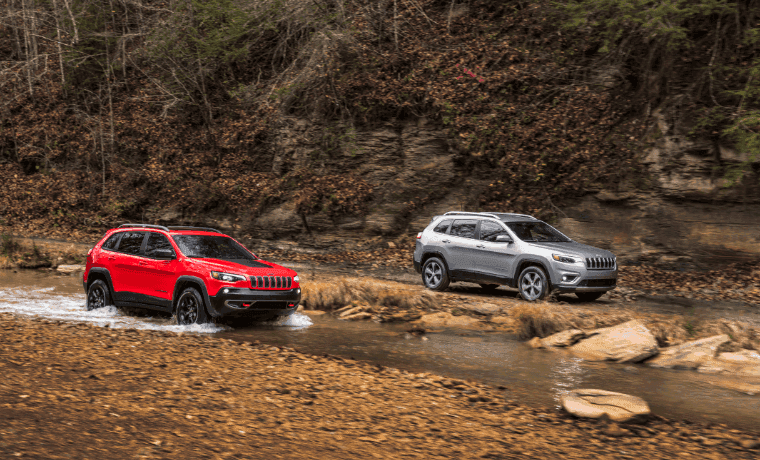
credit: www.almachryslerjeepdodgeram.com
Size and Dimensions: Compact vs Mid-Size
The Compass measures 173.4 inches long, 73.8 inches wide, and 64.6 inches tall. It rides on a 103.8-inch wheelbase. Jeep classifies it as a compact SUV optimized for tight parking and city driving.
The Cherokee stretches 188.1 inches long, 74.7 inches wide, and 67.5 inches tall. That’s nearly 15 inches longer and 3 inches taller than the Compass. The Cherokee straddles the line between compact and mid-size classifications.
Key Measurement Differences:
- Length: Cherokee is 14.7 inches longer
- Width: Cherokee is 0.9 inches wider
- Height: Cherokee is 2.9 inches taller
- Wheelbase: Compass uses a 103.8-inch wheelbase
The size gap affects daily use. The Compass maneuvers through urban environments easily and fits standard parking spaces with room to spare. The Cherokee requires more parking space but delivers better highway stability and a more planted feel at speed.
Interior Space and Cargo Capacity
Both SUVs seat five passengers across two rows. The Cherokee provides 103 cubic feet of passenger volume compared to the Compass’s 99 cubic feet. That extra 4 cubic feet translates to noticeably more rear legroom and headroom—critical for passengers over 6 feet tall.
The Compass offers 27 cubic feet of cargo space behind the rear seats. Fold the seats down, and the capacity expands to 60 cubic feet. The Cherokee provides 33.6 cubic feet behind the seats and 68.3 cubic feet maximum. That’s 6.6 cubic feet more with seats up and 8.3 cubic feet more with seats folded.
Real-world cargo differences matter for specific uses. The Compass handles grocery runs, gym bags, and carry-on luggage easily. The Cherokee accommodates camping gear for four people, sports equipment, or multiple suitcases for extended trips.
Both models feature 60/40 split-folding rear seats, numerous cup holders, and door pockets. The Cherokee adds a power liftgate standard on higher trims and an adjustable cargo floor with hidden storage compartments.
Engine Performance and Fuel Economy
Compass: Turbocharged Four-Cylinder
The 2026 Compass uses a 2.0-liter turbocharged four-cylinder engine producing 200 horsepower and 221 pound-feet of torque. An eight-speed automatic transmission sends power to either front wheel or all four wheels, depending on configuration.
EPA fuel economy ratings reach 24 mpg city and 32 mpg highway with all-wheel drive. Front-wheel-drive models achieve slightly better numbers. Zero to 60 mph acceleration takes approximately 9 seconds.
The Compass engine delivers adequate power for highway merging and daily commuting. It feels strongest in the 2,000-4,000 RPM range, where the turbocharger boost peaks. The eight-speed transmission shifts smoothly and holds gears appropriately on hills.
Cherokee: Hybrid Powertrain
The 2026 Cherokee represents a complete redesign with hybrid-only powertrains. It combines a 1.6-liter four-cylinder engine with two electric motors producing 210 combined horsepower and 230 pound-feet of torque. A continuously variable transmission (CVT) manages power delivery. All-wheel drive comes standard.
Jeep estimates 37 mpg combined, 42 mpg city, and 33 mpg highway—significantly better than the Compass. The hybrid system provides 800 kilometers (approximately 497 miles) of total range. Electric motors deliver instant torque for responsive acceleration from stops.
Performance Comparison:
| Specification | Compass | Cherokee |
|---|---|---|
| Engine | 2.0L turbo 4-cyl | 1.6L 4-cyl + electric motors |
| Horsepower | 200 HP | 210 HP |
| Torque | 221 lb-ft | 230 lb-ft |
| Transmission | 8-speed automatic | CVT automatic |
| MPG Combined | 27 mpg | 37 mpg (est.) |
| Drive Type | FWD/AWD | AWD standard |
The Cherokee’s hybrid system delivers 10 mpg better combined fuel economy while matching or exceeding the Compass’s performance. Electric assist provides smoother power delivery and eliminates traditional turbo lag.
Towing Capacity and Capability
The Compass tows a maximum of 2,000 pounds when properly equipped. This handles small utility trailers, jet skis, lightweight camping trailers, and motorcycle trailers. The 2,000-pound limit represents the high end for compact SUVs in this class.
The Cherokee tows up to 3,500 pounds—75% more than the Compass. This opens options for larger camping trailers, boat trailers, enclosed cargo trailers, and heavier equipment. The Cherokee’s hybrid powertrain delivers strong low-end torque beneficial for trailer pulling.
Both models require proper towing equipment, including trailer hitches rated for their respective capacities, trailer brake controllers for loads over 1,000 pounds, and weight-distributing hitches for maximum loads.
Towing Comparison:
- Compass: 2,000 lbs maximum
- Cherokee: 3,500 lbs maximum
- Difference: 1,500 lbs (75% more for Cherokee)
If you tow regularly or need capacity above 2,000 pounds, the Cherokee becomes the clear choice. For occasional light trailer use or no towing, the Compass suffices for most needs.
Pricing and Trim Levels
Compass Pricing Structure
The 2026 Compass starts at $30,595 for the base Latitude trim. Prices range from $30,595 to $34,530 across four trim levels:
- Latitude: $30,595 – Base features, 10.1-inch touchscreen, wireless smartphone integration
- Limited: $32,535 – Upgraded interior materials, additional safety features
- Trailhawk: $33,395 – Off-road equipment, enhanced ground clearance
- Limited Altitude: $34,530 – Premium features, distinctive styling elements
Cherokee Pricing Structure
The 2026 Cherokee starts at $36,995 for the base trim. Prices range from $36,995 to $53,995 across four trim levels:
- Base Cherokee: $36,995 – Standard hybrid system, AWD, modern safety tech
- Laredo: $44,995 – Enhanced comfort features, upgraded technology
- Limited: $49,995 – Leather seating, premium audio, advanced driver assists
- Overland: $53,995 – Top-tier luxury appointments, maximum features
The Cherokee costs $6,400 more at the entry level and $19,465 more at the top end. However, the Cherokee includes all-wheel drive standard (a $2,000-$2,500 option on the Compass) and a hybrid powertrain delivering superior fuel economy.
Value Considerations:
- Compass offers lower initial costs and insurance rates
- Cherokee provides more standard equipment and better fuel economy
- Cherokee’s hybrid system offsets a higher purchase price through fuel savings
- Compass suits budget-conscious buyers; Cherokee targets premium buyers
Technology and Features
Both SUVs offer Jeep’s Uconnect infotainment system with wireless Apple CarPlay and Android Auto. Screen sizes range from 8.4 to 10.1 inches, depending on trim level.
Standard Features – Compass:
- 10.1-inch touchscreen (Latitude and up)
- Wireless smartphone connectivity
- Dual-zone climate control
- Push-button start
- Rear parking sensors
- Forward collision warning
- Blind spot monitoring
Standard Features – Cherokee:
- 10.25-inch touchscreen
- Wireless smartphone connectivity
- Tri-zone climate control
- Adaptive cruise control
- Lane keeping assist
- Automatic emergency braking (forward and reverse)
- Driver attention monitor
- Intersection collision assist
The Cherokee includes more advanced safety systems as standard. It adds adaptive cruise control, intersection assist, and reverse automatic emergency braking across all trims. The Compass reserves some features for higher trim levels.
Higher Cherokee trims offer a 12.3-inch digital instrument cluster, premium audio systems, and semi-autonomous driving features. The Overland trim adds front parking sensors, surround-view cameras, and automatic park assist.
Off-Road Capability
Both models offer Trailhawk trims engineered for off-road use. These versions include Selec-Terrain traction management systems with multiple drive modes, increased ground clearance, skid plates protecting vital components, and all-terrain tires.
Compass Trailhawk Features:
- 8.2 inches of ground clearance
- Jeep Active Drive Low 4×4 system with low-range gearing
- Hill descent control
- Rock mode in Selec-Terrain
- Red tow hooks and trail-rated badging
Cherokee Trailhawk Features (Previous Generation):
- 8.7 inches of ground clearance
- Electronic locking rear differential
- More sophisticated suspension articulation
- Enhanced approach and departure angles
- Available 2.0-liter turbo engine option
The 2026 Cherokee Trailhawk availability remains unconfirmed. Jeep indicated a Trailhawk trim may arrive later in the model year.
For serious off-road use, previous-generation Cherokee Trailhawk models demonstrated superior capability. The Compass Trailhawk remains highly capable for most recreational off-roading, including forest roads, moderate rock crawling, and beach driving.
Reliability and Ownership Costs
Jeep compact SUVs historically face reliability challenges compared to Honda and Toyota competitors. Common issues include electrical problems, transmission concerns, and premature wear on suspension components.
The Compass (2017-present generation) shows average reliability ratings. Owners report issues with the nine-speed transmission in older models, though the current eight-speed automatic proves more dependable. Electrical gremlins occasionally surface, particularly with the start-stop system and auxiliary battery.
The Cherokee (2014-2023, previous generation) earned mixed reliability scores. The 2.4-liter engine proved reliable, but the nine-speed transmission caused significant problems. The 3.2-liter V6 and 2.0-liter turbo demonstrated better reliability than the base four-cylinder.
The all-new 2026 Cherokee uses an entirely different hybrid platform. Long-term reliability data doesn’t exist yet. Hybrid systems typically prove reliable once manufacturers work through initial bugs.
Estimated Ownership Costs (5 Years):
- Compass: $8,000-$10,000 (maintenance, repairs, tires)
- Cherokee: Data unavailable for 2026 hybrid model
- Insurance: Compass costs $100-200/year less
- Fuel: Cherokee saves $400-600/year with better MPG
Which Should You Choose?
Choose the Compass if:
- Budget constraints limit you to under $32,000
- You primarily drive in urban environments
- Compact size and easy parking matter most
- You tow rarely or never exceed 2,000 pounds
- Lower insurance costs appeal to you
Choose the Cherokee if:
- You need a 3,500-pound towing capacity
- Rear-seat passenger comfort matters frequently
- You want the latest hybrid technology
- Fuel economy savings justify a higher purchase price
- Additional cargo space benefits your lifestyle
- You prefer more standard safety features
The Compass excels as an affordable, practical compact crossover for singles, couples, or small families who rarely tow and primarily drive in cities. Its lower price, smaller footprint, and adequate performance make it sensible for budget-conscious buyers.
The Cherokee targets buyers wanting more capability, space, and refinement who can justify a $6,400+ price premium. The hybrid powertrain delivers excellent fuel economy, while the larger dimensions provide tangible passenger and cargo benefits. If you frequently carry passengers, tow trailers, or drive long distances, the Cherokee’s advantages outweigh its higher cost.
Frequently Asked Questions
Is the Jeep Cherokee bigger than the Compass?
Yes. The Cherokee measures 14.7 inches longer, nearly an inch wider, and 3 inches taller. It provides 4 more cubic feet of passenger space and 8.3 more cubic feet of maximum cargo capacity.
Which gets better gas mileage?
The 2026 Cherokee achieves an estimated 37 mpg combined versus the Compass’s 27 mpg combined. The Cherokee’s hybrid powertrain delivers 10 mpg better fuel economy.
Can a Jeep Compass tow a camper?
The Compass tows up to 2,000 pounds maximum. This handles small pop-up campers and ultralight camping trailers. Most traditional travel trailers exceed this limit and require the Cherokee’s 3,500-pound capacity.
Which is more reliable?
The Compass shows average reliability with known issues around transmissions and electrical systems. The 2026 Cherokee uses an all-new hybrid platform without long-term reliability data. Based on previous generations, both models show similar reliability profiles below Honda and Toyota competitors.
Does the Cherokee have more cargo space?
Yes. The Cherokee offers 33.6 cubic feet behind rear seats versus 27 cubic feet in the Compass. With seats folded, the Cherokee provides 68.3 cubic feet compared to the Compass’s 60 cubic feet.
Is the Compass good for off-roading?
The Compass Trailhawk delivers capable off-road performance for recreational use. It includes 8.2 inches of ground clearance, low-range 4×4, and skid plates. It handles forest roads, moderate trails, and beach driving effectively.
Which holds value better?
Both models depreciate similarly, losing 40-50% of value within five years. The Cherokee historically held value slightly better due to stronger brand recognition, though the all-new 2026 model lacks depreciation data.
Are parts and repairs expensive?
Both use similar Stellantis parts with comparable repair costs. Expect $500-800 for brake jobs, $150-250 for oil changes, and $1,200-1,800 for timing belt service. The Cherokee’s hybrid system may cost more for battery replacement after the warranty expires.