
Is a Jeep Gladiator a JL or JK? Understanding Platform Generations and Specifications

The Jeep Gladiator is a JT—a platform based on the JL generation Wrangler, not the JK. This distinction matters because it clarifies how Jeep engineered a dedicated truck from modern architecture rather than adapting an older SUV platform.
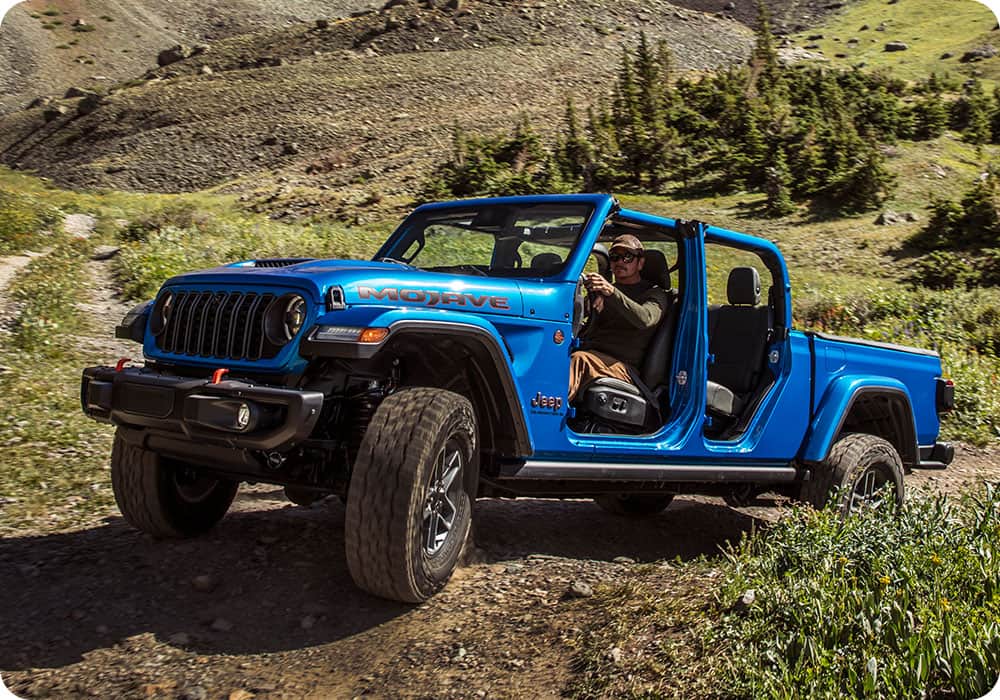
Credit: www.jeep.com
The JL Foundation: Why the Gladiator Shares This Platform
The Jeep Wrangler JL launched in December 2017 for the 2018 model year. The Gladiator (JT) arrived in 2020, with production starting in 2019. Jeep waited two years between launches to adapt the JL platform specifically for truck applications. This timing allowed proper engineering rather than rushing a truck variant to market.
Both vehicles share the same fully-boxed frame design. Both use identical drivetrain foundations. However, the JT designation acknowledges substantial modifications beyond simple variant engineering. The Gladiator received comprehensive adaptations for truck duty—modified suspension, reinforced frame structure, and truck-specific tuning that distinguish it from the Wrangler platform.
Why the Gladiator Is Not Based on the JK
The JK generation Wrangler (2007–2017) never served as the Gladiator’s foundation. The final JK rolled off the assembly line on April 27, 2018. The Gladiator was still in development at that time, making a JK-based design impossible.
From a manufacturing perspective, Toledo’s North plant transitioned directly from JK to JL production. By the time Jeep committed truck resources, only the JL architecture remained viable. This timeline explains why the Gladiator shares no direct legacy with the older JK generation.
The JK used older transmission technology and frame design. The Gladiator inherited the JL’s modern eight-speed automatic transmission, contemporary drivetrain architecture, and modern manufacturing standards that didn’t exist during the JK era.
Wheelbase and Chassis Specifications
The Gladiator wheelbase measures 137.3 inches. The JL Wrangler Unlimited measures 118.4 inches. This 19-inch difference required suspension redesign, not just frame stretching.
Jeep collaborated with Ram Trucks to engineer the rear suspension. The team redesigned suspension geometry to handle increased towing loads while maintaining off-road articulation and on-road comfort. The JK Wrangler Unlimited, by contrast, measured approximately 119 inches in wheelbase but used fundamentally different suspension components and frame construction.
The Gladiator uses a separate body-on-frame design like the Wrangler. Both feature solid front and rear axles. However, Ram’s engineering team adapted rear suspension geometry specifically for truck loads. The rear suspension uses progressive-rate coil springs that distribute weight effectively even when fully loaded.
Towing and Payload Capacity
The Gladiator achieves up to 7,700 pounds of towing capacity and 1,725 pounds of payload on properly equipped models. The JL Wrangler Unlimited achieves 3,500 pounds of towing and 1,310 pounds of payload maximum.
These differences stem from frame modifications, axle upgrades, and suspension tuning. The Gladiator’s base model still achieves 6,500 pounds towing and 1,400 pounds payload—substantially exceeding Wrangler capability despite sharing core platform architecture.
The JK Wrangler Unlimited offered approximately 3,500 pounds of towing across all trim levels. Modern JL architecture, when adapted for truck use, outperforms JK-era engineering even without a complete platform redesign.
Engine Options: What the JL Offers vs. What the Gladiator Uses
The JL Wrangler offers multiple engine choices: the 3.6L Pentastar V6 (285 hp), a 2.0L turbocharged four-cylinder (270 hp), a 3.6L eTorque mild hybrid, a 6.4L HEMI V8 (470 hp), and a 4xe plug-in hybrid system (375 hp total).
The Gladiator takes a focused approach. The 3.6L Pentastar V6 (285 hp, 260 lb-ft torque) serves as the standard engine, paired with a six-speed manual or eight-speed automatic. From 2021 to 2023, a 3.0L EcoDiesel turbocharged V6 (260 hp, 442 lb-ft) was available for maximum towing torque.
Notably absent is the 2.0L turbo-four engine. Jeep prioritized torque and payload capability over fuel economy for truck buyers. The JK relied on older engine technology—initially a 3.8L V6 (202 hp) before the 2012 transition to the modern 3.6L Pentastar. The Gladiator benefits from contemporary engine development unavailable in JK production years.
Frame and Suspension Engineering
The Gladiator frame begins with the JL’s fully-boxed design but diverges significantly in execution. Jeep and Ram reinforced the frame structure for truck loads and towing stresses. Frame thickness increases in critical areas. Welding quality receives particular attention to minimize structural weaknesses under heavy use.
The front suspension maintains the JL’s five-link coil spring design with modified geometry optimized for truck loads. Suspension control arms align differently to distribute weight more effectively through the chassis.
The rear suspension represents the most substantial departure from standard JL architecture. Ram’s engineering incorporated lessons from the Ram 1500 truck platform. This collaboration resulted in a control arm geometry that handles truck loads while maintaining handling characteristics and off-road capability.
Aftermarket Compatibility and Parts Interchange
The JL connection carries practical implications for Gladiator owners considering modifications. Many mounting points and attachment locations align with JL Wrangler specifications. Some aftermarket components designed for the Wrangler will mount to the Gladiator with compatibility.
The extended truck bed prevents direct transfer of certain components, like rock rails or step bars. These items require modification or truck-specific variants. JK Wrangler parts generally don’t interchange with the JL or JT. The older generation used different attachment points, suspension geometry, and frame structures that won’t align with modern platforms.
Production Timeline and Investment
Jeep invested $700 million to retool Toledo’s North plant for JL Wrangler production, which began in December 2017. Two years later, the company announced a $1 billion investment at Toledo’s South plant for Gladiator production, adding more than 2,000 jobs.
This sequential investment strategy allowed Jeep to prove JL platform viability before committing truck resources. The company didn’t rush the Gladiator to market. Instead, it built production capacity specifically for truck manufacturing after establishing JL success.
Why “JT” Instead of “JL Pickup”
The JT designation serves a specific purpose in Jeep’s platform naming. The “J” honors Jeep’s historical J-series pickup line (1962–1992). The “T” signifies “truck.” This distinction signals that the Gladiator uses JL fundamentals but implements modifications sufficient to warrant separate development, testing, and service protocols.
Jeep initially considered the “Scrambler” nameplate, referencing the classic CJ-8 Scrambler from the 1980s. The Scrambler was a stretched CJ-7 with a cargo area and half-cab top—more of an SUV conversion than a dedicated truck.
The company selected “Gladiator” to convey serious truck-focused engineering. The name references the longer-running 1960s–1990s Jeep Gladiator pickup line. This branding choice better represents the modern truck’s dedicated architecture versus a stretched SUV variant.
Off-Road and On-Road Performance Characteristics
Understanding the JT platform reveals how it differs from both the JL Wrangler and the older JK generation. The Gladiator’s longer wheelbase (137.3 inches) reduces breakover angle compared to the Wrangler Unlimited (118.4 inches). This geometry makes extreme rock crawling less approachable than a Wrangler.
The Gladiator excels at desert driving and high-speed off-road travel. Its refined suspension and improved weight distribution capability provide stable handling across rough terrain. The progressive-rate rear springs maintain composure even when carrying maximum payload.
The JL Wrangler Unlimited prioritizes rock crawling articulation and approach angles. Its shorter wheelbase delivers better breakover angles and obstacle clearance. Both vehicles prioritize different off-road scenarios based on their distinct chassis geometries.
Technology and Modern Features
Gladiator buyers receive contemporary conveniences unavailable in the JK era. The truck features a touchscreen display up to 8.4 inches (versus the JK’s optional 6.5-inch screen). Wireless smartphone integration comes standard on higher trims.
Advanced off-road diagnostics display through the Uconnect 4 infotainment system. This system provides terrain response information, traction control status, and suspension performance data in real time. The JK relied on older infotainment systems with limited wireless capability.
The Gladiator inherits the JL’s modern safety features, including adaptive cruise control, blind-spot monitoring, and forward collision warning. These systems reflect the modern architecture’s integration of contemporary automotive standards.
Key Specification Comparison Table
| Feature | Gladiator (JT) | JL Wrangler Unlimited | JK Wrangler Unlimited |
|---|---|---|---|
| Wheelbase | 137.3 inches | 118.4 inches | ~119 inches |
| Max Towing | 7,700 lbs | 3,500 lbs | ~3,500 lbs |
| Max Payload | 1,725 lbs | 1,310 lbs | ~1,200 lbs |
| Engine Options | 3.6L V6, 3.0L Diesel | 3.6L V6, 2.0L Turbo, V8, PHEV | 3.8L V6, 3.6L V6 |
| Production Years | 2020–present | 2018–present | 2007–2018 |
| Transmission | 6-speed manual, 8-speed auto | 6-speed manual, 8-speed auto, auto only | 5–6 speed auto, 6-speed manual |
| Frame Type | Fully-boxed (modified) | Fully-boxed (standard) | Fully-boxed (older design) |
Practical Implications for Buyers
The Gladiator represents modern truck engineering informed by JL platform development. Buyers receive a vehicle engineered specifically for truck duty rather than a Wrangler variant adapted for a truck role.
Buyers seeking maximum towing and payload capacity should choose the Gladiator. Its engineered suspension and reinforced frame deliver truck-class capability. Buyers prioritizing off-road rock crawling should consider the JL Wrangler Unlimited, which offers superior breakover angles and suspension articulation.
The Gladiator’s diesel engine (2021–2023) provided maximum torque for serious towing applications. Gasoline models offer sufficient capability for recreational towing and moderate payload tasks. Neither option exists in the JK generation, reflecting how modern architecture enables greater capability diversity.
Common Misconceptions Clarified
Misconception 1: The Gladiator is a JL with a bed added. Reality: The Gladiator received comprehensive engineering modifications, including frame reinforcement, suspension redesign, and truck-specific tuning. It’s not a simple variant.
Misconception 2: The Gladiator shares JK heritage. Reality: The Gladiator launched after JK production ended. No JK components or architecture transferred to the truck platform.
Misconception 3: Wrangler JL and Gladiator JT components are fully interchangeable. Reality: Many mounting points align, but the extended wheelbase and truck-specific suspension modifications limit direct part sharing. Modifications often prove necessary.
Misconception 4: The Gladiator uses the same suspension as the Wrangler JL. Reality: Ram Trucks’ engineers modified rear suspension geometry specifically for truck loads. Progressive-rate springs and adjusted control arm angles distinguish truck suspension from SUV specifications.
Why Jeep Made This Engineering Choice
Jeep chose the JL foundation for specific reasons. The modern platform offered contemporary manufacturing standards and proven reliability from the Wrangler’s established production. Building from proven architecture reduced development risk compared to creating a truck platform from scratch.
Collaborating with Ram Trucks, an expert in truck engineering, ensured the Gladiator met serious towing and payload expectations. Ram’s expertise in suspension geometry, frame reinforcement, and truck-specific durability informed every design decision.
The JL’s modular architecture allowed Jeep to adapt core components while implementing specialized modifications. This approach delivered a modern truck faster than developing an entirely new platform while maintaining engineering integrity.
Conclusion: Clear Platform Distinctions
The Jeep Gladiator is unequivocally a JT platform based on JL architecture. It shares no direct lineage with the JK generation, which concluded production in 2018 before the Gladiator entered development.
The JL foundation provides modern engineering, contemporary powertrains, and advanced manufacturing standards. However, the JT designation signals that the Gladiator received comprehensive truck-specific modifications warranting separate classification.
For buyers and enthusiasts, this distinction provides clarity: the Gladiator represents modern truck engineering adapted from JL fundamentals, incorporating truck-specific modifications unavailable in either the older JK generation or the SUV-optimized JL Wrangler.
When someone asks whether a Gladiator is a JL or JK, the answer is direct: it’s a JT—a truck platform engineered from JL architecture with comprehensive modifications optimized for truck duty.