What Does 2H Mean in a Jeep? 4×4 Modes Explained (2H, 4H, 4L)

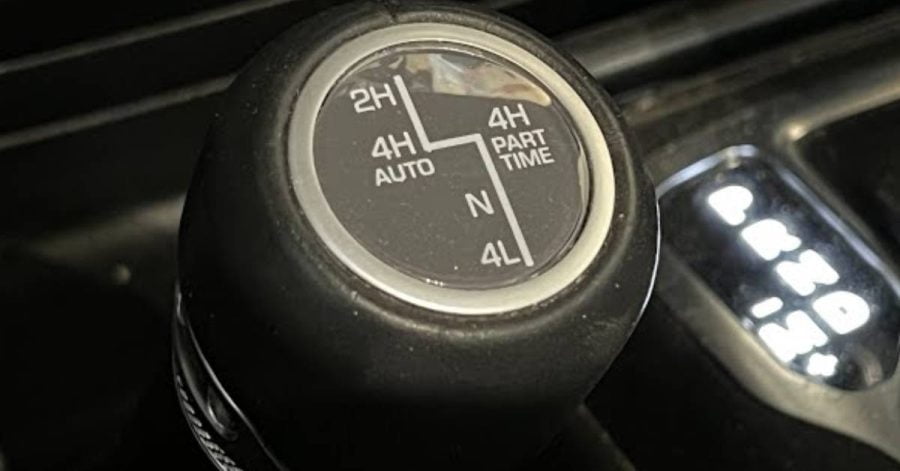
If you’ve ever wondered what 2H means on your Jeep’s shifter, you’re not alone. 2H stands for two-wheel drive high range. It powers only your rear wheels for everyday driving on paved roads.
This mode is your default setting for daily commuting, highway driving, and city streets. It’s the most fuel-efficient option available on Jeeps like the Wrangler and Gladiator. Your front wheels disconnect from the drivetrain completely.
Understanding 2H versus 4H and 4L modes is crucial for safe driving. Each mode serves specific terrain and weather conditions. Proper usage prevents costly damage to your transfer case and drivetrain components.
Most Jeep owners use 2H about 80% of the time. It delivers better gas mileage than four-wheel drive modes. You’ll also reduce wear on expensive 4×4 components by staying in 2H when possible.
What 2H Stands For in Jeep 4×4 Systems
2H means “two-wheel drive high range” in Jeep terminology. Only your rear axle receives power from the engine. The front axle remains disconnected and freewheels as you drive.
This configuration works perfectly for dry pavement conditions. Your Jeep operates like a traditional rear-wheel drive vehicle. The high gear ratio allows normal highway speeds up to 75+ mph.
Think of 2H as your everyday driving mode. It’s designed for commuting, errands, and long road trips. You’ll notice improved fuel economy compared to four-wheel drive settings.
The “high” designation refers to the transfer case gear ratio. High range provides a 1:1 ratio for efficient power transfer. This setup prioritizes speed and fuel efficiency over maximum traction.
Power flows from your engine through the transmission to the transfer case. The transfer case then directs power exclusively to the rear differential. Your front wheels spin freely without receiving any torque.
2H in Wrangler vs. Gladiator
Both Wrangler and Gladiator models use identical 2H functionality. The Command-Trac or Rock-Trac transfer case operates the same way. Your shifter position determines which axles receive power.
Gladiator trucks may feel slightly different in 2H due to their longer wheelbase. The extra length provides more stability on highways. Are the Jeep Wranglers reliable depends partly on proper drivetrain usage.
Newer models include electronic shift-on-the-fly capability. You can switch between 2H and 4H while driving. Always check your owner’s manual for specific shifting procedures.
2H vs. 4H vs. 4L: Key Differences & When to Switch
Understanding all three modes prevents confusion and potential damage. Each mode targets specific driving conditions and terrain types. Here’s exactly when to use each setting:
4H (Four-High) engages all four wheels at highway speeds. It’s perfect for snow, ice, loose gravel, or wet conditions. You can drive up to 55 mph safely in 4H mode.
4L (Four-Low) provides maximum torque for extreme off-roading. Use it for rock crawling, deep mud, or steep inclines. Never exceed 25 mph in 4L to avoid drivetrain damage.
| Mode | Wheels Powered | Max Speed | Best Use Case |
|---|---|---|---|
| 2H | Rear Only | No Limit | Dry pavement, highways |
| 4H | All Four | 55 MPH | Snow, ice, light off-road |
| 4L | All Four | 25 MPH | Rock crawling, steep hills |
Shifting from 2H to 4H can happen while driving at any reasonable speed. Most modern Jeeps allow on-the-fly switching up to 55 mph. Simply move the transfer case lever or press the electronic button.
Engaging 4L requires different procedures. Stop completely or slow to under 3 mph first. Shift your transmission to neutral, then engage 4L. This prevents grinding and protects synchronizers.
Critical rule: Never use 4H or 4L on dry pavement. The front and rear axles will bind up. This causes expensive damage to differentials, transfer cases, and tires.
You’ll feel the steering wheel jerking if you accidentally engage 4WD on dry roads. This “crow hopping” indicates immediate binding. Shift back to 2H immediately to prevent damage.
Best all-terrain tires for Jeep Wrangler selection affect traction in different modes. Quality tires maximize each mode’s effectiveness.
Tips for Using 2H Mode Safely in Your Jeep
2H should be your default mode for 90% of driving situations. It’s the most efficient and longest-lasting option available. Your drivetrain components will thank you for proper usage.
Daily driving strategy: Start every trip in 2H mode. Only switch when conditions absolutely require four-wheel drive. This habit maximizes fuel economy and minimizes wear.
Watch for signs that indicate you need more traction. The rear wheel spinning on wet pavement suggests 4H time. Snow beginning to stick means immediate mode change.
Common mistake: Many new Jeep owners drive in 4H unnecessarily. They think it’s always better to have more traction. This wastes fuel and wears components prematurely.
Your transfer case oil runs cooler in 2H mode. Less internal friction means longer component life. Best lift kit for a Jeep Wrangler installations don’t affect 2H operation significantly.
Temperature considerations: 2H works perfectly in all weather when traction allows. Hot summer days actually favor 2H usage. Your engine runs more efficiently without front axle drag.
Learn your Jeep’s traction limits in 2H before emergencies arise. Practice in empty parking lots during different weather conditions. Understanding limits prevents surprises on busy roads.
Best Jeep Wrangler rock rails protect your vehicle when you do venture off-road. They complement proper mode selection for trail safety.
Maintenance tip: Regular transfer case fluid changes keep all modes working smoothly. Follow Jeep’s recommended service intervals religiously. Clean fluid ensures crisp shifting between modes.
Modern electronic systems monitor wheel spin automatically. Some Jeeps suggest mode changes through dashboard messages. Pay attention to these helpful recommendations.
How much are Jeep Wranglers often reflected in 4×4 capability, but proper usage maximizes your investment. Understanding 2H operation protects expensive drivetrain components.
Night driving: 2H works excellently for highway night driving. Best Jeep Wrangler rock lights help when you do venture off-road in low-light conditions.
Adventure preparation: Best Jeep Wrangler roof top tent setups work great for camping trips. You’ll drive to most campsites in 2H mode comfortably.
Conclusion
2H mode should be your go-to setting for everyday Jeep driving. It delivers optimal fuel economy while preserving expensive 4×4 components. Save four-wheel drive modes for conditions that actually require extra traction.
Remember the golden rule: dry pavement equals 2H mode always. This simple habit prevents thousands in repair bills. Your Jeep’s drivetrain will last significantly longer with proper mode usage.
Master all three modes for complete confidence behind the wheel. Check your specific model’s owner manual for detailed shifting procedures. When does the 2026 Jeep Wrangler come out with potential hybrid improvements to these time-tested systems?