What Color is the Jurassic Park Jeep? Exploring Dinosaur-Themed Vehicle History

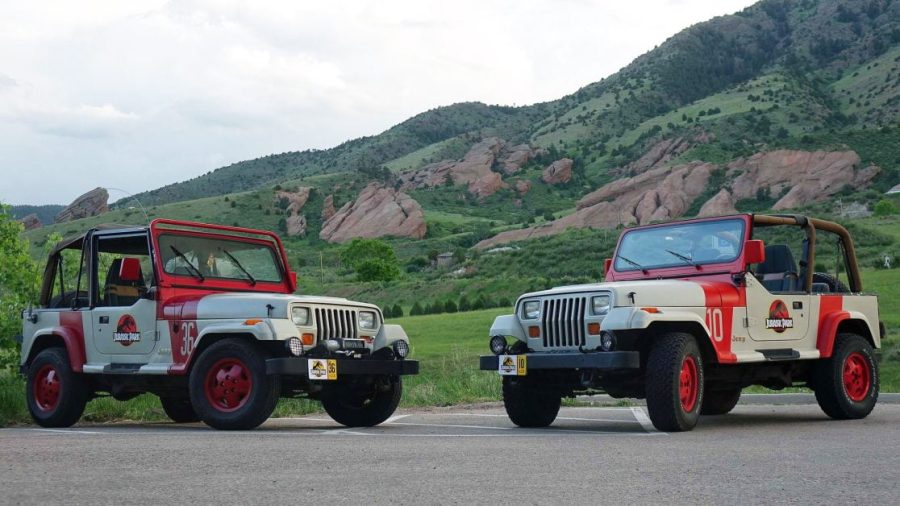
The iconic “Jurassic Park jeep” is a 1992 Jeep Wrangler YJ Sahara painted in Sand Beige, a factory color exclusive to that model year. This beige base coat is complemented by bold red accent stripes, red-painted aluminum wheels, and the unmistakable red “Jurassic Park” logo on each door.
For decades, fans have debated whether the vehicles were yellow, green, or tan. The truth settles the argument: Sand Beige was the official color, though on-screen lighting, tropical rain, and jungle mud often made it appear darker or more greenish-tan.
The Official Color: Sand Beige (LJ1)
Sand Beige was a limited-production color available only on 1992 Jeep Wrangler YJ models. The paint code LJ1 designated this specific shade, which had a low-gloss finish and no clear coat layer. This matte-like appearance gave the Jeeps a rugged, utilitarian look that fit perfectly with the park’s safari aesthetic.
The color appears lighter than standard tan and sits between beige and light brown on the spectrum. Under direct sunlight, Sand Beige has a warm, sandy tone. In shadow or rain, it darkens to a muddy khaki. Steven Spielberg and production designer Rick Carter chose this neutral palette to contrast with the lush green jungle environment while maintaining visibility for the camera.
Because Sand Beige was exclusive to 1992, finding authentic Wranglers in this color has become a challenge for collectors and replica builders. Many enthusiasts resort to custom paint mixing to replicate the exact shade for their Jurassic Park-themed builds.
Red Accents and Branding Details
The most recognizable feature of the Jurassic Park Jeeps is the bold red graphic treatment. Each vehicle sports thick red stripes running horizontally along the sides, wrapping around the hood and rear. These stripes create visual continuity with the park’s branding seen throughout the film.
The red “Jurassic Park” logo appears prominently on both front doors, featuring the iconic T-rex skeleton silhouette. The logo uses a custom typeface that became instantly recognizable in pop culture. Additional red pinstriping accents the body panels, reinforcing the safari-vehicle theme.
Wheels received a full red powder-coat treatment on the aluminum rims, creating a striking contrast against the Sand Beige body. This unconventional color choice made the Jeeps stand out during the film’s high-action sequences, particularly in the T-Rex attack scene, where the red wheels spin frantically in the mud.
Cinema Vehicles, the Hollywood vehicle prep company, applied all graphics and custom paint. They used vinyl decals for some elements and hand-painted others to ensure durability during filming in Hawaii’s humid conditions.
The 1992 Jeep Wrangler YJ Sahara Platform
Universal chose the 1992 Jeep Wrangler YJ Sahara edition as the base platform for the staff vehicles. The YJ generation (1987–1995) was distinctive for its square headlights, a departure from the traditional round headlights on earlier and later Wrangler models. However, the Jurassic Park Jeeps received a custom modification: rectangular off-road lights replaced the stock square headlights entirely.
The Sahara trim level came with upgraded features, including a spice-green interior, higher-quality seats, and additional sound insulation. These creature comforts made the Jeeps more camera-friendly for interior shots and easier on actors during long filming days.
Under the hood sat a 4.0-liter inline-six engine producing 180 horsepower, paired with either a five-speed manual or three-speed automatic transmission. The film used manual-transmission models to give drivers more control during action sequences. Four-wheel drive with a part-time transfer case allowed the vehicles to handle Hawaii’s muddy jungle terrain during location shoots.
Production modified several Wranglers for different filming needs. Some received reinforced suspensions and roll cages for stunt work, while hero vehicles kept stock running gear for close-up shots.
Why Fans Remember Different Colors
Internet forums and social media discussions reveal a surprising phenomenon: many fans remember the Jurassic Park Jeeps as yellow or olive green rather than beige. This collective false memory stems from several factors related to how the vehicles appeared on screen.
Lighting conditions dramatically affected the perceived color throughout the film. The famous T-Rex attack happens at night during a rainstorm, where water and darkness turn the Sand Beige into a muddy brown-green. Daytime jungle scenes cast heavy green color grading over every frame, tinting the beige vehicles with an olive hue.
VHS tapes and early DVD releases further distorted colors due to analog color bleeding and compression artifacts. Viewers who grew up watching these home video versions internalized a color that differed from theatrical prints or modern 4K restorations.
The human memory also tends to simplify colors into basic categories. When people recall “the color of the Jurassic Park Jeep,” their brain often defaults to broader terms like “tan” or “yellow” rather than the specific Sand Beige. Toys, model kits, and merchandise have further confused matters by using a range of yellow, tan, and green shades that don’t match the screen-accurate color.
How the Jeeps Differ From Ford Explorer Tour Vehicles
Casual viewers sometimes confuse the Jeep Wrangler staff vehicles with the Ford Explorer XLT tour vehicles that carry the main characters through the park. These are distinct vehicles with different color schemes and purposes within the film’s world.
The Ford Explorers feature a yellow and black color scheme inspired by electric tour buses. They have enclosed bodies with large plexiglass windows, roof-mounted lighting rigs, and the iconic number decals (04, 05) on their doors. Their role is passive transportation for guests on the automated tour track.
In contrast, the Sand Beige Jeep Wranglers serve as open-air utility vehicles for park staff moving between work sites. They appear during the initial park tour montage and in scenes showing workers tending to dinosaur paddocks. The Jeeps represent the working backbone of park operations, while the Explorers showcase the polished guest experience.
This distinction matters for replica builders and collectors. Someone building a screen-accurate Jurassic Park vehicle needs to decide whether they want the staff Jeep (Sand Beige Wrangler) or the tour vehicle (modified yellow Ford Explorer). Each requires different base vehicles, paint codes, and graphic packages.
Building Your Own Jurassic Park Wrangler
The popularity of the film has spawned a dedicated community of replica builders who restore 1992 Wrangler YJ Saharas to match the movie’s specs. These projects range from accurate restorations to modern interpretations with upgraded drivetrains.
Finding the right base vehicle poses the first challenge. A true replica demands a 1992 YJ Sahara in Sand Beige, but only a few thousand left the factory in this color. Most builders start with any 1992 YJ and repaint it using custom-mixed Sand Beige. Paint shops reference LJ1 color codes and adjust formulas to match screen captures from 4K releases.
The graphic application comes next. Several specialty companies sell vinyl decal kits with accurate red stripes and Jurassic Park logos. These kits typically cost between $400 and $800, depending on quality and material durability. Some purists opt for hand-painted graphics to replicate the original Cinema Vehicles approach.
Headlight modifications require replacing the square sealed-beam units with rectangular off-road lights. This involves custom mounting brackets and wiring modifications. Many builders use modern LED rectangular lights that provide better illumination than period-correct halogen units.
Wheel refinishing completes the transformation. Stock YJ aluminum wheels get sandblasted and powder-coated in a bright red that matches the body graphics. Some builders add roof-mounted light bars, CB radio antennas, and period-correct accessories to enhance the park-vehicle aesthetic.
Online forums like JurassicJeep.com and dedicated Facebook groups provide paint codes, vendor lists, and build guides for aspiring replica builders. Annual Jeep shows and comic conventions showcase completed builds, with some commanding significant attention from fans and collectors.