How to Carry a Kayak on a Jeep Wrangler: 5 Safe Methods (Hardtop & Softtop)

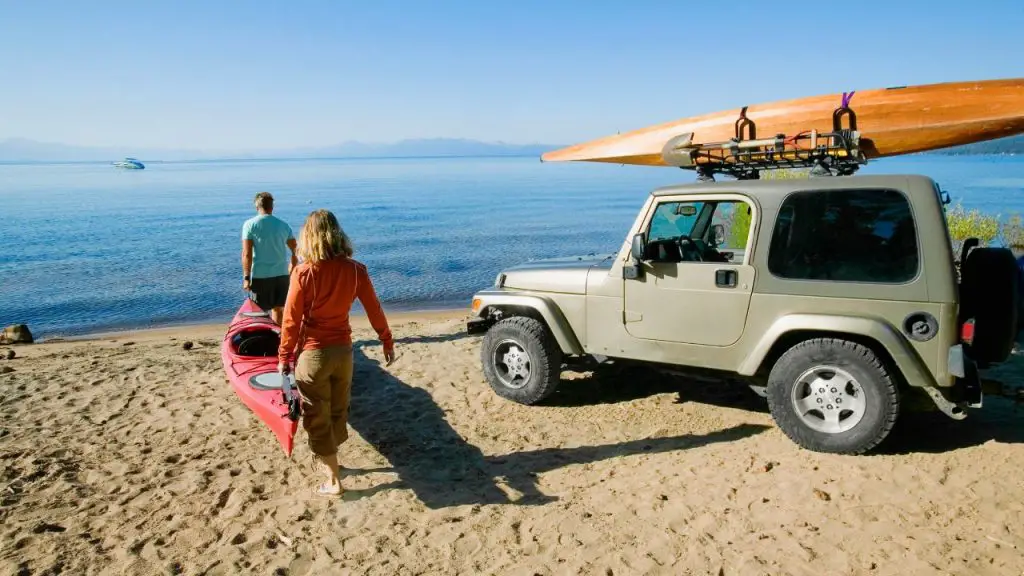
You can carry a kayak on a Jeep Wrangler using a roof rack with a dedicated carrier, a DIY foam-block or pool noodle setup, or by loading it directly inside the cabin. Always use ratchet straps, bow and stern tie-downs, and protective padding. Confirm your roof’s weight limit before adding any load.
Getting this wrong costs you. A sliding kayak at 60 mph is a genuine road hazard, and a single scratch across your softtop fabric can ruin an expensive panel. This guide walks you through every method — rack or no rack, hardtop or softtop — so you arrive at the water without drama.
Step 1 – Choose Your Transport Method Based on Your Jeep Type and Kayak Size
This decision drives everything else. Get it wrong and you’ll buy gear that doesn’t fit.
Start with your top type. Hardtops have rain gutters along the roofline, which accept gutter-mounted clamp brackets. Softtops lack rigid gutters, so you’ll anchor racks to the roll bars instead. These are fundamentally different mounting points.
Next, consider your kayak’s size and how often you’ll haul it. If you watch this step-by-step video on carrying a kayak on a Jeep Wrangler, you’ll see how quickly the right method simplifies the whole process.
Hardtop vs. Softtop Considerations
- Hardtop: Use gutter-clamp base racks (e.g., Thule 300 Foot Pack) with 58-inch load bars.
- Softtop: Use roll-bar-mounted base rack kits (e.g., Thule Part #45058) instead.
- Softtops need foam buffers at every kayak contact point — no exceptions.
- Check whether you own a JK, JL, TJ, or JLU; rack fitment varies by generation. If you’re unsure about your model year’s specs, see when the 2026 Jeep Wrangler comes out for updated compatibility notes.
Single Kayak vs. Multiple Kayaks
- One kayak under 65 lbs: almost any method works.
- Two or more kayaks: you need a dedicated multi-kayak carrier and a roof system rated to handle the combined weight.
- Most gutter-mounted racks cap at 165 lbs total load — including the carrier itself.
It also helps to know your Jeep Wrangler towing capacity by year and trim so you can compare roof-loading against trailer options for heavier kayaks.
| Method | Best For | Pros | Cons |
|---|---|---|---|
| Roof Rack + Carrier | Frequent use, large kayaks | Secure, stable, holds multiple | Cost, installation time |
| Pool Noodles / Foam | Temporary, budget-friendly | No installation needed, cheap | Less secure, foam wears fast |
| Interior Loading | Small kayaks, short trips | Protected, no roof exposure | Space limits, hard in 2-door |
Step 2 – Install a Roof Rack System (If Using One)
A solid rack is the foundation. Skip this step properly and everything above it becomes unreliable.
Hardtop Base Rack Installation
The Thule 300 Foot Pack base rack for hardtop Jeep Wranglers clamps directly to the rain gutters. Pair it with 58-inch Thule load bars spaced roughly 24 to 30 inches apart for good kayak support. Tighten each clamp evenly. Never over-torque one side while leaving the other loose — that’s how racks shift at highway speed.
Softtop Base Rack Installation
Use Thule Part #45058, which bolts to the factory roll bars. The mounting surface is rigid steel, so this setup is actually very stable despite the flexible top around it.
Choosing the Right Kayak Carrier
Three Thule options cover most Wrangler owners:
- Thule 883 Glide & Set — felt-lined saddles, wide cradle design, slides the kayak in smoothly. Best for wide recreational kayaks.
- Thule 830 Stacker — vertical stacking system holding up to 4 smaller kayaks. Ideal for whitewater or touring kayaks.
- Thule Hull-a-Port Pro (835 Pro) — standard J-style carrier for everyday recreational kayaks.
Ensure all clamps clear window seals completely. Pressure on a seal creates leaks and permanent deformation.
Step 3 – Secure the Kayak with Proper Straps and Tie-Downs
This is where most beginners make costly mistakes.
Strap Placement and Tension
Use three straps: one at the front of the kayak, one at the center, one at the rear. Each strap loops over the kayak and through the load bars below. Ratchet straps only — bungee cords and rope are not highway-rated for this application.
Snug is the target. You’re not trying to compress the hull. Over-tightening a ratchet strap deforms plastic and composite kayak hulls permanently, and it can damage your roof rack bars too.
Bow and Stern Tie-Downs
These are non-negotiable on the highway.
- Attach a line from the kayak’s bow (nose) to your front bumper or tow hook.
- Attach a second line from the stern (rear) to your rear bumper or tow hook.
- These lines prevent wind lift from lifting the kayak off the rack at speed.
Thread your center strap through the open door frames, then close the doors on the strap. It’s an old trick, but it adds meaningful lateral hold.
Check Interval
Pull over after 15 minutes of driving and re-check all straps. Straps settle under vibration. What felt tight in your driveway often isn’t after the first few miles.
Step 4 – DIY No-Rack Methods (Pool Noodles, Foam Blocks, Softtop Hacks)
No rack? No problem — if you do this right.
For softtop-specific guidance, this article on how to strap a kayak to a softtop Jeep without damaging the fabric covers foam cushioning, window removal, and strap routing in detail.
The Jeep Wrangler community has also developed clever workarounds. Check out this Reddit thread with a pool noodle kayak hack for Jeep Wrangler JLU owners for real-world DIY solutions from people who’ve tested them on actual trips.
Pool Noodle Setup
- Place two pool noodles across the windshield frame and above the soundbar.
- Flip the kayak upside down and rest it on the noodles — hull facing up.
- Route ratchet straps over the kayak and through the door frames.
- Close all four doors over the straps to lock them in place.
Foam Block Method
- Use two dense foam kayak blocks (sold at outdoor retailers for under $20).
- Position one block at the windshield brace, one at the roll bar.
- These stop the kayak from sliding forward under braking.
Softtop Protection and Window Removal
Never slide a kayak across softtop fabric. One pass gouges the material. Instead, remove the rear side windows or unzip them before loading, lay a moving blanket over the entire top, then lower the kayak onto the blanket. This takes four extra minutes and saves an expensive repair.
Step 5 – Interior Loading (Fold Seats, Use Spare Tire, Remove Doors)
Sometimes the simplest solution is just loading the kayak inside.
Folding Rear Seats in a 4-Door Unlimited
In a JLU (4-door Unlimited), fold the rear seats completely flat. Open the rear hatch. Slide the kayak nose-first into the cabin. For kayaks up to roughly 10 feet, this works well with padding underneath to protect interior trim.
Place an old towel or moving blanket across every surface the kayak will contact. Kayak hulls are abrasive and they’ll scratch plastic trim panels on first contact.
Using the Spare Tire as a Support Point
With the rear hatch open, the exterior spare tire creates a natural cradle. Rest the kayak cockpit over the spare, centered and balanced. Add an extra ratchet strap from the cockpit to your roll bar tow point inside the cabin.
Removing Rear Doors for a 2-Door Wrangler
A standard 2-door Wrangler has very limited interior length. The solution is removing the rear doors entirely. Learning how to take Jeep Wrangler doors off safely takes about 10 minutes per door and dramatically opens up the rear opening for kayak loading.
Without doors, even a 9-foot kayak can angle in through the rear opening with the hatch down. Tie it securely. Interior movement damages both kayak and cabin faster than roof transport does.
Pro Tips: Avoiding Damage and Ensuring Safety on the Road
Small details prevent big problems.
- Check your roof’s rated capacity before buying a rack — many gutter-mount systems cap at 165 lbs, including the rack weight itself.
- For two-kayak loads, the Thule Hullavator Pro Kayak Roof Rack and Lift Assist dramatically reduces loading effort and injury risk.
- Re-check straps at the 15-minute mark, then again at each fuel stop on long trips.
- Avoid ratcheting straps beyond “firm.” Snug holds; crushing damages.
- Use foam, pool noodles, or folded towels under every kayak contact point — roof, bars, and carrier saddles.
- If you’ve installed a lift kit, note that added height changes your roof clearance in car parks and low bridges. Review the best Jeep Wrangler lift kit options to understand how different kit heights affect your total vehicle height with a kayak loaded on top.
- Bow and stern tie-downs aren’t optional at highway speeds. Wind lift is real and it’s sudden.
Pre-Drive Kayak Transport Checklist
Run through this before every trip:
- Roof rack tightened at all clamp points
- Kayak padded at all contact points
- Three straps routed and ratcheted snug
- Center strap threaded through door frames
- Bow tie-down attached to front anchor
- Stern tie-down attached to rear anchor
- Total load within rack weight rating
- All straps re-checked after first 15 minutes
FAQ – Common Questions About Kayak Transport on a Jeep Wrangler
Can I carry a kayak on a Jeep Wrangler without a roof rack?
Yes. Use pool noodles or foam blocks across the windshield frame and roll bar, flip the kayak upside down on top, and secure it with ratchet straps through the door frames. This works for occasional trips. It’s not ideal for daily use or long highway runs.
What’s the best kayak carrier for a Jeep Wrangler?
The Thule 883 Glide & Set suits wide recreational kayaks best. The Thule 830 Stacker handles up to four smaller kayaks. For a single standard kayak, the Thule Hull-a-Port Pro (835 Pro) is a solid everyday choice.
How do I protect my soft top when carrying a kayak?
Remove or unzip the side windows before loading. Lay a blanket across the entire softtop. Never drag the kayak across the fabric — lower it straight down onto the cushioning material.
Can I fit a kayak inside a 2-door Wrangler?
Only with the rear doors removed. With doors off, kayaks up to approximately 9 feet can angle in through the rear opening. Larger kayaks require roof transport regardless of the model.
How many kayaks can a Jeep Wrangler roof rack hold?
The Thule 830 Stacker holds up to four kayaks vertically. Any multi-kayak setup requires confirming your total load stays within the rack’s rated capacity — typically 165 lbs for gutter-mount systems.
Conclusion – Get Loading and Get on the Water
Choose your method, set up your system properly, and run the pre-drive checklist every single time. The five approaches here cover every Wrangler configuration — hardtop, softtop, 2-door, 4-door, rack or no rack.
Double-check all straps before pulling out of the driveway. Drive cautiously for the first 15 minutes, then re-tighten anything that’s shifted. For regular trips with heavy kayaks, the Thule Hullavator Pro is worth every dollar in loading ease and safety.
For most people with a hardtop JL or JLU: install the Thule 300 Foot Pack, add the 883 Glide carrier, use bow and stern tie-downs, and you’re done. It’s the most secure, repeatable setup on the platform.
Once you’re back from the water, keep your Jeep in top shape with our guide on how to replace a Jeep starter — because outdoor adventures are hard on vehicles, and staying ahead of maintenance keeps you on the road longer.