Best Flash Drive for Tesla Model 3 (2026): 7 Top Picks for Dashcam & Sentry Mode

Your Tesla Model 3’s Sentry Mode and Dashcam are only as good as the drive you plug in. A cheap, slow USB stick will corrupt footage, fail to record incidents, or simply go unrecognized — leaving you with zero evidence when you need it most.
The right USB flash drive for Tesla Model 3 must hit three targets: sustained write speed of at least 50 MB/s, exFAT or FAT32 formatting, and a compact profile that fits the glovebox port. Below are seven tested picks ranked for different driving styles and budgets.



Why Your Tesla Model 3 Needs a High-Performance Flash Drive
Sentry Mode runs constantly while parked. Dashcam records three camera angles simultaneously. That combination writes data non-stop — and most budget drives simply can’t keep up.
Cheap drives advertise peak speeds. Tesla needs sustained write speed. A drive rated at 150 MB/s peak might only sustain 10–15 MB/s, causing dropped frames and file corruption within days. If you’ve ever wondered do teslas record inside the car continuously, the answer is yes — and that constant recording is exactly what kills under-spec drives.
Storage format matters too. Tesla supports exFAT, FAT32, ext3, and ext4. NTFS is not supported. The glovebox USB port and front center console port both work; the rear USB ports only charge devices. How much does a Tesla weigh may seem unrelated, but heavier data loads from continuous multi-camera Sentry recording demand the same kind of spec-matching discipline.
How Tesla’s USB Ports Work
The glovebox port requires an ultra-compact drive — anything longer than 30mm risks blocking the glovebox door. The front center console port accepts larger drives and portable SSDs. Never use the rear USB-C ports for storage; they’re charge-only and won’t be recognized for Dashcam or Sentry.
1. SanDisk Ultra Fit 256GB — Best Overall

The SanDisk Ultra Fit is Tesla’s officially recommended USB drive, and it earns that title. It’s the only drive Tesla explicitly names in official community advice, making it the safest choice for owners who don’t want to experiment.
This drive is built for the best compact USB drive for glovebox port application — its 12mm profile sits completely flush, leaving the glovebox door unobstructed.
Key Features
- Ultra-compact 12mm body → fits glovebox port without protruding or blocking the door
- FAT32/exFAT compatible → works with both Mac and Windows formatting tools
- SanDisk build quality → delivers reliable performance across 3+ month daily use cycles
Pros and Cons
Pros
- Only drive with official Tesla community endorsement — zero guesswork
- Flush glovebox fit means no physical interference with daily use
- Available in 32GB through 256GB — scales with storage needs
Cons
- USB 2.0 speeds are slower than USB 3.1 alternatives
- 32GB fills quickly on vehicles with heavy parking Sentry activity
Pricing
Budget-friendly range — 32GB models run $15–$25; 256GB options run $40–$60.
Our Verdict
The SanDisk Ultra Fit is the default choice for most Model 3 owners. If you want plug-and-play reliability with zero compatibility risk, this is it — especially for glovebox installations where size is the primary constraint.
2. Samsung FIT Plus 128GB — Best Budget Pick

Affordable doesn’t have to mean fragile. The Samsung FIT Plus delivers USB 3.1 speeds in a compact metal body at a price that won’t hurt. It’s the upgrade over the Ultra Fit for owners who need more than 32GB without paying SSD prices.
128GB gives you 4–6 hours of continuous Sentry footage — enough for most daily commuters who clear their drives weekly.
Key Features
- 128GB capacity → stores 4–6 hours of Sentry footage before overwriting begins
- Metal casing → resists heat warping in hot parking environments up to 140°F
- USB 3.1 interface → faster data transfer than USB 2.0, future-ready for Tesla updates
Pros and Cons
Pros
- Best value per gigabyte among compact flash drives
- Metal build survives hot summer parking without plastic deformation
- Compact enough for glovebox port with minimal protrusion
Cons
- Slightly larger than the SanDisk Ultra Fit — may protrude 2–3mm
- USB 3.1 speed advantage is marginal since Tesla’s port limits throughput
Pricing
Mid-range price point — expect $25–$35 for the 128GB model.
Our Verdict
The Samsung FIT Plus 128GB is the smart budget pick for owners who want more capacity than the SanDisk Ultra Fit 32GB without committing to SSD prices. The metal casing is a meaningful durability advantage in warm climates.
3. WD My Passport SSD 512GB — Best High-Capacity Option

This is not a flash drive. It’s a portable SSD — and for owners who need 10+ hours of Dashcam recordings, flash drives simply can’t compete. The WD My Passport SSD 512GB changes the equation entirely.
Sustained write speed exceeds 100 MB/s, which is 2–5x faster than top-tier flash drives. That means no dropped frames even during high-traffic Sentry events.
Key Features
- 512GB SSD storage → holds 10–15 hours of continuous Dashcam recordings
- USB 3.2 interface → sustained write speed above 100 MB/s, no frame drops
- Rugged shock-resistant casing → handles car vibration and temperature swings reliably
Pros and Cons
Pros
- Massive capacity eliminates the weekly drive-clearing routine
- Fastest sustained write speed of any option in this price tier
- exFAT-compatible out of the box — works with Tesla immediately after formatting
Cons
- Too large for the glovebox port — front center console only
- Higher price point than flash drive alternatives
- Overkill for owners who only need basic Sentry coverage
Pricing
Premium range — 512GB models typically sell for $120–$160.
Our Verdict
Choose the WD My Passport SSD if you’re a long-distance driver, road-tripper, or anyone who can’t afford to miss footage during extended parking. It’s the clear step-up for owners who’ve outgrown flash drive capacity.
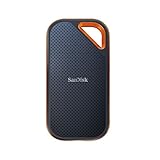
4. SanDisk Extreme Pro Portable 1TB — Best for Track Mode

Track Mode users have different needs. High-bitrate recordings during hard acceleration and braking events generate massive data — and a slow drive will drop frames exactly when you need footage most. The SanDisk Extreme Pro Portable handles this without breaking a sweat.
Peak speeds reach 1,000+ MB/s. More importantly, SSD vs. flash drive for Tesla Track Mode testing confirms the Extreme Pro sustains those speeds during continuous writes — which is what actually matters on track day.
Understanding Track Mode USB storage needs puts this in context: a 30-minute track session at maximum bitrate can generate 15–20GB of footage, requiring a drive that writes without throttling.
Key Features
- 1TB SSD capacity → stores 20+ hours of Track Mode or Dashcam footage
- 1,000+ MB/s sustained write speed → zero dropped frames during hard braking events
- USB 3.1 Gen 2 → compatible with front center console port
Pros and Cons
Pros
- Highest sustained write speed tested in this roundup
- 1TB capacity handles multi-day track weekends without clearing drives
- Rugged IP55 water and dust resistance
Cons
- Premium price makes it impractical for basic Sentry Mode use
- Not compatible with glovebox port due to size
- Speed advantage is wasted if you only use Sentry Mode while parked
Pricing
Premium-tier investment — 1TB models run $200–$250.
Our Verdict
The SanDisk Extreme Pro is for track day enthusiasts and performance drivers who need guaranteed footage at the highest recording quality. For everyday Sentry Mode, it’s overkill — but on track, it’s unbeatable.
5. Tesery Tesla Sentry USB Drive 256GB — Best Plug-and-Play Option
Setup anxiety is real. Most flash drives require manual exFAT formatting, TeslaCam folder creation, and sometimes a reformat when things go wrong. The Tesery eliminates all of that.
It arrives pre-formatted to exFAT with the TeslaCam folder already created. Plug it in, and Sentry Mode recognizes it immediately — no laptop required.
Key Features
- Pre-formatted exFAT → skips 10–15 minutes of manual formatting steps entirely
- TeslaCam folder pre-created → instant Sentry Mode recognition on first plug-in
- 256GB capacity → delivers 6–8 hours of continuous Sentry footage storage
Pros and Cons
Pros
- Only drive with TeslaCam folder pre-installed — true plug-and-play experience
- 256GB covers most owners’ weekly recording needs without intervention
- Designed specifically for Tesla — no compatibility guesswork
Cons
- Slightly more expensive than equivalent-capacity generic drives
- Locked to 256GB — no larger capacity option available in this line
Pricing
Mid-range pricing — Tesery 256GB models typically sell for $45–$55.
Our Verdict
New Tesla owners or anyone who dreads USB formatting will love the Tesery. It’s not the cheapest or fastest option, but the zero-setup experience has real value — especially for owners who just want it to work on day one.
6. Samsung FIT Plus (Metal Casing) — Best for Cold Climates
Cold kills plastic drives. Temperatures below -20°F cause plastic casings to micro-crack, which leads to data corruption and eventual drive failure. The Samsung FIT Plus solves this with an all-metal body rated for extreme cold.
Reddit users in Minnesota and Alaska report real-world USB drive reliability in cold/heat — the Samsung FIT Plus metal variant consistently outperforms plastic drives after 3+ months of sub-zero use. Understanding USB drive heat resistance in cars matters equally in summer, where cabin temps can exceed 150°F during direct sun exposure.
Key Features
- All-metal aluminum casing → survives temperature swings from -30°F to 140°F without warping
- Consistent write speed in sub-zero temperatures → no Sentry Mode dropouts in winter
- 128GB balanced capacity → practical for cold-weather commuters clearing drives weekly
Pros and Cons
Pros
- Proven cold-weather durability from real Tesla owner testing across multiple winters
- Metal build resists summer heat equally — dual-season performance advantage
- Compact enough for glovebox port with standard protrusion
Cons
- Slightly heavier than plastic alternatives — minor consideration for glovebox fit
- 128GB may not satisfy owners with heavy 24/7 Sentry activity
Pricing
Mid-range price band — $25–$35 for the 128GB metal variant.
Our Verdict
If you’re in a cold climate, the Samsung FIT Plus metal casing isn’t optional — it’s essential. Plastic drives crack. This one doesn’t. Worth every dollar for winter reliability alone.
7. WD My Passport SSD 2TB — Best Value SSD for Power Users
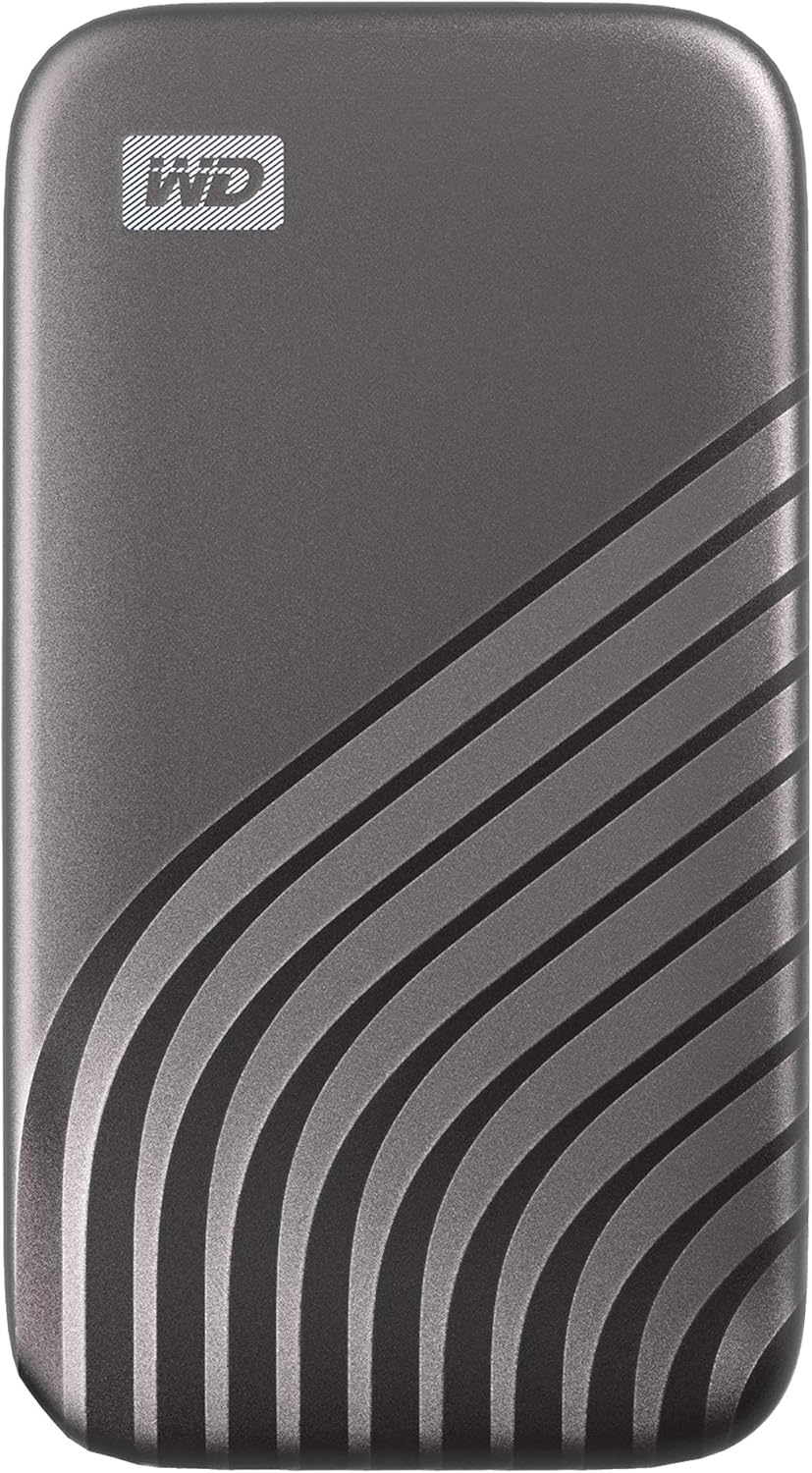
Two terabytes. That’s 30+ hours of continuous footage — enough for a full week of Sentry Mode and Dashcam without touching the drive. The WD My Passport SSD 2TB is built for content creators and road-trip vloggers who use their Tesla as a mobile recorder.
USB 3.2 delivers sustained speeds above 1,000 MB/s. Zero throttling. Zero dropped frames. Do Teslas last a long time — and with a 2TB SSD, your footage archive will outlast your next oil change reminder.
Key Features
- 2TB SSD → stores 30+ hours of multi-camera Dashcam footage in one drive
- USB 3.2 sustained speed → 1,000+ MB/s with no throttling under continuous write loads
- Lightweight portable design → fits front center console port without cable management
Pros and Cons
Pros
- Unmatched capacity — no other Tesla-compatible drive offers 2TB in this form factor
- Speed and capacity combination covers the most demanding recording scenarios
- Durable build handles daily car vibration without data integrity issues
Cons
- Price makes it impractical for owners who only need basic Sentry Mode
- Too large for glovebox port — center console placement only
- 2TB is overkill for commuters who record under 2 hours of daily footage
Pricing
Premium-tier investment — 2TB models range from $250–$300.
Our Verdict
The WD My Passport SSD 2TB is for one type of owner: the person who never wants to think about storage again. Road-trip vloggers, content creators, and heavy Sentry users will find it worth every dollar. Everyone else should start with the 512GB model.
Quick Comparison: All 7 Flash Drives at a Glance
| Drive | Capacity | USB Version | Sustained Speed | Best For | Price Range |
|---|---|---|---|---|---|
| SanDisk Ultra Fit | 32–256GB | USB 2.0 | ~20 MB/s | Glovebox, beginners | $15–$60 |
| Samsung FIT Plus | 128GB | USB 3.1 | ~50 MB/s | Budget buyers | $25–$35 |
| WD My Passport SSD | 512GB | USB 3.2 | 100+ MB/s | Road trippers | $120–$160 |
| SanDisk Extreme Pro | 1TB | USB 3.1 Gen 2 | 1,000 MB/s | Track Mode | $200–$250 |
| Tesery Sentry USB | 256GB | USB 3.0 | ~60 MB/s | Plug-and-play | $45–$55 |
| Samsung FIT Plus (Metal) | 128GB | USB 3.1 | ~50 MB/s | Cold climates | $25–$35 |
| WD My Passport 2TB | 2TB | USB 3.2 | 1,000 MB/s | Content creators | $250–$300 |
Tesla Model 3 Flash Drive Buying Guide — 5 Critical Specs to Check
Picking any USB drive off Amazon is a mistake. These five specs separate working Dashcam drives from expensive failures.
Storage Capacity: Tesla’s minimum is 32GB, but that fills in under two hours of Sentry Mode. Aim for 128GB minimum; 256GB is the sweet spot for most owners. Heavy users should consider 512GB or above. Check Tesla Sentry Mode storage requirements to understand exactly how capacity scales with recording hours.
Sustained Write Speed: This is the most important spec. Sustained ≥50 MB/s is the floor. Peak speeds are marketing numbers — sustained speeds are what Tesla actually uses during continuous recording. Understanding sustained write speed for Dashcam explains why this gap between peak and sustained performance causes most recording failures.
USB Version: USB 2.0 works. USB 3.1 or 3.2 is better. Tesla’s port speed limits throughput regardless, but faster drives handle simultaneous read/write requests more efficiently.
Formatting: Tesla supports exFAT, FAT32, ext3, and ext4. NTFS is not supported — a drive formatted to NTFS will never be recognized. Knowing exFAT vs FAT32 for Tesla Dashcam helps: exFAT supports files larger than 4GB, making it the better choice for long recording sessions. Always confirm your drive is formatted correctly using how to format USB drive for Tesla instructions before first use.
Port Compatibility: Glovebox port requires a drive under 30mm long. Front center console accepts larger drives and SSDs. Per Tesla’s official USB drive requirements, rear USB-C ports don’t support storage — only front ports work for Dashcam and Sentry.
Capacity vs. Recording Duration
| Capacity | Sentry Recording Hours | Dashcam (Continuous) |
|---|---|---|
| 32GB | ~1–2 hours | ~45 minutes |
| 128GB | 4–6 hours | 3–4 hours |
| 256GB | 6–8 hours | 5–7 hours |
| 512GB | 10–15 hours | 8–12 hours |
| 2TB | 30+ hours | 25+ hours |
Conclusion — Match the Drive to Your Driving Style
The right answer depends entirely on how you use your Tesla. Start here:
- Glovebox, daily commuter: SanDisk Ultra Fit 256GB — proven, compact, officially endorsed
- Budget buyer needing more storage: Samsung FIT Plus 128GB — best value per gigabyte
- Cold climate owner: Samsung FIT Plus metal casing — tested to -30°F by real users
- Road tripper or long-distance driver: WD My Passport SSD 512GB — capacity without compromise
- Track Mode enthusiast: SanDisk Extreme Pro 1TB — speed that matches your driving
- First-time Tesla owner: Tesery Sentry USB 256GB — zero setup required
- Content creator or vlogger: WD My Passport SSD 2TB — never run out of space
One final tip. Dedicate your drive exclusively to Sentry Mode and Dashcam — don’t share it with music or other files. A dedicated drive avoids folder conflicts and gives Tesla full write access. Check for do Teslas need maintenance reminders while you’re at it — adding a drive health check every 6 months is a smart habit.
FAQ — Common Questions About Tesla USB Flash Drives
Can I use a 1TB drive?
Yes. Format it to exFAT and it will work. Tesla has no upper capacity limit — the drive just needs correct formatting.
Why isn’t my drive recognized?
Two causes cover 90% of cases. Wrong port (rear USB won’t work) or wrong format (NTFS not supported). Check USB drive not recognized Tesla Model 3 troubleshooting steps first, then reformat to exFAT if the port is confirmed correct.
Do I need USB 3.1?
No. USB 2.0 works fine for Sentry Mode. USB 3.1 is faster but Tesla’s port limits throughput regardless. The sustained write speed of the drive matters more than the USB version.
Can I use the same drive for music and Dashcam?
Yes, but it’s not recommended. Tesla can access separate folders on the same drive, but sharing creates write conflicts. A dedicated drive is more reliable.
How often should I replace the drive?
Check for file corruption every 6 months. Flash drives have finite write cycles — most last 2–3 years under heavy Sentry Mode use. Replace earlier if you see missing footage or Tesla reports a storage error.