Can You Leave Your Jeep in 4 Wheel Drive? A Complete Guide to Safe Usage

The short answer: it depends entirely on your Jeep’s 4WD system type and how you plan to drive. Leaving your Jeep in 4-wheel drive on certain surfaces and conditions causes no harm whatsoever, while doing so in others can produce serious, expensive damage to your drivetrain. Understanding when it’s safe and when it risks breaking your vehicle is critical for protecting your investment.
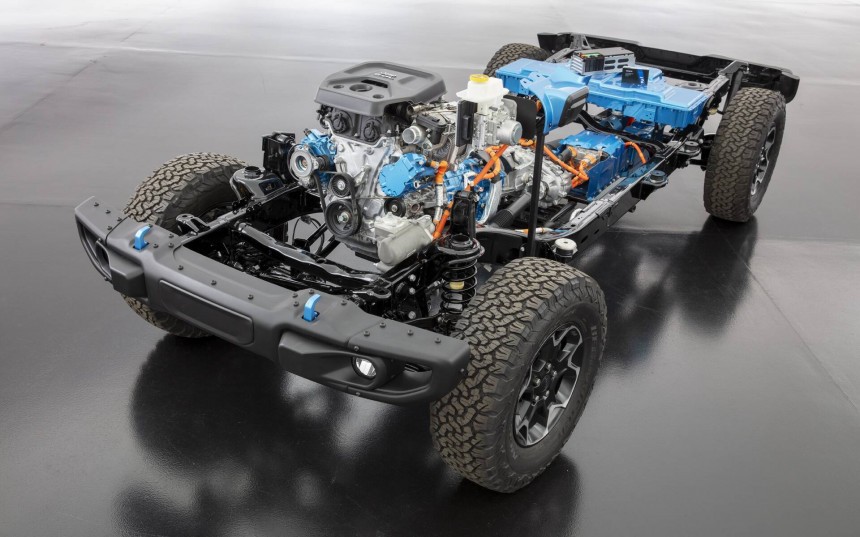
credit: www.autoevolution.com
Understanding Your Jeep’s 4WD System Type
Not all 4WD systems work the same way, and this distinction fundamentally determines whether continuous engagement is safe. Your Jeep likely uses one of two designs, and identifying which you own changes everything about how you should operate it.
Part-Time 4WD Systems are the most common setup across Jeep models. These systems lock the front and rear drive shafts together, forcing both axles to rotate at identical speeds. This design excels in loose, slippery conditions where tire slippage naturally accommodates the speed difference between front and rear wheels.
On dry pavement, however, this same locking mechanism creates a dangerous mismatch. The front wheels want to rotate faster through turns due to the vehicle’s geometry and tire grip, but they’re mechanically prevented from doing so.
This creates what’s called drivetrain binding—a violent twisting force inside your transfer case, axles, and related components that can crack gears, break U-joints, and damage your transmission.
Full-Time 4WD Systems, typically found on higher trim Jeeps or equipped with models like the Selec-Trac NP242 transfer case, operate fundamentally differently. These systems include a center differential that allows the front and rear axles to spin at different speeds while both receive engine power.
This means you can safely engage full-time 4WD on dry pavement, in the rain, or in snow without risk of binding. Jeep’s own manual explicitly states that full-time 4WD can be “used year-round on all road surfaces.”
The easiest way to identify your system: consult your owner’s manual or check whether your Jeep has a center differential in the transfer case. Most commonly, if your Jeep is not a Rubicon or specified as full-time AWD, you have part-time 4WD.
How Drivetrain Binding Actually Happens
The physics of binding matter because understanding the mechanism helps you recognize when risk is real. When you engage part-time 4WD on dry pavement, the transfer case locks your front and rear axles together. At low speeds on straight roads, this works fine—both sets of wheels rotate at the same speed without issue.
But the moment you turn the steering wheel, the front wheels must rotate faster than the rear wheels simply due to the geometry of how vehicles turn. The inside front wheel travels the shortest distance, while the outside front wheel travels the furthest.
On dry pavement with strong tire grip, your tires refuse to slip. The locked axles can’t compensate for the speed difference through wheel slippage. Instead, all that mechanical stress builds up inside your transfer case, axles, and driveshafts. This force can instantly destroy CV joints, strip transfer case gears, twist driveshafts, and cause binding noise or complete drivetrain failure.
On loose, slippery surfaces like mud, snow, or sand, the front wheels slip sideways slightly through turns, naturally accommodating the speed differences your axles demand. This is why part-time 4WD is designed exclusively for these conditions.
Part-Time 4WD: When It’s Safe to Leave On
For part-time 4WD Jeeps, the safest approach is to engage 4WD only when conditions genuinely require it, then disengage as soon as conditions improve. However, understanding the nuances prevents unnecessary anxiety about brief accidental engagement.
Driving straight on dry pavement in 4WD for a short distance causes minimal risk. If you accidentally left part-time 4WD engaged while cruising down the highway at 55 mph for 50 miles with minimal turning, you’re unlikely to experience damage. The straight-line driving prevents the binding force from building up. Studies and mechanical reports confirm that extended highway miles in 4WD typically damage tires more than drivetrain components because wheels slip minimally at speed.
Making tight turns on dry pavement in 4WD is where real damage happens. U-turns, sharp corners, or parking lot maneuvers can damage your transfer case on the spot. Even a single tight 90-degree turn on pavement with 4WD engaged has been reported to cause immediate binding symptoms or gear damage. This is the highest-risk scenario.
Best practice for part-time systems: Use 4 High (4H) for slippery surfaces only—snow, ice, mud, heavy rain, gravel—and keep speeds under 55 mph while engaged. Disengage to 2-wheel drive on dry pavement. The 4H mode can be engaged on-the-fly at any legal speed, so switching is convenient.
Full-Time 4WD & 4H Auto: Safe to Leave On
If your Jeep has a full-time 4WD system or an automatic 4WD mode (often labeled 4H Auto), you can leave the system engaged indefinitely without damage. These systems were engineered specifically for this purpose.
4H Auto mode deserves special mention because it represents the modern middle ground. Available on many newer Jeeps, 4H Auto operates in 2-wheel drive by default and automatically engages 4-wheel drive only when the system detects wheel slippage (traction loss).
Engineers at Fiat Chrysler America confirm that leaving 4H Auto engaged continuously causes no damage whatsoever. The 2025 Jeep Wrangler 392 model doesn’t even include a 2-wheel drive option—it comes only with 4H Auto as the default for this reason.
Full-time systems with center differentials similarly pose no binding risk on any surface. You can leave them engaged while driving the highway, navigating city streets, or encountering mixed surfaces of ice and dry pavement. The center differential handles the speed differences automatically.
The Fuel Economy Trade-Off
Leaving your Jeep in 4WD continuously carries a practical downside beyond mechanics: reduced fuel efficiency. Powering all four wheels instead of two requires additional engine energy to overcome rotational resistance and friction in extra drivetrain components. Real-world data shows 4WD engagement reduces MPG by approximately 5 to 10 percent, depending on vehicle configuration and driving conditions.
For part-time systems used only occasionally on slippery surfaces, this penalty is minimal. For full-time systems or 4H Auto left on during normal driving, that fuel penalty becomes noticeable over time. A vehicle averaging 25 MPG in 2WD might drop to 22-23 MPG in continuous 4WD operation. Monthly fuel costs add up, so there’s a practical incentive to use 2WD when conditions allow.
Mixed Surface Driving: The Tricky Scenario
Many Jeep owners face a common dilemma: roads with segments of both ice and dry pavement. Winter commutes often shift between snow-covered roads and salted, dry sections without clear boundaries. How should you handle this?
For part-time 4WD, the ideal approach is to use 4H only on the slippery sections and switch to 2H on dry areas. While the switching takes seconds, this method eliminates any binding risk. If you’re on a well-traveled highway where packed snow might exist in one lane but melted pavement in another, staying in 4H is reasonable because the varying traction creates wheel slippage that prevents binding.
For 4H Auto systems, this scenario is precisely what they solve. Leave the system in 4H Auto throughout your commute, and the transmission automatically engages 4-wheel drive only when wheels slip, disengaging on dry sections. This combines safety, convenience, and automatic traction management.
Maintenance Requirements for Continuous 4WD Use
If you do run your Jeep in 4WD frequently, transfer case fluid maintenance becomes critical. The transfer case is a complex mechanical component containing gears, bearings, and other parts that rely on clean, high-viscosity fluid for lubrication and cooling.
Standard maintenance intervals vary by manufacturer but typically range from 25,000 to 60,000 miles, depending on whether your use is classified as “normal” or “severe duty.” Off-road enthusiasts and frequent 4WD users fall into severe duty, requiring more frequent changes. Consult your specific owner’s manual for your model year, as recommendations vary.
Warning signs of transfer case wear include whining or grinding noises, visible leaks underneath the vehicle, burnt smells, or sluggish engagement. Caught early, a fluid change prevents catastrophic failure. Ignored, low, or contaminated fluid leads to gearbox failure requiring expensive rebuilds.
When to Test Your 4WD System
Many Jeep manuals recommend engaging 4WD at least once per month for short distances—typically 10 miles—even if you don’t need it. This keeps seals, gaskets, and internal mechanisms lubricated and functional. Years of 4WD sitting unused can cause seals to dry out or components to seize, leaving you without this critical system when conditions finally demand it. A brief, gentle 4WD engagement in safe conditions preserves the system’s integrity.
Common Mistakes That Cause Damage
Engaging 4 Low while moving at speed. The 4L mode is designed for slow, controlled off-road movement. Engaging it above 2-3 mph can snap your transfer case. Always come to a complete stop, shift into neutral, and then engage 4 Low.
Shifting directly from 2WD to 4 Low. Always go 2WD → 4H → 4L. Skipping the intermediate step risks transfer case damage.
Extended tight-turn maneuvers in 4WD on pavement. Parking lot practice donuts, sharp U-turns, or three-point turns should never happen in 4WD on dry ground.
Ignoring maintenance schedules. Stale transfer case fluid and worn differentials lurk silently until failure strikes during critical driving.
The Bottom Line
Whether you can safely leave your Jeep in 4-wheel drive depends on three factors: your system type (part-time or full-time), the surfaces you’re driving on, and whether you’re making sharp turns.
Full-time systems and 4H Auto can be left engaged indefinitely without mechanical damage. Part-time 4WD should be engaged only on slippery surfaces, especially on straight roads—engaging it for city driving with multiple sharp turns on dry pavement risks expensive drivetrain failure.
When in doubt, use 2-wheel drive on dry pavement and reserve 4WD for when your tires actually need the help. Regular maintenance and mindful shifting habits protect your 4WD system for years of reliable service.