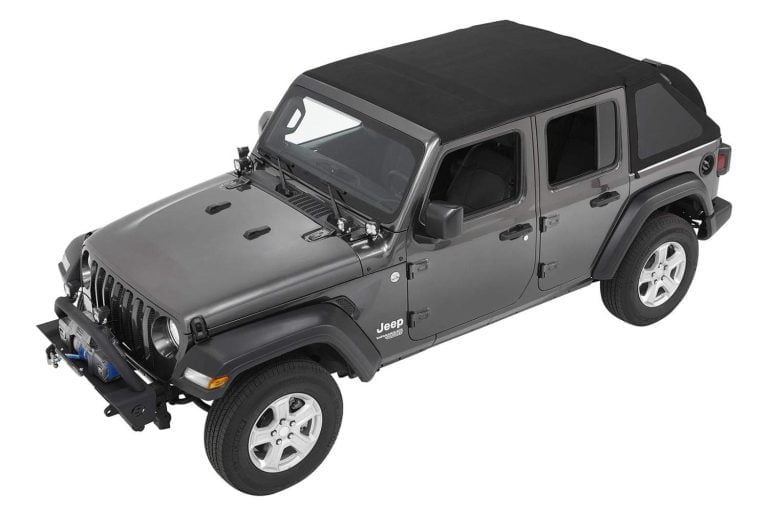
2-Door vs 4-Door Jeep Wrangler: Key Differences, Pros, Cons & Which to Buy


The 2-door Jeep Wrangler excels as a pure off-road machine with superior breakover angles and nimble trail handling, making it ideal for solo adventurers and weekend trail warriors.
The 4-door Wrangler Unlimited offers significantly more interior space, higher towing capacity, and family-friendly practicality while maintaining impressive off-road capability.
Choose the 2-door if maximum off-road agility and lower cost matter most. Pick the 4-door if you need rear passenger comfort, cargo space for gear, or plan to use your Wrangler as a daily driver. Both configurations share identical powertrain options and core Jeep DNA, but serve distinctly different lifestyles.
Overview of 2-Door Jeep Wrangler
The 2-door Jeep Wrangler represents the purest expression of Jeep’s off-road heritage, maintaining the compact dimensions and agile character that made the original CJ-series legendary. At 166.8 inches long with a 95.4-inch wheelbase, the 2-door prioritizes maneuverability over passenger space. This shorter wheelbase translates to a tighter turning radius and superior breakover angle, allowing it to navigate technical terrain that might challenge longer vehicles.
Weighing approximately 400 pounds less than its 4-door sibling, the 2-door Wrangler offers a more direct connection between driver and machine. The lighter curb weight enhances acceleration and reduces stress on drivetrain components during aggressive off-road use. However, this compact design comes with trade-offs in interior space and cargo capacity.
The rear seats in a 2-door Wrangler are best described as occasional-use, suitable for short trips or small children rather than adult passengers on long journeys. Behind the rear seats, cargo space measures just 17 cubic feet with seats up, though this expands to 72 cubic feet with seats folded—identical to the 4-door’s maximum capacity.
History and Availability
The 2-door configuration has remained largely unchanged since the JK generation launched in 2007, preserving the classic Wrangler proportions while incorporating modern safety and comfort features. Available across most trim levels from Sport to Rubicon, the 2-door serves as the entry point into Wrangler ownership with lower starting prices than comparable 4-door models.
Overview of 4-Door Jeep Wrangler (Unlimited)
The 4-door Jeep Wrangler Unlimited extends the classic Wrangler formula by 21.6 inches in overall length, creating a more practical vehicle without sacrificing core off-road capability. At 188.4 inches long with a 118.4-inch wheelbase, the Unlimited strikes a balance between trail prowess and real-world usability that has made it the more popular choice among buyers.
This extended platform provides genuine rear-seat space for adult passengers, with 35.7 inches of rear legroom compared to the 2-door’s cramped quarters. The longer wheelbase also contributes to improved highway stability and a smoother ride quality, making the 4-door more comfortable for daily driving and long-distance travel.
The 4-door’s additional length primarily benefits interior volume rather than cargo capacity. While maximum cargo space remains identical at 72 cubic feet with all seats folded, the Unlimited offers 31 cubic feet behind the rear seats—nearly double the 2-door’s capacity. This makes the 4-door significantly more practical for hauling gear, groceries, or luggage without having to fold the seats.
Key Model Generations
The Unlimited nameplate debuted during the TJ generation (2004-2006) as a stretched 2-door before evolving into a true 4-door with the JK generation. The current JL generation, launched in 2018, refined the formula with improved aerodynamics, advanced technology, and available hybrid powertrains while maintaining the distinctive Unlimited proportions that define modern Wrangler versatility.
Head-to-Head: Dimensions and Interior Space
The dimensional differences between 2-door and 4-door Wranglers extend beyond simple length measurements, affecting everything from parking convenience to passenger comfort. Understanding these variations helps buyers align their choice with intended use.
| Dimension | 2-Door | 4-Door Unlimited |
|---|---|---|
| Overall Length | 166.8 inches | 188.4 inches |
| Wheelbase | 95.4 inches | 118.4 inches |
| Width | 73.8 inches | 73.8 inches |
| Height | 70.9 inches | 70.9 inches |
| Rear Legroom | 35.1 inches | 38.3 inches |
| Cargo (seats up) | 17.5 cu ft | 31.7 cu ft |
| Cargo (seats down) | 72.4 cu ft | 72.4 cu ft |
The 2-door’s compact footprint makes it easier to park in tight spaces and navigate narrow trails, while the 4-door’s additional length provides meaningful interior volume gains. Front-seat accommodations remain identical between configurations, with generous headroom and shoulder space for occupants up to 6’4″ tall.
Rear-seat differences prove most dramatic. The 2-door’s rear bench sits upright with minimal legroom, making it suitable primarily for children or short trips. The 4-door provides adult-appropriate seating with reasonable comfort for passengers up to average height, though the upright seating position still favors shorter journeys compared to traditional SUVs.
Storage solutions vary between configurations as well. The 4-door offers additional interior cubbies and door pockets, while both models feature removable rear seats for maximum cargo flexibility. For official specifications, consult Jeep’s Wrangler specs page for the most current measurements.
Off-Road Performance and Handling
Off-road capability represents the Wrangler’s core mission, and the dimensional differences between 2-door and 4-door configurations create distinct advantages for each model. While both share identical drivetrain options, suspension components, and ground clearance, their wheelbase variations affect approach angles and maneuverability.
The 2-door Wrangler’s shorter wheelbase provides a superior breakover angle of 22.6 degrees compared to the 4-door’s 20.4 degrees. This 2.2-degree advantage proves meaningful when cresting sharp ridges or navigating steep terrain transitions. The shorter overhang also reduces the risk of high-centering on obstacles, allowing more aggressive line choices on technical trails.
Approach and departure angles remain nearly identical between configurations (44.3° approach for 2-door vs. 44.4° for 4-door), as both models share similar front and rear overhangs. Ground clearance of 10.8 inches and 30-inch water fording capability match across the lineup, ensuring comparable performance in most situations.
However, the 4-door’s longer wheelbase provides stability advantages at highway speeds and during high-speed desert running. The additional weight between axles reduces the tendency for light-weight bouncing over washboard surfaces, while the longer contact patch improves traction distribution on loose surfaces.
Both configurations benefit from identical available features, including locking differentials, disconnecting sway bars, and rock rails. For enhanced protection during serious off-road use, consider upgrading to best Jeep Wrangler rock rails designed for your specific configuration. Suspension modifications using best Jeep Wrangler shocks can further optimize performance for either wheelbase length.
Fuel Economy, Towing, and Payload
Despite their dimensional differences, 2-door and 4-door Wranglers deliver nearly identical fuel economy figures thanks to shared powertrains and similar aerodynamic profiles. The current lineup offers three engine options across both configurations, with EPA-rated fuel economy data showing minimal variation between wheelbases.
| Specification | 2-Door | 4-Door Unlimited |
|---|---|---|
| V6 City/Highway MPG | 17/25 | 17/25 |
| Turbo 4-Cyl City/Highway | 22/24 | 22/24 |
| Towing Capacity | 2,000 lbs | 3,500 lbs |
| Payload Capacity | 1,043 lbs | 1,050 lbs |
Towing capacity represents the most significant capability difference between configurations. The 4-door’s 3,500-pound rating enables pulling small travel trailers, boat trailers, or utility trailers, while the 2-door’s 2,000-pound limit restricts towing to lightweight cargo or small watercraft. This difference stems from the longer wheelbase providing better stability under load rather than powertrain limitations.
Payload capacities remain nearly identical, as both models share similar suspension components and GVWR ratings. The slight advantage for the 4-door reflects structural reinforcement in the longer frame rather than meaningful real-world differences for most users.
For optimal tire selection to complement either configuration’s capabilities, explore options for best tires for Jeep Wrangler that balance fuel economy with off-road traction requirements.
Price Positioning and Value
The 2-door Wrangler serves as the value-oriented entry point into the Wrangler lineup, with starting prices typically $3,000-$5,000 lower than equivalent 4-door trim levels. This price advantage makes the 2-door attractive for budget-conscious buyers seeking authentic Jeep capability without premium pricing.
However, the 4-door’s higher initial cost often proves justified by increased utility and stronger resale value retention. Market data indicates 4-door Wranglers maintain slightly better resale percentages due to broader appeal among used buyers, particularly families seeking practical off-road vehicles.
Trim level availability remains consistent between configurations, from base Sport models through premium Rubicon 392 variants. The 2-door’s lower entry cost allows buyers to access higher trim levels for the same budget as a base 4-door, potentially providing better feature content per dollar spent.
Insurance costs typically favor the 2-door due to lower initial value and reduced theft risk, though the differences rarely exceed $10-20 per month. Maintenance costs remain identical between configurations, as both share powertrain and suspension components requiring similar service intervals.
Features and Customization Options
Factory feature availability remains largely identical between 2-door and 4-door Wranglers, with both configurations offering the same engine options, transmission choices, and technology packages. Differences emerge primarily in convenience features that leverage the 4-door’s additional interior space.
The 4-door provides more interior storage solutions, additional USB ports, and rear-seat entertainment options unavailable in the 2-door. Climate control effectiveness also benefits from the 4-door’s larger cabin volume, with rear vents helping distribute conditioned air more evenly.
Customization potential varies significantly between configurations. The 4-door’s longer roofline better accommodates roof racks for soft tops, while its increased payload supports heavier accessories like roof top tents for overlanding adventures.
Door removal remains equally simple on both models, though the 4-door requires removing four doors versus two, increasing setup time for doorless driving. Both configurations benefit from doors-off mirrors for safe open-air operation.
Aftermarket support favors the 4-door slightly due to higher sales volumes, though both configurations enjoy extensive modification options from major manufacturers. Rock sliders, bumpers, and lift kits remain available for both wheelbases, with some manufacturers offering wheelbase-specific designs optimized for each configuration’s proportions.
Real-World Use Cases and Buyer Recommendations
The choice between 2-door and 4-door Wrangler configurations ultimately depends on individual priorities and usage patterns. Understanding typical use cases helps buyers align their selection with long-term satisfaction.
Choose the 2-door if you:
- Prioritize maximum off-road agility and technical capability
- Primarily drive solo or with one passenger
- Want the lowest possible purchase price
- Prefer traditional Wrangler proportions and styling
- Plan to use the Wrangler primarily for recreation rather than daily transport
Choose the 4-door if you:
- Need regular rear passenger seating for adults
- Require cargo space without folding seats
- Plan to tow trailers or boats regularly
- Intend to use the Wrangler for daily driving duties
- Want maximum versatility from a single vehicle
Family buyers almost universally prefer the 4-door for its practical advantages, while serious off-road enthusiasts often gravitate toward the 2-door’s pure focus on capability over comfort. However, many buyers successfully use 4-door Wranglers for serious trail running, accepting minimal capability compromises for significant daily usability gains.
Consider also that Jeep Wrangler reliability remains consistent between configurations, as both share identical powertrains and major component designs.
Comparison Table: Specs at a Glance
| Feature | 2-Door | 4-Door Unlimited |
|---|---|---|
| Dimensions | ||
| Length | 166.8″ | 188.4″ |
| Wheelbase | 95.4″ | 118.4″ |
| Capacity | ||
| Seating | 4 passengers | 5 passengers |
| Cargo (seats up) | 17.5 cu ft | 31.7 cu ft |
| Towing | 2,000 lbs | 3,500 lbs |
| Off-Road Angles | ||
| Approach | 44.3° | 44.4° |
| Breakover | 22.6° | 20.4° |
| Departure | 35.6° | 35.6° |
| Performance | ||
| Ground Clearance | 10.8″ | 10.8″ |
| Water Fording | 30″ | 30″ |
| Curb Weight | ~4,200 lbs | ~4,600 lbs |
FAQ
Which Wrangler is better for off-roading?
The 2-door offers superior breakover angles and lighter weight for technical rock crawling, while the 4-door provides better stability for high-speed desert running. Both excel off-road but in different scenarios.
Can adults sit comfortably in a 2-door Wrangler’s back seat?
Adults can fit in the 2-door’s rear seats, but comfort is limited on trips longer than 30 minutes. The seating position is upright with minimal legroom, making it suitable primarily for children or short journeys.
Is fuel economy different between configurations?
Fuel economy ratings are nearly identical between 2-door and 4-door models with the same engine. The weight difference is minimal compared to aerodynamic and powertrain factors.
Which holds its value better?
Both configurations maintain strong resale values, with the 4-door showing slightly better retention due to broader market appeal among used buyers seeking practical SUVs.
Can I remove the doors on both models?
Yes, door removal is standard on both configurations. The 2-door requires removing two doors, while the 4-door needs four doors removed, but the process is identical.
Which is more reliable?
Reliability is identical between configurations as they share the same powertrains, suspension components, and manufacturing processes. Any reliability concerns affect both models equally.
Is the 4-door much more expensive?
The 4-door typically costs $3,000-$5,000 more than equivalent 2-door trim levels, though this varies by specific options and incentives.
Final Verdict
The 2-door vs 4-door Jeep Wrangler decision ultimately reflects your priorities between pure capability and practical versatility. The 2-door excels as a weekend warrior’s tool, offering maximum off-road agility, lower cost, and classic Wrangler character. Its superior breakover angles and lighter weight make it the choice for serious trail enthusiasts who prioritize capability over comfort.
The 4-door Unlimited transforms the Wrangler into a genuinely versatile daily driver without sacrificing core off-road competence. Its ability to seat adult passengers comfortably, carry cargo with seats up, and tow meaningful loads makes it suitable for buyers seeking one vehicle for all duties.
For most buyers, the 4-door’s practical advantages outweigh its minor off-road compromises and higher cost. However, the 2-door remains the purist’s choice for those who prioritize maximum capability and don’t need regular rear seating. Either choice delivers authentic Jeep DNA and impressive capability—the decision comes down to matching configuration strengths with your intended use patterns.