How to Restore Jeep Wrangler Fenders (Faded, Rusty & Dented)

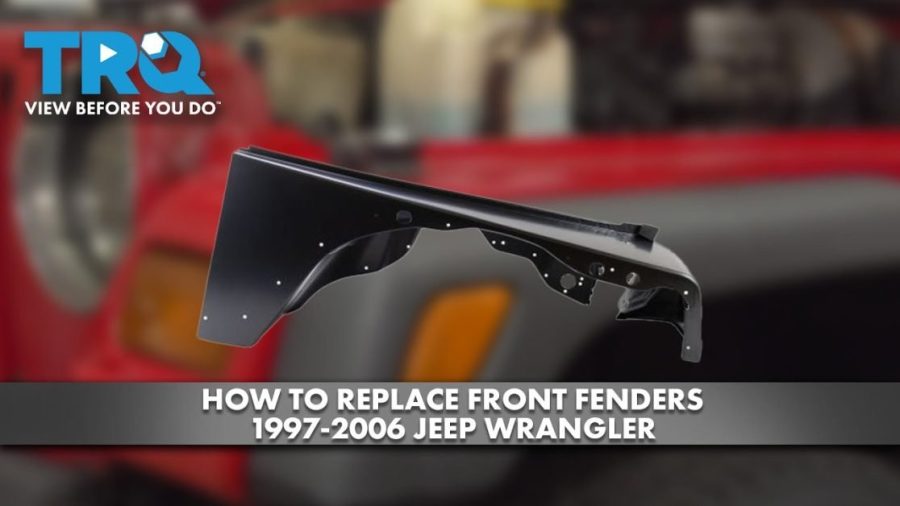
Restoring Jeep Wrangler fenders depends on your damage type: faded black plastic on JK/JL models responds to a heat gun or UV protectant, while rusted steel fenders on TJ/YJ models require sanding, rust converter, and paint. The right method saves you $200–$1,500 vs. outright replacement, and most fixes are fully DIY.
This guide covers every fender damage scenario in a single place: UV fade, rust, dents, cracks, and full replacement — with model-specific steps, product recommendations, and cost comparisons for 2026.
Table of Contents
- Identify Your Damage Type First
- Restore Faded Black Plastic Fenders (JK / JL)
- Repair Rusty Steel Fenders (TJ / YJ)
- Fix Dents and Cracks on Wrangler Fenders
- Fender Replacement: When Restoration Isn’t Enough
- Long-Term Protection to Prevent Fender Damage
- Frequently Asked Questions
Identify Your Damage Type First
Before buying products or tools, confirm what you’re actually dealing with. The Jeep Wrangler has used two fundamentally different fender materials across generations, and each demands a completely different fix.
| Generation | Years | Fender Material | Most Common Issue |
|---|---|---|---|
| YJ | 1987–1995 | Steel (painted) | Surface rust, paint peel |
| TJ | 1997–2006 | Steel (painted) | Rust perforation, dents |
| JK | 2007–2018 | ABS plastic (black) | UV fade, gray chalking |
| JL | 2018–present | ABS plastic (black) | UV fade, scuffs |
Quick damage checklist:
- Gray/chalky surface, no cracking → UV fade on plastic → heat gun or protectant
- White oxidation + brittle feel → deep UV degradation → protectant or paint
- Orange surface staining on steel → surface rust → sand + rust converter + paint
- Holes, deep pitting, flaking metal → rust perforation → patch weld or replace
- Rounded indentations with no paint damage → dent → PDR (paintless dent repair)
- Hairline cracks or splits in plastic → stress fractures → fiberglass repair
Getting this diagnosis right before spending money is the step most guides skip. If you’re dealing with fender flare damage specifically, rather than the fender body itself, our guide on best Jeep JK fender flares covers replacement options with fitment comparisons.
Restore Faded Black Plastic Fenders (JK / JL)
Black plastic fenders on the JK and JL fade because ABS plastic is made from polyethylene (PE) and polypropylene (PP) — both break down under UV exposure, road salt, and heat, causing oils within the plastic to evaporate and leaving a gray, chalky surface.
There are three effective restoration methods, in order of durability:
Method 1 — Heat Gun (Best for Moderate Fading)
The heat gun forces oils inside the plastic back to the surface, restoring the deep black color.
What you need: Heat gun (~$30–$60), microfiber cloths, and all-purpose cleaner.
Steps:
- Wash fenders thoroughly with an all-purpose cleaner and dry completely. Any embedded dirt will cook into the plastic under heat.
- Set the heat gun to medium (300–500°F) and hold it 4–6 inches from the surface.
- Move in slow, continuous passes — never stay on one spot longer than 2–3 seconds. The plastic color visibly deepens as oils surface.
- Let the fender cool fully (15–20 minutes) before touching.
- Apply 303 Aerospace Protectant immediately after cooling to seal restored oils and block UV re-damage.
Cost: ~$30–$80 total. Longevity: 3–6 months before reapplication is needed.
⚠ Caution: A heat gun reaches ~1,000°F at the nozzle — too close or too slow, and you will bubble or melt the plastic permanently. Test on a hidden section first.
Method 2 — Plastic Restorer Product (Easiest, Best for Mild Fade)
Products like 303 Aerospace Protectant, CarGuys Plastic Restorer, or Torque Detail Plastic Restorer use nano-technology to permeate and reconstitute plastic without heat.
Steps: Clean and dry surface → spray or wipe product onto fender → let sit 60 seconds → buff off excess with microfiber.
Cost: $15–$35 per product. Longevity: 2–4 months. Best used as a follow-up to the heat gun method for maximum results.
Method 3 — Paint or Plasti-Dip (Severe/Long-Term Fade)
When fading has gone beyond oil depletion — years of unprotected exposure leaving brittle, cracked texture — painting is the only lasting fix.
- Low-gloss black trim paint (Rust-Oleum or similar): Clean → rub with isopropyl alcohol → spray 2 coats in back-and-forth motions, holding can 10–12 inches from surface. Lasts 2–3 years.
- Plasti-Dip: Removable rubber coating, cheaper than paint. Apply 3–4 thin coats. Lasts up to 3 years and peels off cleanly if you change your mind.
- Bedliner spray (Raptor/Line-X): Toughest option. Lasts the vehicle’s lifetime. Adds texture, fully covers deep fade, and minor surface scratches.
Once your plastic fenders are restored, the approach for matching or upgrading fender flares is covered in our Jeep Wrangler JK Bushwacker fender flares guide.
Repair Rusty Steel Fenders (TJ / YJ)
Steel fenders on the TJ and YJ rust from the inside out — road salt packs into the inner fender lip, holds moisture against the metal, and causes rust perforations within 10–15 years in northern climates.reddit+1
Surface rust (no holes):
- Sand the affected area with 80-grit, then 150-grit sandpaper to bare metal.
- Apply rust converter (POR-15 or Rust-Oleum Rust Reformer) — chemically neutralizes iron oxide and creates a hard polymer base. Let it cure for 24 hours.
- Apply self-etching primer, then 2 coats of body-matched paint.
- Wet-sand the final coat with 400-grit, then buff.
Rust-through (holes, perforations):
- DIY patch welding: Cut out rusted section → weld in sheet metal patch → grind smooth → prime and paint. Requires MIG welder and body filler for shaping ($200–$500 in materials).
- Pro body shop repair: $500–$1,500 per fender, depending on severity and region.reddit+1
- Replacement fender (cheapest for severe rust): Used steel TJ fender from salvage: $80–$200. Aftermarket replacement: $150–$300 each.
Cost comparison:
| Approach | DIY Cost | Pro Shop Cost |
|---|---|---|
| Surface rust treatment | $40–$80 | $200–$400 |
| Patch weld (small hole) | $100–$200 | $400–$800 |
| Full fender replacement | $150–$350 | $500–$1,200 |
Knowing how to remove fenders before you start saves time on all repair approaches — our step-by-step guide on how to remove Jeep JK fenders walks through the bolt-off process for both JK and TJ.
Fix Dents and Cracks on Wrangler Fenders
Dents (Steel Fenders — TJ/YJ)
Small-to-medium dents with no paint damage respond well to paintless dent repair (PDR). A professional PDR tech uses precision rods to push the dent out from behind — no sanding, no paint, no filler.
- DIY PDR kits: $30–$80. Effective for dents under 3 inches with smooth, accessible backs.
- Professional PDR: $75–$200 per dent, depending on size and location.
- When PDR won’t work: Dents with sharp creases, paint cracks, or located near a fender edge require body filler, blocking, and repaint — cost $300–$700 at a body shop.
Cracks (Plastic Fenders — JK/JL)
Plastic fenders crack from trail impacts, improper jack placement, or extreme cold. Small cracks can be repaired without replacement:
- Drill a small stop-hole at each end of the crack to prevent spreading.
- Clean the crack interior with isopropyl alcohol.
- Apply plastic repair adhesive (3M panel adhesive or bumper repair kit) from behind.
- Sand flush from the front and finish with black trim paint or Plasti-Dip.
For cracks longer than 6 inches or through-and-through breaks, replacement is more cost-effective than repair. For styling options alongside repairs, Jeep JK fender flares with LED lights are a popular upgrade when the factory fender is already coming off.
Fender Replacement: When Restoration Isn’t Enough
Replacement makes more sense than restoration when:
- Rust perforation covers more than 30% of the fender surface
- Plastic cracks are longer than 6 inches or structurally compromise the mounting points
- Fading is too severe for heat or protectant methods to recover
- You’re upgrading to a wider fender flare for larger tires
Replacement cost guide:
| Fender Type | OEM (New) | Aftermarket | Used/Salvage |
|---|---|---|---|
| JK front fender (plastic) | $280–$450 ea | $120–$250 ea | $60–$150 ea |
| JL front fender (plastic) | $350–$550 ea | $180–$320 ea | $80–$180 ea |
| TJ front fender (steel) | $200–$380 ea | $90–$200 ea | $60–$150 ea |
Installation time: 45–90 minutes per fender. Fenders on all Wrangler generations bolt directly on — no welding needed for standard replacements. Remove the wheel arch liner, disconnect any marker light wiring, unbolt the 6–8 mounting bolts, and reverse for installation.
For a detailed removal walkthrough before installing new fenders, our guide on how to paint Jeep Wrangler fender flares covers the prep, paint-matching, and installation sequence for a clean finish.
Long-Term Protection to Prevent Fender Damage
The best restoration is one you never need to do. These habits protect both plastic and steel fenders:wranglerjkforum+1
- Rinse after every off-road trip — road salt and mud pack into fender lips and accelerate both rust and UV degradation
- Apply 303 Aerospace Protectant every 60–90 days on plastic fenders — blocks UV rays and replenishes plasticizers
- Wax steel fenders twice a year — a hard carnauba wax layer stops moisture from reaching bare metal
- Inspect inner fender liners annually — a cracked or missing liner exposes the inner fender metal to direct salt and debris
- Avoid silicone-based protectants — silicone causes plastic to appear shiny temporarily, but draws out oils faster long-term, accelerating fade
- Park in shade or use a cover — parking in direct sun accelerates UV degradation of plastic fenders significantly faster than shaded storage
For more on protecting Jeep exterior components and keeping your Wrangler trail-ready, are Jeep Wranglers reliable? Which model years and components require the most proactive attention?
Frequently Asked Questions
How do I restore faded black plastic fenders on a Jeep Wrangler JK?
The most effective approach is a two-step process: use a heat gun (held 4–6 inches from the surface, moving constantly) to bring oils back to the surface, then immediately seal with 303 Aerospace Protectant or a dedicated plastic restorer product. Results last 3–6 months per application.
What is the best product to restore Jeep Wrangler fenders?
303 Aerospace Protectant is the most consistently recommended product in Jeep forums for maintenance and mild fade. For deeper restoration, Torque Detail Plastic Restore uses nano-penetration technology and outperforms silicone-based sprays for longevity. For severe fade, low-gloss black trim paint or Plasti-Dip provides a longer-lasting fix.
Can I use a heat gun on painted Jeep fenders?
Only on unpainted ABS plastic fenders (JK/JL). Never use a heat gun on painted steel fenders (TJ/YJ) — the heat will bubble and crack the paint finish. On painted surfaces, use chemical rust converters and standard body shop paint repair methods.
How much does it cost to restore Jeep Wrangler fenders professionally?
Professional plastic fender restoration (clean + heat + protectant) at a detailing shop: $100–$300 per vehicle. Rust repair on steel fenders: $500–$1,500 per fender at a body shop, depending on severity. Full fender replacement with paint match at a body shop: $500–$1,200+ per fender, including labor.
How long does a heat gun fender restoration last?
The color restoration from a heat gun alone lasts approximately 1–3 months before UV fade returns. Following up with 303 Aerospace Protectant extends results to 3–6 months. For a permanent-style fix, finish with Plasti-Dip or bedliner spray after the heat treatment.
Should I restore or replace my Jeep Wrangler fenders?
Restore if: UV fading only, surface rust without holes, or small dents/cracks under 6 inches. Replace if: rust perforations cover more than 30% of the fender, plastic cracks are structural, or you need wider fender coverage for larger off-road tires. Replacement is often cheaper than extensive body work on severely damaged fenders.
Where can I find more Jeep fender options and upgrades?
For JK owners looking beyond stock, best Jeep JK fender flares and Jeep JK fender flares with LED lights cover the top aftermarket upgrades with fitment specs and installation tips.