10 Best Jeep Wrangler Modifications for Style, Performance, and Trail Readiness

The Jeep Wrangler model overview shows just how capable this truck is straight from the factory. But the real magic starts after you drive it off the lot.
No other vehicle on the market accepts modifications as willingly as the Wrangler. The aftermarket is enormous, parts fit across multiple generations, and most mods deliver genuine, measurable improvements rather than just visual flair. If you’re staring at your new JL or JK wondering where to start, this list ranks the ten best Jeep Wrangler modifications by real-world impact — not just popularity.
We’ve organized each mod around what it actually does for you: trail capability, daily comfort, protection, or all three. You’ll also find honest tradeoffs, so you can spend smarter. According to aftermarket modification resources from SEMA, the Jeep Wrangler consistently ranks as one of the most modified vehicles in America — and for good reason.
1. Lift Kit — Best First Jeep Wrangler Upgrade for Trail Capability
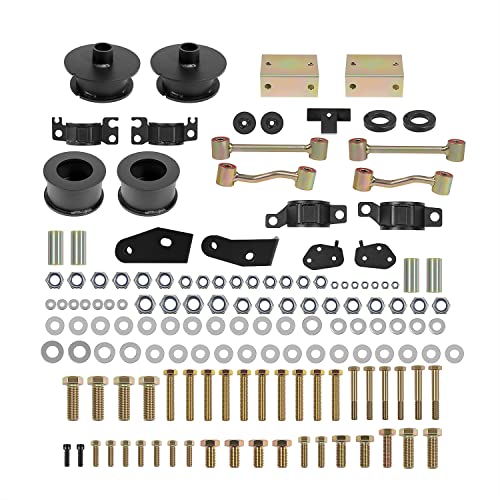
A lift kit is the single most transformative modification you can make to a Wrangler. It’s the foundation that unlocks every other major off-road upgrade.
Key Features
- Adds 2–4 inches of ground clearance, opening room for 33–37-inch tires
- Improves approach, departure, and breakover angles for rocky terrain
- Coil lift kits offer better flex and articulation than leveling spacers
Pros and Cons
Pros
- Dramatically increases trail capability and obstacle clearance
- Creates a more aggressive stance that improves curb appeal
- Allows fitment of larger, more capable all-terrain or mud-terrain tires
Cons
- May require an alignment, new control arms, and track bar adjustments
- Can worsen highway ride quality if paired with stiff aftermarket springs
Pricing
Budget spacer lifts start at a few hundred dollars; quality suspension lift kits range from the mid-hundreds to well over a thousand, plus labor.
Our Verdict
A lift kit is the right first investment for anyone planning to run larger tires or tackle real trails. Read our dedicated guide on the best lift kit for a Jeep Wrangler to compare coil lift vs leveling options by height and budget. For shock absorber pairing, check out best Jeep Wrangler shocks reviews before you buy.
2. All-Terrain or Mud-Terrain Tires — Biggest Capability Gain Per Dollar
Tires are the single contact point between your Wrangler and the ground. Better tires fix more problems than almost any other modification.
Key Features
- All-terrain tires balance traction, road manners, and tread life for mixed use
- Mud-terrain tires excel on soft, loose, or rocky surfaces but wear faster on pavement
- Sizing up from stock 255/75R17 to 285 or 315 adds bite and presence
Pros and Cons
Pros
- Immediately improves grip on dirt, gravel, rock, and wet pavement
- Larger diameter tires raise ground clearance even without a lift
- Visual impact is significant — tires transform the Wrangler’s stance
Cons
- Larger tires cause speedometer error and require regearing to restore power
- Mud terrains create noticeable road noise above 60 mph
Pricing
All-terrain sets run from moderate to premium depending on brand; mud-terrains typically cost more per tire due to compound and construction.
Our Verdict
Start here before anything else. Explore the best all terrain tires for Jeep Wrangler for a full breakdown by driving style. Also check how much are Jeep Wrangler tires to budget accurately before you shop.
3. Bumpers and Recovery Mounts — Protection That Pays Off
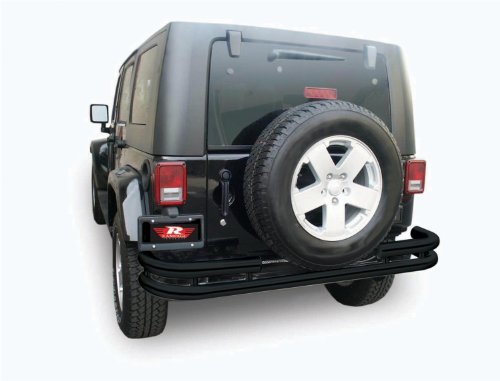
Stock Wrangler bumpers are plastic. That’s fine for parking lots.
Key Features
- Steel front bumpers improve approach angle by removing factory plastic valance
- Winch-ready bumper designs include a receiver plate and wiring channel
- Rear bumpers add hitch points and protect against rock strikes during reversal
Pros and Cons
Pros
- Steel bumpers withstand trail impacts that destroy OEM plastic
- Winch-ready designs let you add a winch without a separate mounting plate
- Dramatically improve the Wrangler’s aggressive visual identity
Cons
- Steel bumpers add 50–80 lbs per end, affecting fuel economy slightly
- Full-width designs can reduce approach angle if they hang too low
Pricing
Steel tube bumpers start at a few hundred dollars; full-featured winch-ready bumpers with D-ring mounts run significantly higher. If you want to understand pricing better, our guide on how much is a Jeep Wrangler bumper breaks it down clearly.
Our Verdict
A steel front bumper is the gateway to a winch and a full recovery setup. It’s a protection and function upgrade that pays for itself the first time a tree branch or boulder makes contact.
4. Winch and Recovery Gear — The Safety Mod You’ll Thank Yourself For

Here’s the truth about off-roading: getting stuck isn’t a failure. It’s inevitable.
Key Features
- 9,500–12,000 lb-rated winches handle most JL and JK recovery situations
- Synthetic rope is lighter and safer than steel cable under load
- Recovery kits should include straps, shackles, a tree saver, and gloves
Pros and Cons
Pros
- Lets you self-recover without waiting for another vehicle
- Synthetic winch rope won’t recoil dangerously if it snaps under tension
- Doubles as a tool to help pull out other stuck vehicles
Cons
- Requires a compatible winch-ready bumper for proper mounting
- Learning proper winch technique takes time — improper use causes damage
Pricing
Quality winches from brands like Warn or Smittybilt range from mid-hundreds to over a thousand dollars; full recovery kit bundles add to that cost.
Our Verdict
Recovery gear beats appearance mods every single time if your Wrangler sees real trails. Bookmark Jeep’s off-road driving tips before your first serious run — knowing how to read terrain reduces how often you’ll need the winch in the first place.
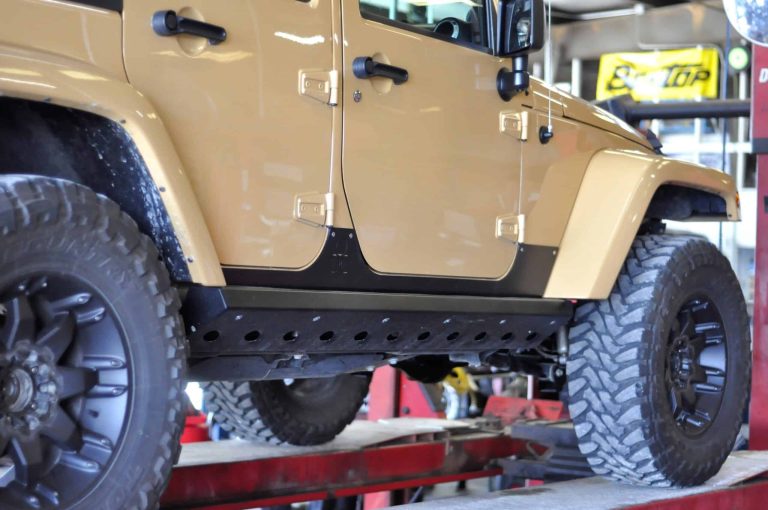
5. Rock Sliders and Rock Rails — Side Protection That Actually Works
Most people don’t realize how exposed the Wrangler’s rocker panels are until one gets destroyed on a ledge.
Key Features
- True rock sliders contact the ground and transfer side impact force to the frame
- Rock rails provide lighter protection and double as a step for entry
- Tube-style sliders add minimal weight but absorb serious hits
Pros and Cons
Pros
- Prevent costly body and rocker panel damage on rocky trails
- Best Jeep Wrangler rock rails mount to the frame, not just the body, for real strength
- Useful as a step for loading gear and getting in when the door is narrow
Cons
- Full rock sliders reduce ground clearance slightly on the sides
- Installation on some JL models requires minor trimming of factory plastic
Pricing
Rock rails start at a few hundred dollars; heavy-duty frame-mounted sliders with full protection cost more and often require professional installation.
Our Verdict
This is a must-have for anyone running trails with significant side exposure. Don’t mistake decorative side steps for true rock sliders — the difference matters when you’re hanging off a ledge.
6. Off-Road Lighting — See the Trail Before It Sees You

Night wheeling is a different experience entirely. Factory headlights simply aren’t built for it.
Key Features
- 40–50 inch LED light bars mount on the hood, roof, or bumper for wide flood coverage
- Spot and flood pod lights improve targeted visibility for specific obstacles
- Rock lights illuminate the undercarriage and sides during technical crawling
Pros and Cons
Pros
- LED technology draws far less current than halogen equivalents
- Rock lights improve obstacle visibility and add trail-ready aesthetics
- Pod lights on A-pillars or bumpers are easy to mount and aim
Cons
- Roof-mounted light bars are street-illegal when aimed forward in most states — always check local laws
- Cheap light bars degrade quickly from vibration and moisture exposure
Pricing
Quality LED pod sets start around a hundred dollars; larger light bars and full lighting systems range into the mid-hundreds to higher depending on brand and output.
Our Verdict
Start with a quality pod light set before committing to a full bar. For terrain-level visibility, our guide on best Jeep Wrangler rock lights covers every option worth buying.
7. Fender Flares and Tire Coverage — Style, Compliance, and Protection
Running wider tires without appropriate fenders isn’t just ugly — it’s often illegal.
Key Features
- Wider flares accommodate tires up to 315mm without cutting fenders
- Flat-style flares (like Poison Spyder or EAG) maximize tire coverage and look aggressive
- OEM-style replacements maintain the factory look while covering wider rubber
Pros and Cons
Pros
- Legally required in most states when tires extend beyond the body line
- Protect paint, glass, and other vehicles from mud and debris spray
- Bolt-on installation on JK and JL models requires no cutting
Cons
- Aftermarket flares may require minor adjustment for perfect gap fitment
- Wide flat-style flares trap mud against the body if not properly sealed
Pricing
Entry-level flare sets start at a few hundred dollars; premium tube-style or aluminum flares cost significantly more. Our guide on best Jeep Wrangler fenders compares all the top styles.
Our Verdict
If you’ve already upgraded to larger tires, fender flares aren’t optional — they’re a requirement. For those replacing damaged OEM flares, check out our guide on Jeep Wrangler fender flares replacement OEM for direct-fit options across JK and JL generations.
8. Roof Rack or Cargo Solutions — Solve the Wrangler’s Storage Problem
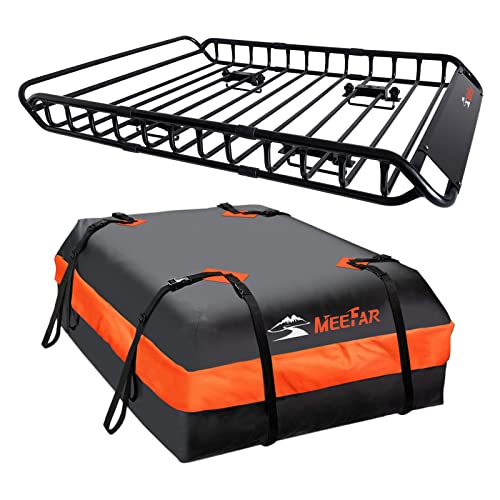
Wranglers are short inside. That’s the tradeoff for a removable roof and doors.
Key Features
- Roof racks expand vertical storage without touching interior space
- Modular systems from Rhino-Rack and Gobi allow accessory mounting on the rack itself
- Soft cargo bags provide overflow storage without adding permanent structure
Pros and Cons
Pros
- Essential for overlanding — adds room for recovery gear, camp equipment, and water
- Hard racks double as a mounting point for rooftop tents and lighting
- Gobi and Smittybilt racks are designed specifically for JK and JL roof dimensions
Cons
- Roof racks raise the center of gravity and increase wind resistance at highway speed
- A loaded rack adds significant noise at speeds above 55 mph without a fairing
Pricing
Entry-level cargo racks start at a few hundred dollars; modular overlanding systems with rails, fairing, and accessories reach into the mid-to-high hundreds or beyond.
Our Verdict
If you camp or overland, a roof rack is non-negotiable. Find the right setup in our roundup of the best Jeep Wrangler cargo racks. For those planning overnight adventures, the best Jeep Wrangler roof top tent guide pairs directly with this upgrade.
9. Floor Mats, Seat Covers, and Interior Protection — The Smart First Purchase
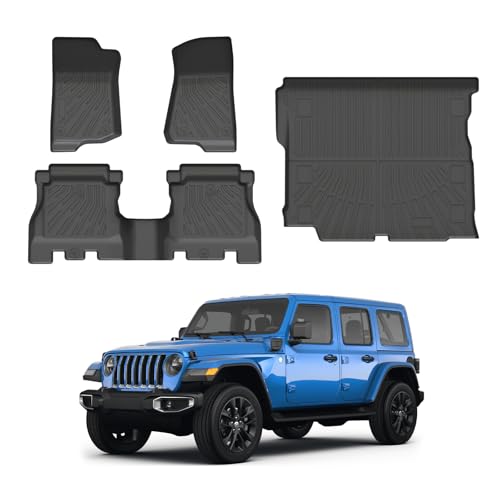
This is the modification most new owners skip. It’s the one they regret first.
Key Features
- Weathertech or Husky Liners rubber mats trap mud, water, and debris completely
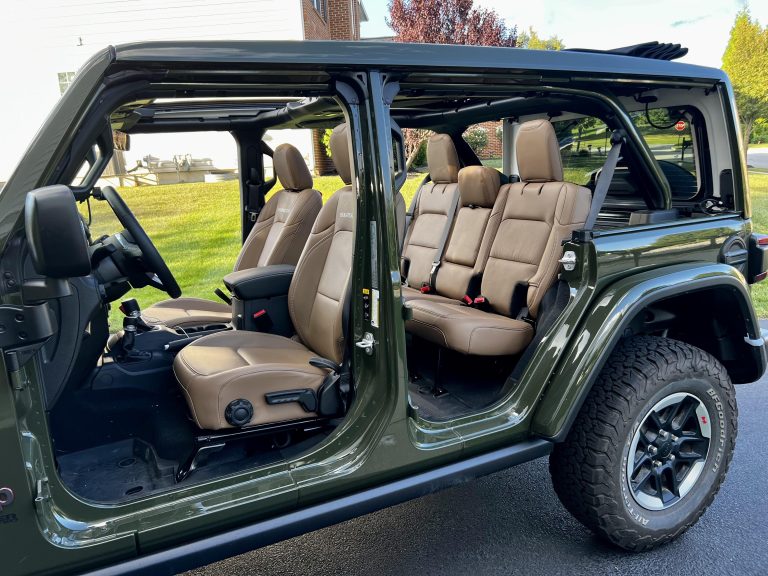
- Neoprene or ballistic nylon seat covers protect factory upholstery from UV, sweat, and grit
- Center console organizers prevent gear from rattling around on rough trails
Pros and Cons
Pros
- Protect the interior before it gets damaged — far cheaper than repair or replacement
- Improve resale value by keeping factory seats and flooring in clean condition
- Easy install, no tools required, and reversible if you sell the Wrangler
Cons
- Cheap floor mats shift underfoot and create a safety hazard
- Some aftermarket seat covers reduce airbag deployment efficiency — check compatibility
Pricing
Quality rubber floor mat sets start under a hundred dollars; full interior protection packages with mats and seat covers range higher depending on brand and coverage.
Our Verdict
Buy these the week you take delivery. They cost little and protect a lot. If you’re prepping for doorless summer driving, our guide on how to take Jeep Wrangler doors off is the next logical step for new owners.
10. Performance and Drivetrain Mods — Restore What Bigger Tires Take Away
Going bigger on tires without addressing the drivetrain is one of the most common Wrangler mistakes.
Key Features
- Regearing from the stock 3.73 ratio to 4.56 or 4.88 restores acceleration and towing after larger tire fitment
- Cold air intakes add 5–15 hp on the 3.6L Pentastar and improve throttle response
- Upgraded steering stabilizers eliminate the death wobble risk that builds with lift and larger tires
Pros and Cons
Pros
- Regearing is the most impactful drivetrain mod for lifted, large-tired Wranglers
- Intake and exhaust upgrades improve engine breathing and trail-worthy sound
- Steering upgrades dramatically improve handling and reduce fatigue on rough roads
Cons
- Regearing costs between $800–$2,000 per axle depending on shop and ratio
- Exhaust and intake modifications may affect emissions compliance in some states — check emissions compliance guidance before modifying
- Some performance mods void portions of the factory powertrain warranty — review vehicle safety guidance and your dealer terms
Pricing
Intake kits are relatively affordable in the low hundreds; regearing is a labor-intensive professional job; full performance builds can reach several thousand dollars across all components.
Our Verdict
Don’t touch performance mods until your lift and tires are sorted. Regearing is the priority once you’re running 35-inch tires or larger. For ongoing engine health, our guide on the best Jeep Wrangler oil filter keeps your engine protected as you push it harder. If you’re looking at cost-to-regear specifics, see how much does it cost to regear a Jeep Wrangler.
Jeep Wrangler Modification Comparison: Cost, Complexity, and Impact
| Modification | Cost Range | Install Difficulty | Real-World Impact |
|---|---|---|---|
| Lift Kit | $$–$$$$ | Medium–High | Very High |
| All-Terrain/MT Tires | $$–$$$ | Low | Very High |
| Steel Bumpers | $$–$$$ | Low–Medium | High |
| Winch + Recovery Gear | $$–$$$ | Low–Medium | Very High |
| Rock Sliders | $$–$$$ | Medium | High |
| Off-Road Lighting | $–$$$ | Low–Medium | Medium–High |
| Fender Flares | $–$$ | Low | Medium |
| Roof Rack | $$–$$$ | Low | Medium–High |
| Interior Protection | $ | Very Low | High (for resale) |
| Drivetrain/Performance | $$$–$$$$ | Very High | High (after big tires) |
Which Jeep Wrangler Modifications Should You Prioritize First?
Your mod order should match your goals. That’s the only rule that matters.
New daily-driver owners: Start with interior protection (floor mats, seat covers), then tires, then a lift if you want to clear larger rubber. These three cover 80% of the common ownership experience.
Trail-focused buyers: Tires and lift first, then bumpers and a winch. Rock sliders and lighting come next once you’ve identified your most common terrain challenges.
Overlanders: Roof rack and cargo solutions are critical from day one. Pair with a rooftop tent, recovery gear, and interior organization to turn your Wrangler into a capable base camp.
What to skip for now: Light bars, exhaust systems, and intake kits aren’t wrong choices — they’re just low priority until the core protection and capability mods are in place. Performance mods shine once your lift, tires, and regearing are sorted.
The Wrangler rewards a thoughtful mod ladder. Build protection first, capability second, and comfort third. You’ll spend less, enjoy more, and avoid reversing decisions later. For a broader look at what this platform can do, the best performance mods for Jeep Wrangler Unlimited guide is worth bookmarking for your next upgrade phase.