
Mini Cooper JB Plus Review: Plug-In Power Gains Worth The Money?

The Burger Motorsports JB Plus represents one of the simplest performance upgrades for Mini Cooper S and JCW models. This piggyback tuner promises 20 wheel horsepower and 30 lb-ft of torque gains, with installation taking under 30 seconds. No laptop required. No ECU flashing. Just plug it in and drive.
But does this $300 module deliver real performance? Can it improve your Mini without voiding your warranty? This review examines real-world results, the installation process, and whether the JB Plus makes sense for your Cooper.

credit: Youtube.com
What Is The JB Plus?
The JB Plus is a plug-and-play piggyback tuner that intercepts signals between your Mini’s mass airflow sensor and engine control unit. It modifies boost pressure, timing, and fueling to extract additional power while working with factory engine management systems rather than against them.
The device targets N18-equipped Minis from 2011-2015 and B38/B46/B48 engines from 2014 onward. Both Cooper S and John Cooper Works models benefit from the tune. The unit plugs directly into the MAF sensor connector with zero wiring, cutting, or permanent modifications.
Burger Motorsports positions the JB Plus as an entry-level option for owners wanting noticeable gains without complex installation or advanced tuning knowledge. The device sits below the more sophisticated JB4 in their product lineup, trading advanced features for simplicity and lower cost.
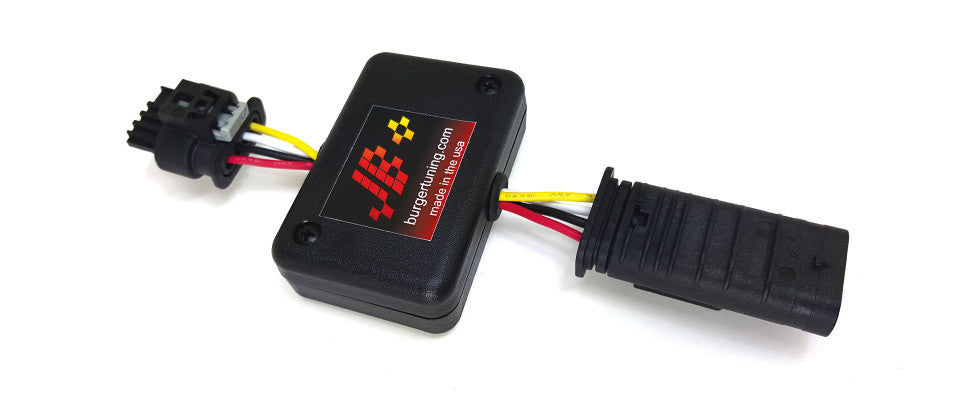
credit: burgertuning.com
Performance Gains: Real Dyno Numbers
Advertised gains claim 20 wheel horsepower and 30 lb-ft of torque. Actual dyno testing confirms these numbers hold up in practice.
A 2013 R55S with N18 engine showed 15 wheel horsepower and 20 lb-ft of torque gains on 93 octane. Stock runs produced 276 wheel horsepower, while JB Plus at default settings delivered 291 wheel horsepower. Torque jumped from 307 lb-ft to 327 lb-ft.
Another N18-equipped Cooper S recorded gains from stock 180 horsepower to approximately 200 horsepower at the crank with the JB Plus installed. Boost increased 2-4 psi over stock, depending on conditions and fuel quality.
The B48 engine in newer F56 Cooper S models sees larger gains—up to 30 wheel horsepower and 40 lb-ft of torque with 4.5 psi of additional boost. The newer platform responds more aggressively to the tune modifications.
Power delivery mimics the factory curve but is amplified. The JB Plus doesn’t fundamentally change how power builds—it maintains the stock surge above 3,000 rpm and taper after 5,000 rpm. You get more of what the engine already does rather than a transformed powerband.
Seat-of-the-pants feel improves noticeably. Third and fourth gear pulls feel stronger, highway passing becomes easier, and the car exhibits more urgency from throttle inputs. The difference isn’t neck-snapping, but it’s clearly perceptible.
Installation: Literally 30 Seconds
Installation requires zero tools and takes under one minute once you locate the MAF sensor. The process involves four steps.
Open the hood and wait five minutes for the engine control unit to sleep. Locate the mass airflow sensor at the top of the engine—a black connector with a retaining clip. Push the clip, unplug the factory connector, and insert it into the JB Plus female end. Plug the JB Plus male connector back into the MAF sensor. Done.
The F56 Cooper S places the MAF sensor behind the intake pipe, requiring you to remove the intake for access. This adds maybe two minutes to the process. The N18 engine positions the sensor more accessibly.
Removal takes the same time. Simply unplug the JB Plus and reconnect the factory harness. No traces remain that the device was installed. This matters for warranty concerns and dealer service visits.
A blue adjustment dial inside the unit allows fine-tuning from 0-100 percent boost increase. The default 3 o’clock position delivers 4 psi over stock—the sweet spot for 91-93 octane fuel. Lower settings reduce boost for 87 octane or conservative driving. Higher settings push boost further for premium fuel and aggressive use.
Fuel Economy: Unchanged During Normal Driving
The JB Plus doesn’t hurt fuel economy during typical driving. Multiple owners report identical or slightly improved MPG figures with the tune installed.
One owner averaged 33 mpg on a highway trip with the JB Plus, up from 23-26 mpg previously. Highway cruising at 65 mph showed 36-37 mpg. The improved efficiency likely results from optimized air-fuel ratios rather than the tune itself.
City driving and spirited use drop the economy as expected. Aggressive throttle inputs with increased boost push consumption into the high teens. This reflects driver behavior more than the tune—more power invites using more power.
The tune only adds boost and modifies timing when you demand it. Light throttle cruising operates near stock parameters, preserving efficiency. The engine management system continues to control fueling and emissions during normal operation.
Reliability and Warranty Concerns
The JB Plus works by manipulating sensor signals rather than permanently altering ECU programming. This provides easy removal before service visits, but doesn’t guarantee warranty protection.
Under the Magnuson-Moss Warranty Act, dealers must prove that aftermarket modifications caused a failure to deny warranty coverage. A failed window regulator can’t be blamed on a boost controller. But turbo failure, transmission damage, or engine issues could be attributed to increased power output.
Mini dealerships can detect modifications through multiple methods. Boost pressure logs, gearbox torque readings, and DME adaptation values may reveal tuning even after removal. Some dealerships run diagnostics that examine historical data stored outside the main ECU.
Owner experiences vary. Mod-friendly dealers ignore piggyback tuners entirely. Others deny warranty claims immediately upon discovering modifications. Geography and dealer relationships matter significantly.
The JB Plus, at default settings, rarely throws check engine lights or tuner detection codes. Some owners report CELs appearing during testing, but most experience no issues. Clearing codes before dealer visits adds protection but doesn’t eliminate detection risk.
Long-term reliability depends on driving style and maintenance. Conservative use with quality fuel appears safe. Aggressive driving, sustained big boost, and deferred maintenance increase failure risk. The N18 engine handles moderate power increases well, though it remains less robust than the newer B48.
CARB Approval and Legal Status
The N18 JB Plus carries California Air Resources Board approval under Executive Order D-744. This makes it legal for street use in California on 2011-2015 Cooper S and JCW models with the 1.6-liter N18 turbo.
The unit ships with an EO label that must be placed on or near the device in the engine bay for smog inspection. Technicians verify the EO number during testing. Only units bearing the MiniJBPlus part number carry this approval.
The B48 JB Plus for 2014+ F-series Minis also holds CARB approval under EO D-744-4. This covers 2015+ F55/F56 Cooper S and JCW models, among others.
Despite CARB approval, the devices technically modify emissions-related components. Smog checks focus on OBD monitor readiness and emissions output rather than hardware inspection. As long as the car passes tailpipe tests and shows no fault codes, most inspections proceed without issue.
Other piggyback tuners and full ECU tunes lack CARB approval, making them illegal for street use in California regardless of actual emissions impact. The JB Plus provides a legal path for California residents seeking performance gains.
JB Plus vs JB4: Which Should You Choose?
Burger Motorsports offers two piggyback options. The JB Plus costs $300 and provides simple plug-in power. The JB4 costs $700, adds Bluetooth connectivity, data logging, user-adjustable mapping, and advanced features.
The JB Plus works well for stock cars seeking mild gains with minimal complexity. Installation and removal take seconds. No laptop, smartphone app, or technical knowledge required. Boost increases 2-4 psi with timing and fueling adjusted automatically.
The JB4 delivers smoother power delivery, engine failsafes, and extensive customization. It connects to the CAN bus system to read engine data directly—ignition advance, knock detection, air-fuel ratios, fuel pressure, temperatures, and more. This enables dynamic mapping that responds to conditions.
Additional JB4 features include full data logging, code reading and clearing, boost-by-gear control, E85 support, water-methanol injection compatibility, and large turbo tuning. The system allows on-the-fly map switching via smartphone.
For owners keeping their Mini stock or adding minimal modifications, the JB Plus suffices. The $400 savings buy other upgrades like an intake or intercooler. If you plan extensive modifications or want maximum control, the JB4 justifies its higher price.
Both devices offer trade-up programs. Purchase a JB Plus, then upgrade to JB4 later with 100 percent credit toward the price difference. This lets you start simple and expand as needs grow.
Comparison to Full ECU Tunes
Full ECU flashes from MHD, Bootmod3, or custom tuners produce larger gains than piggyback devices. Stage 1 tunes deliver 40-60 horsepower increases with smoother power delivery and better drivability.
ECU tunes rewrite engine management software directly rather than intercepting sensor signals. This provides finer control over every parameter—ignition timing, fueling, boost targets, throttle response, transmission behavior, and rev limits.
The downside: ECU flashes leave permanent traces in adaptation history. Dealers detect tuning easily even after flashing back to stock. Warranty coverage becomes questionable. Removal requires a laptop and tuning software rather than unplugging a connector.
Full tunes also require more supporting modifications. Upgraded intercoolers, downpipes, and intakes maximize gains and maintain safe operating temperatures. Piggyback tuners work safely on completely stock vehicles.
For owners prioritizing warranty protection and reversibility, piggyback tuners make more sense. For those past warranty periods or willing to accept the risk, full ECU tunes deliver superior results.
Real Owner Experiences
Reddit and forum users report consistent satisfaction with the JB Plus. Common themes include noticeable power gains, improved highway passing, and enhanced driving enjoyment without complexity.
One F56 Cooper S owner describes “significant enhancement to the car’s performance” with the JB Plus at default settings. Power delivery lacks the smoothness of a full tune but provides excellent value for the price.
An N18 Countryman S owner recorded 1.5-2 psi additional boost over stock in night testing. The motor sounds different under load, with clear urgency pulling to speed. Seat-of-the-pants improvement proves immediately noticeable.
Owners appreciate the installation simplicity. Many describe removing the device before dealer service visits and reinstalling afterward with zero hassle. This provides peace of mind unavailable with permanent modifications.
Complaints center on occasional check engine lights and jerky shifting behavior. The JB Plus manipulates sensor signals, which can confuse the transmission’s adaptive logic. Clearing adaptations often resolves these issues.
Some owners outgrow the JB Plus quickly. The moderate gains satisfy initially but leave enthusiasts wanting more. This leads to JB4 upgrades or full ECU tunes as modifications progress.
Pros and Cons
Advantages:
The JB Plus installs in under one minute with zero tools. Removal takes equal time, leaving no trace. This makes dealer service visits straightforward.
Real dyno testing confirms advertised gains. You get 15-20 wheel horsepower and 20-30 lb-ft of torque for $300. That’s a measurable, noticeable improvement.
Fuel economy remains unchanged during normal driving. The tune only modifies parameters under boost, preserving efficiency during cruising and light throttle use.
CARB approval makes the device legal for California street use. The EO sticker satisfies smog inspection requirements on applicable models.
The unit works with factory engine management rather than fighting it. Timing and fueling adjustments maintain proper air-fuel ratios and boost levels safely.
Disadvantages:
Power delivery lacks the smoothness of full ECU tunes. Sensor signal interception causes occasional transmission confusion and jerky shifts.
Warranty protection remains uncertain. Easy removal helps, but dealers can still detect historical modifications through adaptation values and logged data.
Gains remain modest compared to full tunes. Stage 1 ECU flashes deliver double the horsepower increase for twice the price.
The device doesn’t support extensive modifications. Large turbos, upgraded fuel systems, and aggressive setups require the JB4 or full ECU tuning.
Some units trigger check engine lights. While rare, this forces code clearing and adjustment dialing to resolve.
The Verdict: Solid Value for Mild Gains
The Burger Motorsports JB Plus delivers exactly what it promises—plug-in power gains with minimal complexity. Installation takes 30 seconds. Removal takes 30 seconds. You get 15-20 wheel horsepower and genuine performance improvement for $300.
This device suits owners wanting a taste of performance without committing to extensive modifications. The completely stock Mini gets noticeably quicker without sacrificing fuel economy or introducing complexity. Warranty concerns decrease with easy removal before service visits.
Serious enthusiasts will find the gains insufficient. The JB Plus represents a stepping stone rather than an endpoint. Those planning downpipes, intercoolers, and aggressive setups should skip straight to the JB4 or full ECU tuning.
But for the price and simplicity, the JB Plus makes sense. It transforms the driving experience just enough to justify the cost without demanding technical knowledge or permanent changes. Your Mini feels quicker, pulls harder, and responds more eagerly—exactly what a $300 plug-in module should deliver.
Score: 8/10
Buy if: You want simple power gains on a stock Mini, prioritize easy removal for warranty protection, and appreciate CARB-legal modifications.
Skip if: You plan extensive modifications, demand maximum power output, or want the smoothest possible power delivery and advanced features.