
Are Teslas Good in Snow? (Performance, Safety & Winter Driving Tips)

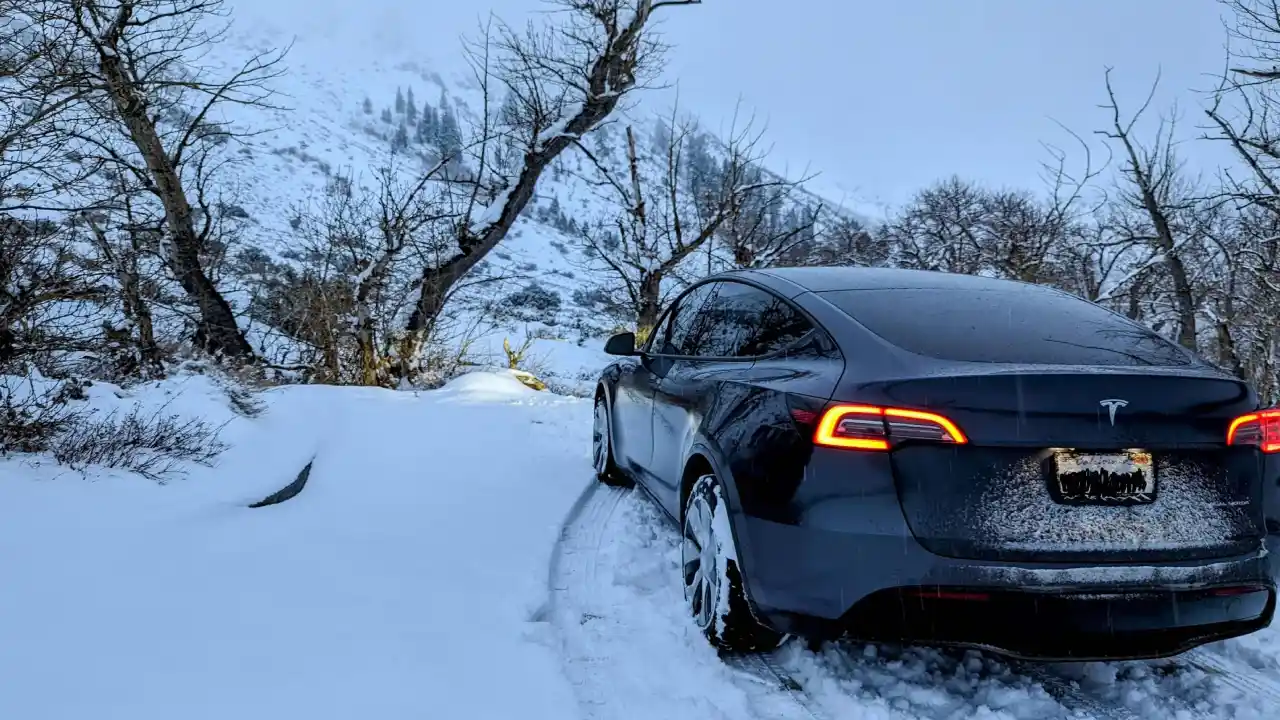
Yes, Teslas are good in snow. Their instant torque delivery, low center of gravity, and advanced traction control give them a real edge on slippery roads. Here’s what you need to know before winter hits.
The Short Answer: Yes, Teslas Excel in Snow
Teslas handle snow better than most gas-powered vehicles. The floor-mounted battery pack lowers the center of gravity dramatically, improving stability on ice and slush. Dual-motor AWD models distribute power to all four wheels simultaneously — no mechanical delay, no hesitation.
Rear-wheel-drive models (like the base Model 3) perform well too, but require more driver awareness on unplowed roads.
Why Teslas Perform Well in Winter
Electric motors deliver torque instantly. That’s the key advantage. Gas engines need RPM to build power; Teslas respond the moment you press the pedal — which means smoother, more controlled acceleration on slippery surfaces.
The battery pack sits flat across the floor in every Tesla. This gives the car a lower center of gravity than virtually any gas vehicle, reducing the chance of sliding out on corners. To understand different Tesla models for winter performance differences between Model 3, Model Y, and Model S, it’s worth comparing AWD availability across the lineup.
Dual Motor Advantage
AWD Teslas (Model Y AWD, Model 3 AWD, Model S, Model X) split torque between front and rear motors. This delivers superior grip in deep snow and ice. For Tesla rear wheel drive in snow, performance is solid on maintained roads but less forgiving on steep, unplowed terrain.
Traction Control Features
Tesla’s traction control adjusts power delivery in milliseconds. It works faster than any mechanical system in a gas car. Combined with instant torque modulation, this keeps the car planted even when conditions deteriorate quickly.
If you’re wondering whether does the Tesla battery perform in cold weather over years of winter use, research shows Tesla batteries retain strong performance across high-mileage cold-climate driving.
Real-World Performance: What Owners Report
Cold-climate Tesla owners consistently report positive experiences. Most cite the AWD grip and low center of gravity as the biggest advantages over their previous gas vehicles. The main complaint? Range loss.
Expect 15–25% battery range reduction in cold weather. Temperatures below 32°F (0°C) accelerate this loss, especially when cabin heating runs continuously. Tesla charging in winter conditions becomes more important — plan more frequent stops on long trips.
Consumer Reports EV winter testing confirms Teslas rank among the top performers in cold-weather EV assessments. Braking, handling, and driver confidence scores remain high even in snowy conditions.
Range in Cold
At -10°F (-23°C), range loss can reach 30–40% with heavy heating use. Pre-conditioning your battery while still plugged into a charger minimizes this. The car warms itself using grid power — not your battery.
Safety Considerations & Limitations
No vehicle is invincible in winter. That’s worth stating clearly.
Tesla’s regenerative braking system behaves differently than traditional brakes. In cold weather, do Teslas have brake pedals that respond normally? Yes — but regen braking reduces aggressively in very cold temps until the battery warms up. This means less one-pedal driving initially. Adjust your following distance.
Tire selection matters enormously. All-season tires are not enough in heavy snow. Dedicated winter tires like Michelin X-Ice or Bridgestone Blizzak dramatically improve stopping distance and cornering on ice. Check NHTSA winter tire requirements for official safety guidance on when and why winter tires are legally recommended.
Tesla models don’t include a spare tire. Carry a portable tire inflator and foam sealant. For a full breakdown, see spare tire and emergency winter gear considerations specific to Tesla Model 3. For long-term durability through harsh winters, research on how long Teslas operate in extreme cold shows consistent performance across decades of use.
Quick Winter Driving Tips for Tesla Owners
These steps make a real difference. Don’t skip them.
- Pre-condition your battery before every cold-weather drive — do it while still plugged in
- Enable Slip Start in the driving menu to allow wheel spin on deep snow for forward momentum
- Reduce regen braking to “Low” setting on icy roads to avoid sudden deceleration
- Check Tesla’s official winter mode guide for model-specific settings and battery preconditioning steps
- Use Tesla winter mode settings alongside the broader winter maintenance checklist for your vehicle
- Install winter tires before the first snowfall — don’t wait for a storm
- Upgrade windshield wipers for winter visibility — Tesla’s standard wipers work, but beam-style winter wipers clear ice more effectively
- Accelerate smoothly — instant torque is powerful, but gentle inputs prevent wheelspin
Cold weather drains the battery faster than most drivers expect. Check your range before every trip.
Bottom Line for Snow Buyers
Teslas are genuinely capable winter vehicles. AWD models compete with — and often outperform — traditional all-wheel-drive gas cars in snow. Rear-wheel-drive models work well with proper tires and smooth driving technique.
Prep matters. Good winter tires, battery pre-conditioning, and adjusted driving habits make the difference between a stressful commute and a confident one. If you’re buying a Tesla for a cold climate, choose an AWD variant and budget for winter tires. You won’t regret it.