850RE vs 8HP75 Transmission for Jeep: Which Transmission Should You Choose?

Choosing between the 850RE and 8HP75 transmissions for a Jeep means understanding two distinct approaches to automatic shifting. The 850RE powers the standard V6 and 2.0L turbocharged models, while the 8HP75 backs the high-torque EcoDiesel engines and the Wrangler Rubicon 392. Both trace their DNA to ZF’s legendary 8-speed architecture, yet they deliver markedly different capabilities.
For Jeep buyers, this transmission choice directly affects power delivery, reliability profiles, and long-term cost of ownership. If you’re speccing a Wrangler or Gladiator and the option exists—or if you’re considering an engine swap—understanding these differences ensures you select the transmission matched to your actual driving demands.
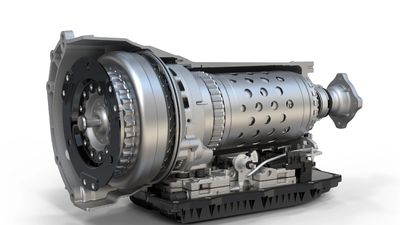
Credit: sunwesttransmissionandautorepair.com
Core Differences in Torque Capacity and Construction
The fundamental split between these transmissions lies in their torque ratings and engineering emphasis. The 850RE carries a maximum input torque capacity of 500 Newton-meters (369 lb-ft), calibrated for the 285-horsepower Pentastar V6 and 2.0L turbo engines. The 8HP75, by contrast, handles 750 Newton-meters (553 lb-ft)—a 50% increase that puts it squarely in heavy-duty territory.
This difference isn’t merely a number. The 8HP75 uses reinforced clutch packs, stronger backing plates, and enhanced hydraulic pressure circuits designed to withstand sustained high-torque loads. When Jeep paired the 8HP75 with the 6.4L Hemi V8 in the Rubicon 392, engineers factored in peak torque of 645 lb-ft, requiring the transmission’s superior load handling.
Both transmissions share the same basic gear ratios—4.71:1 first gear, 3.14:1 second, and 0.67:1 eighth. The 7.0-to-1 overall gear spread remains identical. This means acceleration feel and highway cruising RPMs stay consistent between the two, despite their different torque capacities.
The 850RE was engineered in-house at Chrysler’s Kokomo, Indiana facility under ZF license. The 8HP75, also produced domestically under license, benefits from the proven infrastructure ZF originally developed for high-performance applications across the BMW, Mercedes, and Rolls-Royce product lines.
Engine Applications and Transmission Pairing Strategy
The 850RE found its primary home with the 3.6L Pentastar V6, where it delivers smooth shifts without unnecessary complexity. Jeep discontinued this transmission option after 2024 but reintroduced it for 2025 Wrangler Unlimited models in direct response to community demand for a lighter-duty, more fuel-efficient automatic option. The pairing balances 285 horsepower and 260 lb-ft of torque with transmission efficiency, yielding notable fuel economy improvements over manual alternatives.
The 2.0L turbocharged Hurricane also receives the 850RE. Here, peak torque of 368 lb-ft aligns well with the transmission’s 369 lb-ft rating, providing adequate but not excessive capacity. This engine-transmission pairing emphasizes efficiency and responsive acceleration rather than sustained towing or high-load off-road work.
The 8HP75, conversely, appears behind heavy hitters: the 6.4L Hemi V8 in the Rubicon 392, the 3.0L EcoDiesel across Wrangler and Gladiator lineups, and high-performance conversions involving engine swaps. The EcoDiesel, rated at 260 horsepower and 442 lb-ft of torque, requires the 8HP75’s robust architecture because diesel engines deliver peak torque at lower RPMs, concentrating load intensity differently than gasoline engines.
In Jeep’s Grand Cherokee and other platforms, the 8HP75PH (plug-in hybrid variant) manages the complexity of dual powerplants—combustion engine plus electric motor—with hydraulic management refined specifically for regenerative braking and battery charging protocols.
Real-World Reliability Patterns and Known Weaknesses
Both transmissions inherit the same fundamental vulnerability from their ZF lineage: the “E” clutch assembly. This clutch pack, responsible for gears 2, 3, 4, 6, and 8, suffers from marginal oil circulation and a flimsy hub that wears rapidly under sustained load. The problem intensifies in heavier vehicles or high-performance applications, which explains why the 8HP75 features reinforced clutch materials compared to the 850RE’s factory friction specs.
The “A” and “B” clutch packs, mounted on the pump assembly, face a design defect where the backing plate flexes under high line pressure, creating 7th and 8th gear flutter or sluggish launch behavior. The 8HP75 addresses this with upgraded steel backing plates capable of supporting additional friction elements—an advantage absent from the standard 850RE.
Solenoid valve failures plague both transmissions when fluid maintenance is neglected. Jeep recommends lifetime fluid in some publications, contradicting ZF’s official guidance of 60,000 to 80,000-mile intervals. Owners who ignore fluid service experience solenoid degradation around 100,000 miles, with O-rings tearing and activation becoming sluggish. The 8HP75, deployed in higher-stress roles, benefits more dramatically from proactive maintenance schedules.
Pressure regulator valve leaks represent a third critical failure mode. When this valve begins to seep, the transmission functions normally during gentle driving but loses line pressure during hard throttle or heavy towing. Diagnostic trouble codes may not appear, masking the issue until demanding conditions expose the flaw.
Bushings composed of babbitt material—used in both transmissions—degrade over time, particularly in neglected maintenance scenarios. Roughly two of every three ZF 8-speed transmissions rebuilt by specialists show worn bushings. As they deteriorate, transmissions shuffle or vibrate under load, and worn bushings that serve as “oil dams” create cross-leaks, cascading into secondary failures.
The 850RE carries an inherent disadvantage: it operates closer to its torque ceiling even in normal driving scenarios. A Pentastar V6 pulling a moderately loaded trailer or climbing steep terrain approaches the transmission’s design limits, stressing components not engineered for sustained high-load cycles. The 8HP75’s 50% torque headroom provides a safety margin that encourages component longevity.
Fuel Economy and Performance Characteristics
The 850RE’s lighter calibration and reduced pressure circuits yield measurable fuel economy benefits. A Wrangler JL with the 850RE paired to the Pentastar returns EPA ratings averaging 21-23 highway MPG in two-door configurations. The transmission logic prioritizes smooth upshifts and early overdrive engagement to minimize engine load at cruise.
The 8HP75, engineered for performance and load capacity, accepts higher line pressures and more aggressive shift logic. The same Wrangler equipped with an EcoDiesel and 8HP75 trades one to two MPG for the ability to tow 3,500 pounds compared to the gasoline model’s 2,000-pound rating. In practice, highway MPG sits near 22-24 for diesel Wranglers, though real-world data from owners shows considerable variation depending on driving patterns and terrain.
The acceleration feel differs subtly between the two. The 850RE executes shifts with a “smooth and seamless” character, as Jeep marketing describes it, minimizing gear-change sensation for on-road driving comfort. The 8HP75 allows more assertive downshift logic during spirited driving or towing, with faster response to throttle inputs—a characteristic prized by enthusiasts but less noticeable in everyday commuting.
Both transmissions employ a torque converter rather than a direct wet clutch design, meaning fluid coupling introduces a slight delay between engine throttle input and transmission engagement. The modern valve bodies and electronic control minimize this inherent lag, but it remains a factor when comparing to manual transmissions or newer dual-clutch alternatives.
Upgrade Availability and Customization Options
The aftermarket recognizes the 850RE and 8HP75 as fundamentally sound but finite in capacity. Specialists like Southern HotRod, Bruiser Conversions, and ATS Diesel offer upgraded versions of both transmissions with reinforced components intended to support high-output engine swaps.
For the 850RE, upgrade paths typically involve enhanced friction materials (Alto Products G3 or similar), improved clutch hubs in billet aluminum, and refined valve bodies with higher line pressure settings. These modifications push the transmission toward 500+ horsepower handling capability, a step above factory ratings.
The 8HP75 receives more aggressive modifications because its starting torque capacity already exceeds most standard applications. Upgrades focus on billet E-drum assemblies, performance steels and friction packs, and pressure regulator refinements. Some shops target 600+ horsepower applications, with transmissions validated through dyno testing and real-world deployment in high-power conversions.
Engine conversion specialists installing 5.7L or 6.4L Hemis in older JK-generation Wranglers standardly specify the 8HP75 as their transmission core. The 850RE, by contrast, lacks the upgrade credibility for sustained high-torque engine swaps, appearing only in conservative builds pairing smaller displacement or turbo engines with moderate power ratings.
Cost-Benefit Analysis for Jeep Buyers
Jeep prices the 850RE transmission option at $2,000 to $2,500 when available as an option (the manual remains cheaper). The 8HP75 typically costs slightly more when bundled with compatible engines, but often comes as the only automatic option for diesel or high-performance variants—limiting price comparison.
From an ownership perspective, the 850RE suits buyers prioritizing fuel economy, on-road comfort, and lighter-duty off-road work (rock crawling, light trails). The transmission’s lower pressure demands translate to reduced cooling load and potentially longer drain intervals between maintenance events.
The 8HP75 justifies its presence—and premium—for owners planning serious towing, high-output engine swaps, or sustained off-road expeditions where transmission cooling and load capacity matter. The transmission’s enhanced durability characteristics provide insurance against premature failure in demanding scenarios.
Resale value considerations remain murky. Jeep data suggests the 850RE carries a slight buyer preference among Pentastar owners seeking efficiency, while the 8HP75’s presence on performance models (Rubicon 392) and diesel variants appeals to a narrower enthusiast segment. Long-term reliability data favors the 8HP75 in high-mileage scenarios, though the 850RE has achieved 200,000+ mile reliability in lightly-loaded service.
Which Transmission Matches Your Use Case?
Choose the 850RE if your Jeep priorities center on highway fuel efficiency, casual off-road touring, and moderate towing needs below 2,000 pounds. The transmission provides smooth operation, proven reliability in normal driving conditions, and competitive pricing. Maintenance discipline—fluid changes every 60,000 miles despite factory “lifetime” claims—remains critical for longevity.
Choose the 8HP75 if you plan serious towing, operate in extreme terrain, require high engine output through turbocharging or displacement, or seek maximum transmission durability for six-figure mileage. The transmission’s engineered reserve capacity and reinforced components justify the investment when demands exceed standard duty cycles.
Consider the 8HP75 mandatory for any engine swap exceeding factory power levels, whether installing a modern Hemi crate engine or a turbocharged build. The 850RE’s design margins vanish with peak torque exceeding 450 lb-ft, creating reliability risk unacceptable for high-dollar builds.
For 2025 Wrangler Unlimited buyers with Pentastar V6 engines, Jeep’s reintroduction of the 850RE provides a compelling efficiency alternative if highway driving dominates your schedule and towing remains occasional. The newer-generation 850RE benefits from recent refinements compared to earlier examples, though core design characteristics persist.
Final Verdict
The 850RE and 8HP75 represent different philosophies encoded in transmission design. The 850RE optimizes for efficiency and smooth operation within the bounds of moderate-duty service. The 8HP75 prioritizes durability and sustained performance under load. Both transmissions share proven DNA from ZF’s global applications, yet their engineering emphasis diverges sharply based on intended role.
Neither transmission is objectively superior—each excels within its design envelope. Mismatching the application to the transmission, however, creates predictable failure modes. Pair an 850RE with a high-output engine or heavy towing, and component stress accelerates wear dramatically. Specify an 8HP75 on a fuel-conscious commuter, and you’ve incurred unnecessary cost and complexity.
The superior transmission for your Jeep becomes apparent once you define your actual usage: efficiency demands versus capability margins, on-road smoothness versus load capacity, and purchase-price constraints versus long-term reliability investment.