Is the Jeep Compass Good in Snow? The Honest Winter Performance Guide 2026

The Short Answer: Yes—When You Do It Right
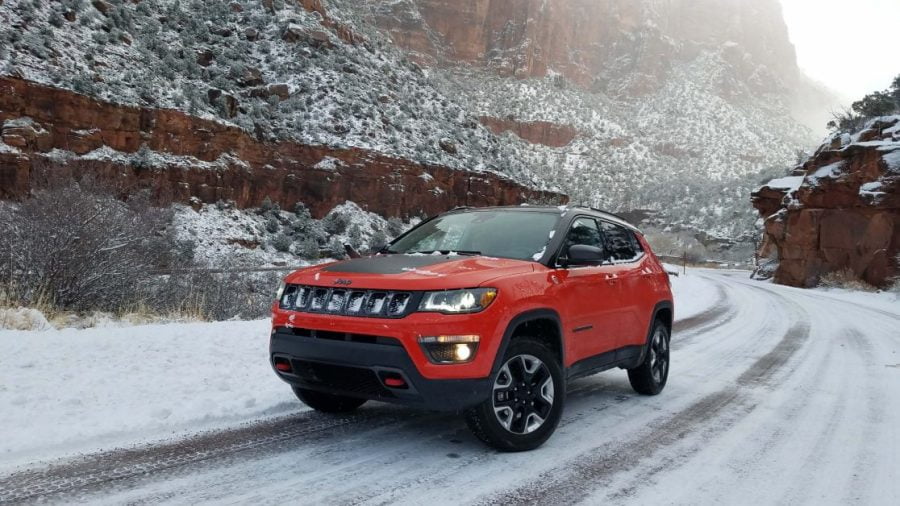
The Jeep Compass handles snow capably for daily winter driving on maintained roads. Its standard all-wheel-drive system, intelligent traction management, and compact size make it competent in moderate snow and icy conditions. However, this capability depends heavily on one non-negotiable factor: winter tires. Without them, even the best 4WD system fails. With them, the Compass becomes a confident winter companion.
The real question isn’t whether the Compass can navigate snow—owners consistently report excellent performance on highways, city streets, and even unplowed residential roads. The question is whether it matches your specific winter climate. For lake-effect regions, urban environments, and moderate snowfall areas, the answer is a definitive yes. For backcountry exploration or regular deep-snow routes, you’d be better served by a Wrangler.
What Makes the Compass Winter-Ready
Every 2026 Jeep Compass comes standard with the Jeep Active Drive 4×4 system, eliminating the guesswork of choosing between front-wheel-drive and four-wheel-drive. This all-time system automatically distributes torque to wheels with the best grip, requiring no driver input. You simply drive, and the system adapts.
The Selec-Terrain Traction Management System is where winter capability truly shines. Turn a console dial, and the Compass recalibrates its throttle sensitivity, transmission shift points, and traction thresholds for the conditions ahead. In Snow mode, the system minimizes wheelspin on startup and maintains momentum when acceleration would normally cause slippage. This translates to smoother launches from stoplights on ice and more predictable climbing on snowy hills.
The Trailhawk trim adds the Jeep Active Drive Low 4×4 system with a 20:1 crawl ratio, plus an additional Rock mode for Selec-Terrain. While marketed for off-road use, the low-range gearing and enhanced traction control improve stability when navigating deeply rutted or severely iced surfaces. For most winter drivers, the standard Compass suffices; Trailhawk is insurance for challenging terrain.
Ground clearance sits at 8.1 inches—respectable for a compact SUV but not excessive. This height lets the Compass clear typical slush, packed snow, and uneven frozen patches without dragging. Beyond 12 inches of fresh snow, however, the risk of high-centering rises noticeably.
How the Compass Compares in Winter
When stacked against compact competitors like the Honda CR-V and Subaru Crosstrek, the Compass holds its own and often pulls ahead in controlled winter scenarios. The CR-V offers solid AWD and competent handling but lacks the breadth of Selec-Terrain modes. The Crosstrek, known for winter prowess, delivers symmetrical AWD and decent ground clearance—yet the Compass’s discrete transmission steps (eight-speed automatic versus CVT) provide finer throttle modulation during low-speed snow driving.
The decisive advantage: every Compass comes with 4WD standard. The CR-V reserves the best AWD systems for specific trims, and the Crosstrek requires stepping up to higher trims for certain features. For buyers prioritizing consistent winter capability across the lineup, the Compass eliminates trim-level trade-offs.
In real-world testing, owners report the Compass excels on maintained highways and moderately snowy residential streets. One owner pulled four stuck vehicles during heavy snow while driving a standard Compass—proof that capability isn’t reserved for off-road extremes. On unplowed routes and deeply drifted terrain, however, the Wrangler’s higher clearance and specialized locking differentials become meaningful advantages.
The Winter Tire Factor: Non-Negotiable
This deserves emphasis: winter tires are the most important winter upgrade you can make. More significant than 4WD. More significant than Selec-Terrain. More significant than ground clearance.
Tire compounds are engineered for specific temperature ranges. All-season tires begin losing grip below 45°F and become dangerously stiff below 32°F. Winter tires retain flexibility in sub-zero cold, biting into ice and packed snow with compounds that all-season tires simply cannot match. The difference is dramatic: winter tires reduce braking distance on ice by 25–50% compared to all-season alternatives on the same vehicle.
The Compass comes with all-season tires from the factory—adequate for summer and fall but insufficient for regular snow and ice. Switching to winter tires when temperatures consistently drop below 7°C (roughly early November in northern climates) is the single best decision for winter safety. Reputable options for the Compass include Michelin X-Ice Snow, BFGoodrich Winter T/A KSI, and Bridgestone Blizzak lines, all designed for compact SUVs and urban winter driving.
Maintain tread depth above 4 mm—the legal minimum in many regions—though 6 mm provides better security. Once spring arrives and ambient temperatures consistently exceed 7°C, switch back to all-season tires to preserve both tire sets and reduce fuel consumption.
A practical note: the all-wheel-drive system helps you accelerate and climb in slippery conditions, but it does nothing to improve braking or cornering grip. Winter tires are what stop the vehicle and keep it in your lane. AWD without winter tires remains inferior to front-wheel-drive equipped with winter tires—a critical misconception that costs drivers safety and money.
Real-World Winter Performance: What Owners Report
The Compass’s winter reputation comes from consistent, repeatable owner experiences across varied climates. One driver reported navigating a 2010 Compass (the Compass’s predecessor in spirit) through highways and backroads covered with fresh snow “with ease,” maintaining confident control where other vehicles needed reduced speeds. Another 2014 Compass owner praised its stability on unplowed city streets and deep snow, noting it had “been a great vehicle to own in the snow.”
Recent feedback from 2025–2026 model owners emphasizes similar themes. The compact footprint aids maneuvering in tight, icy parking lots and narrow winter streets. The responsive steering and eight-speed transmission help drivers modulate speed and power delivery smoothly during tricky situations. Even on modest all-season tires, the Compass demonstrates surprising winter poise when driven with appropriate caution.
The Selec-Terrain system earns particular praise. Toggling into Snow mode visibly reduces wheelspin during acceleration from stops on ice, and the adjusted traction thresholds allow the vehicle to settle into steady, controlled progress rather than abrupt power delivery. Drivers familiar with vehicles that hunt for traction appreciate the Compass’s composed responses.
Maximizing Your Compass in Winter: Practical Tips
Install winter tires before conditions deteriorate. Don’t wait for the first heavy snow. Swap tires when ambient temps consistently drop below 7°C, ensuring you’re ready before emergency demand spikes tire availability and pricing.
Use Selec-Terrain Snow mode proactively. Switch to Snow mode when roads transition from bare pavement to slush or packed snow, rather than waiting until you lose traction. The adjusted throttle mapping prevents unnecessary wheelspin and conserves momentum.
Maintain steady momentum. When navigating snowy streets, avoid over-revving and abrupt acceleration. Keep throttle inputs smooth and gradual, allowing the tires to maintain purchase. This principle applies regardless of 4WD or AWD; it’s simply good winter driving.
Carry a small shovel and blanket. Even capable winter vehicles can get stuck. A small shovel and emergency blanket weigh little but prove invaluable if conditions deteriorate unexpectedly.
Increase the following distances. Winter tires reduce braking distance significantly, but they don’t eliminate it. Maintain at least 8–10 seconds of following distance behind other vehicles—substantially longer than dry-road recommendations.
Consider available safety tech thoughtfully. Adaptive cruise control and lane keeping assist can reduce fatigue on long winter drives, but these systems have limits in poor visibility. Use them as aids, not substitutes for attentive driving.
Honest Limitations: When the Compass Falls Short
The Compass is winter-capable for typical climates, not winter-extreme. Several scenarios exceed its design envelope.
Deep unplowed snow (12+ inches): The 8.1-inch ground clearance leaves little margin. Fresh, light snow up to 10 inches remains manageable; compressed, heavy snow at that depth risks high-centering the underbody on snow rather than on tires, causing traction loss and potential damage.
Severe ice with worn all-terrain tires: Aggressive off-road treads (mud terrain tires) perform surprisingly poorly on ice and packed snow due to their open tread design. They trap water, reducing the contact patch. Even the standard all-season tires outperform aggressive muds on icy roads.
Sustained backcountry driving: The Compass isn’t a trail vehicle. Its Trailhawk variant adds capability, but even that doesn’t compete with Wrangler-level off-road prowess. For regular backcountry exploration, a Wrangler’s approach angle, departure angle, and locking differentials matter.
Extreme wind and heavy drifting: Mountain passes and exposed highways during intense blizzards can overwhelm any compact SUV. The Compass’s lower mass can be vulnerable to crosswinds when visibility drops to near-zero during heavy snow with gusts.
FAQ
Can I use all-season tires if I live in a mild winter climate?
If winter means occasional frost, light snow, and daytime temps above freezing, all-season tires work. If winter brings sub-freezing nights, frequent snow, or icy mornings—even if accumulation stays light—winter tires justify their cost in safety and control.
Is the Trailhawk worth it for winter driving?
For typical winter commuting, the standard Compass with winter tires outperforms the base model in practice. Trailhawk excels if your winter routine includes unplowed forest roads, steep driveways, or occasional off-road access—situations where low-range gearing and Rock mode provide meaningful advantage.
Should I keep my Compass in 4H or 4L for winter highways?
Leave the Compass in its standard all-wheel-drive mode (not selectable low or high range on non-Trailhawk models). The automatic system distributes power intelligently. Engage the low range only if stuck or attempting extremely low-speed maneuvers.
The Verdict
The Jeep Compass is genuinely good in snow for urban and suburban winter driving on maintained roads. Its standard all-wheel-drive, intelligent Selec-Terrain system, and compact maneuverability make it a capable winter companion. Equip it with winter tires, practice smooth driving inputs, and it will navigate the conditions most drivers encounter.
Where the Compass reaches its ceiling is deep snow, severe ice, and sustained backcountry use. In those domains, heavier SUVs with higher ground clearance and specialized locking systems outperform it. For most winter climates—the kind where roads are plowed, salted, and passable—the Compass delivers confidence and reliability that justify its winter rating.