Where Are the Window Controls on a Jeep Wrangler? Step-by-Step Guide by Model Year


Finding the window controls on your Jeep Wrangler can be confusing, especially if you’re switching between model years or driving with the doors off. The short answer: window control locations vary significantly by generation.
TJ and YJ models (pre-2007) typically have controls on the door panels, JK models (2007-2018) feature them on the center console, and JL models (2018+) place them overhead or on the doors, depending on configuration.
Understanding your Wrangler’s generation and trim level is crucial for locating these controls quickly. Sport models may have manual windows, while Sahara and Rubicon trims usually feature power windows with different switch layouts.
Whether you’re navigating with best Jeep Wrangler doors off mirrors or trying to operate windows during off-road adventures, knowing exactly where your controls are located can prevent frustration and ensure safe operation.
This comprehensive guide covers every Wrangler generation from 1997 to 2026, including specific trim differences, troubleshooting tips, and special considerations for doors-off driving. We’ll walk through each model’s unique control layout, common issues, and pro maintenance tips to keep your window systems functioning smoothly.
Safety note: Always ensure windows are in their desired position before removing doors, as some configurations limit access to controls when doors are off.
Understand Jeep Wrangler Generations and Trim Impacts
Jeep Wrangler window control locations depend heavily on your model generation and trim level. Each generation features distinct electrical architectures and interior designs that directly impact where you’ll find your window switches.
TJ/YJ Models (1987-2006)
The TJ generation (1997-2006) and earlier YJ models (1987-1995) share similar control layouts. Most TJ Wranglers came with manual windows standard, though power windows were available on higher trims like the Sahara. When equipped with power windows, controls are typically located on the driver and passenger door panels near the armrests.
Key characteristics:
- Manual windows standard on Sport trim
- Power window switches integrated into door panels
- Rear windows are often manually crank-operated
- Simple rocker switch design
JK Models (2007-2018)
The JK generation revolutionized Wrangler interiors with a more car-like approach. Power windows became standard on most trims, with controls relocated to the center console between the front seats. This design choice accommodated the popular doors-off driving style while maintaining easy access to all window functions.
The center console location includes controls for all four windows (on 4-door Unlimited models) plus mirror adjustments. Jeep Wrangler JK fender flare extensions and other modifications don’t typically affect window control access, making this generation particularly modification-friendly.
JL Models (2018-Present)
The newest JL generation offers the most sophisticated window control system. Depending on your specific model year and configuration, controls may be located overhead above the rearview mirror, integrated into the door panels, or both. The 2021+ model years introduced touch-sensitive controls on higher trims, while base models retained traditional rocker switches.
Notable features:
- Overhead console controls (most common)
- Touch-sensitive operation on premium trims
- Integration with soft-top controls
- Backup door-mounted switches on some configurations
Trim level impact across generations:
- Sport/Base: Often manual windows (TJ/YJ), basic power windows (JK/JL)
- Sahara: Power windows standard, premium switch finishes
- Rubicon: Full power windows with additional features like one-touch operation
Understanding these generational differences ensures you’re looking in the right places and helps explain why techniques that work on one Wrangler may not apply to another.
STEP 1: Locate Controls on TJ/YJ Jeep Wrangler (Pre-2007)
KEY ACTION: Check the driver and passenger door panels for rocker switches or manual window cranks.
EXPECTED OUTCOME: Direct control of front windows, with rear windows typically operated via manual cranks.
For TJ and YJ Wranglers, window controls follow a straightforward door-mounted approach. Start by examining your driver-side door panel, specifically the armrest area and the section just forward of the interior door handle.
Power window-equipped models:
- Driver door panel: Look for a dual rocker switch controlling both driver and passenger windows. The switch is usually black plastic with up/down arrows or window symbols.
- Passenger door panel: Contains a single rocker switch for passenger window control only.
- Switch orientation: Pressing the top of the rocker raises the window, bottom lowers it.
Manual window models:
- Window cranks: Located low on each door panel, these require clockwise rotation to raise windows.
- Handle position: Cranks fold flat against the door when not in use.
- Resistance check: Stiff operation may indicate worn window regulators.
Rear window considerations: Most TJ/YJ models feature removable rear windows with zipper operation or manual sliding mechanisms. Hard-top equipped Wranglers may have fixed rear glass without controls.
COMMON MISTAKE: Assuming all pre-2007 Wranglers have power windows. Many Sport trim models came with manual windows to reduce cost and complexity. Always verify by visual inspection before troubleshooting electrical issues.
Troubleshooting tips:
- If switches don’t respond, check the fuse box under the hood (fuse #26 typically controls power windows)
- Door panel switches can accumulate dirt and moisture, affecting operation
- Window motors in TJ models are known failure points after 15+ years
Doors-off operation: When running doors-off, TJ/YJ owners lose access to window controls entirely. Plan window positions before door removal, or consider aftermarket solutions like portable window switch panels that plug into existing harnesses.
This generation’s simple approach makes troubleshooting straightforward, but the door-mounted design limits flexibility for doors-off enthusiasts compared to newer generations.
STEP 2: Find Window Switches on JK Wrangler (2007-2018)
KEY ACTION: Look at the center console between the front seats, positioned forward of the gear shifter.
EXPECTED OUTCOME: Master control of all four windows from the driver position, with passenger-side mirror controls integrated.
The JK generation’s center console window controls represent a major departure from earlier Wranglers, designed specifically to accommodate doors-off driving while improving overall ergonomics.
Console Diagram
Primary control location:
- Center console forward section: The main window control panel sits prominently between the seats, easily reachable by both driver and passenger.
- Switch layout: Four individual rocker switches arranged in a 2×2 pattern, corresponding to each window position.
- Labeling: Switches are typically marked with window position indicators (LF, RF, LR, RR) or simple directional arrows.
Switch operation:
- Single press: Incremental window movement up or down
- Full press and hold: Continuous operation until the switch is released
- Auto-down feature: Available on some trims, allows one-touch window lowering
Master controls: The driver position switch panel often includes lock-out functionality, preventing passenger-side operation of rear windows – particularly useful when children are passengers.
Doors-Off Access
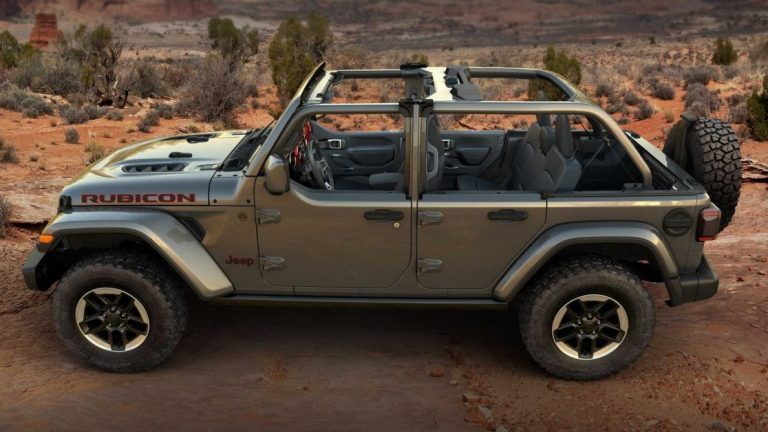
The JK’s center console design shines during doors-off operation. Unlike earlier generations, where door removal eliminated window control access, JK owners maintain full window functionality regardless of door configuration.
Advantages:
- Controls remain accessible with any door configuration
- No need to plan window positions before door removal
- Simplified wiring with fewer connection points to weather seal
Soft-top considerations: When running a soft top with the doors off, window controls allow you to lower rear windows for improved airflow while maintaining front window protection from wind and debris.
Hard-top operation: JK hard tops integrate seamlessly with the console controls, though rear window operation may be limited depending on your specific hard-top configuration.
COMMON MISTAKE: Forgetting that half-doors or tube doors don’t include window switches. Always rely on the center console controls rather than looking for door-mounted alternatives that don’t exist on JK models.
Maintenance tips specific to JK consoles:
- Clean around switches regularly to prevent dirt accumulation
- Keep Jeep Wrangler fenders black and maintain interior surfaces to prevent premature switch wear
- Check console mounting screws periodically, as vibration can loosen connections
Aftermarket modifications: The JK’s center console design accommodates numerous aftermarket upgrades, including switch panel additions for auxiliary lighting, winches, or other accessories without interfering with window controls.
This centralized approach makes JK models particularly user-friendly for both daily driving and off-road adventures where door configurations change frequently.
STEP 3: Overhead and Door Controls on JL Wrangler (2018+)
KEY ACTION: Inspect the overhead console above the rearview mirror first, then check for auxiliary switches on door panels.
EXPECTED OUTCOME: Touch-sensitive or traditional rocker controls for all windows, often integrated with soft-top and lighting controls.
The JL generation introduces the most sophisticated window control system in Wrangler history, with multiple control locations and advanced features that vary by model year and trim level.
Primary overhead console:
- Location: Mounted above the rearview mirror, integrated into the headliner
- Control type: Touch-sensitive buttons on higher trims, traditional rockers on base models
- Integration: Combined with dome lighting, garage door openers, and soft-top controls
- Illumination: Backlit controls for night operation
2018-2020 models:
- Standard rocker switches in overhead position
- Basic up/down operation with auto-down on the driver window
- Separate controls for 2-door vs 4-door configurations
2021+ model updates: Touch-sensitive controls replaced mechanical switches on Sahara and Rubicon trims, offering:
- Haptic feedback for operation confirmation
- Integration with the Uconnect infotainment system
- Programmable auto-up/down functions
- Enhanced weather sealing
4-Door vs. 2-Door Configurations
Unlimited (4-door) models:
- Four-window control layout in the overhead console
- Individual switches for each window position
- Master lock-out functionality
- Rear passenger override switches (when equipped)
2-door models:
- Simplified two-window layout
- Larger switch sizes for easier operation
- Focus on front window priority controls
Aftermarket Variations
The JL’s advanced electrical architecture accommodates extensive modifications while maintaining window control functionality.
Compatible modifications:
- Aftermarket overhead consoles with expanded switch capacity
- Door panel additions that don’t interfere with factory systems
- Soft-top upgrades that integrate with existing window controls
Installation considerations: When adding modifications, ensure compatibility with the JL’s CAN-bus electrical system. Improper installations can affect window operation and trigger warning lights.
COMMON MISTAKE: Overlooking the 2021+ model year refresh that significantly changed control operation. Touch-sensitive controls require different troubleshooting approaches compared to mechanical switches, and some owners initially struggle with the sensitivity adjustment.
Advanced features (2022+ models):
- Remote window operation via key fob (hold unlock button)
- Smartphone app integration for window control
- Programmable window behavior through the infotainment system
- Enhanced security features prevent unauthorized operation
Doors-off considerations: While overhead controls remain accessible doors-off, some JL configurations include backup switches on removable door panels. These provide redundant control options and improved ergonomics when doors are installed.
Soft-top integration: JL models with power soft tops feature integrated controls that coordinate window and top operation, preventing conflicts between systems and ensuring proper sequencing during top operation.
4xe hybrid considerations: The 4xe hybrid maintains identical window control layouts but includes additional energy management features that may delay window operation during charging or low-battery conditions.
This advanced system provides unmatched convenience and integration, though the complexity requires more detailed troubleshooting when issues arise.
Troubleshooting Window Controls Not Working
When your Jeep Wrangler’s window controls stop responding, systematic troubleshooting can identify the issue quickly and often lead to simple fixes that don’t require professional service.
Fuse Locations
TJ/YJ models (pre-2007):
- Primary fuse: #26 in the under-hood power distribution center
- Rating: Typically 25-amp
- Secondary fuses: Individual window motors may have separate 15-amp fuses
JK models (2007-2018):
- Window fuse: #38 in the integrated power module (under hood)
- Rating: 30-amp for all windows
- Relay: Window relay located in the same power distribution center
JL models (2018+):
- Multiple fuses: F86 (driver), F87 (passenger), F88 (rear windows)
- Rating: 25-amp each
- Additional: Body control module fuses may affect operation
Quick Fixes
Before calling a mechanic, try these steps:
- Battery reset: Disconnect the negative terminal for 10 minutes to reset the body control modules
- Switch cleaning: Use electrical contact cleaner on accessible switch contacts
- Manual operation: Check if windows move manually (engine off, pushing glass gently)
- Wiring inspection: Look for pinched or damaged wires in door jambs (TJ/YJ models)
Generation-specific issues:
- TJ/YJ: Window motors commonly fail due to age; check for grinding noises
- JK: Center console switches can collect debris; remove and clean carefully
- JL: Touch-sensitive controls may need recalibration through the infotainment system
When to seek professional help: If fuses are good and switches feel responsive but windows don’t move, the issue likely involves window regulators, motors, or complex electrical problems requiring diagnostic equipment. Jeep Wrangler reliability varies by generation, with electrical issues being more common in older models.
Tool requirements for DIY troubleshooting:
- Multimeter for voltage testing
- Basic hand tools for fuse/relay replacement
- Electrical contact cleaner
- Flashlight for inspection
Pro Tips for Jeep Wrangler Window Use and Maintenance
Proper window system maintenance extends component life and prevents unexpected failures during adventures. These professional insights can save you hundreds in repair costs while improving daily usability.
Cleaning and weatherproofing:
- Clean window tracks monthly with compressed air and silicone-safe lubricant
- Apply dielectric grease to electrical connections annually
- Use UV-protectant sprays on interior switches to prevent cracking
- Inspect door seals when washing to prevent water intrusion into electrical systems
Off-road preparation:
- Test all window functions before heading out on trails
- Carry spare fuses for your generation’s window system
- Consider Jeep Wrangler fender flare replacement OEM parts that don’t interfere with door removal
- Pack basic tools for switch panel access in case of trail-side issues
Upgrade considerations: JK and JL models accept numerous aftermarket improvements that enhance window control functionality without compromising reliability. Popular upgrades include illuminated switch panels, waterproof control modules, and integrated systems that coordinate windows with soft-top operation.
Seasonal maintenance: Winter driving requires extra attention to window systems, as freezing temperatures can damage components, and road salt accelerates electrical corrosion. Summer preparation should focus on lubrication and UV protection.
For those seeking the best Jeep Wrangler for daily driving, prioritizing models with reliable window systems and accessible controls can significantly improve the ownership experience.
FAQ
Do all Wranglers have power windows?
No, many Sport trim TJ and some base JK models came with manual windows to reduce cost. Always verify your specific configuration, as aftermarket conversions are common.
Where are the window controls on half-doors?
Half-doors typically don’t include window controls. JK and JL models rely on center console or overhead controls, while TJ models require full doors for switch access.
Can I add power windows to a manual window Wrangler?
Yes, but it’s complex and expensive. Aftermarket kits exist for all generations, though professional installation is recommended due to electrical complexity.
Why do my JL touch controls seem unresponsive?
Touch-sensitive controls on 2021+ models may need sensitivity adjustment through the infotainment system settings menu. Cold weather can also affect responsiveness.
What should I do if the windows won’t work doors-off?
Check your generation: TJ models lose control doors-off (by design), while JK/JL models should maintain full functionality. If JK/JL windows don’t work doors-off, check the center console or overhead controls and related fuses.
Conclusion
Understanding your Jeep Wrangler’s window control locations depends entirely on the generation and trim level. TJ/YJ models place controls on door panels, JK generations centralize them in the console for doors-off convenience, and JL models offer sophisticated overhead systems with advanced features. Each generation has specific maintenance requirements and common failure points that owners should understand.
Whether you’re troubleshooting a non-responsive switch or planning modifications, knowing your exact model year and control type enables proper diagnosis and repair. Regular maintenance, proper fuse knowledge, and understanding your specific generation’s quirks will keep your window systems functioning reliably for years of on-road and off-road adventures.
For detailed specifications and additional maintenance guidance, consult your owner’s manual or visit authorized Jeep service centers for generation-specific support.