Service ESC System Jeep Compass: What It Means, Causes, and Fixes

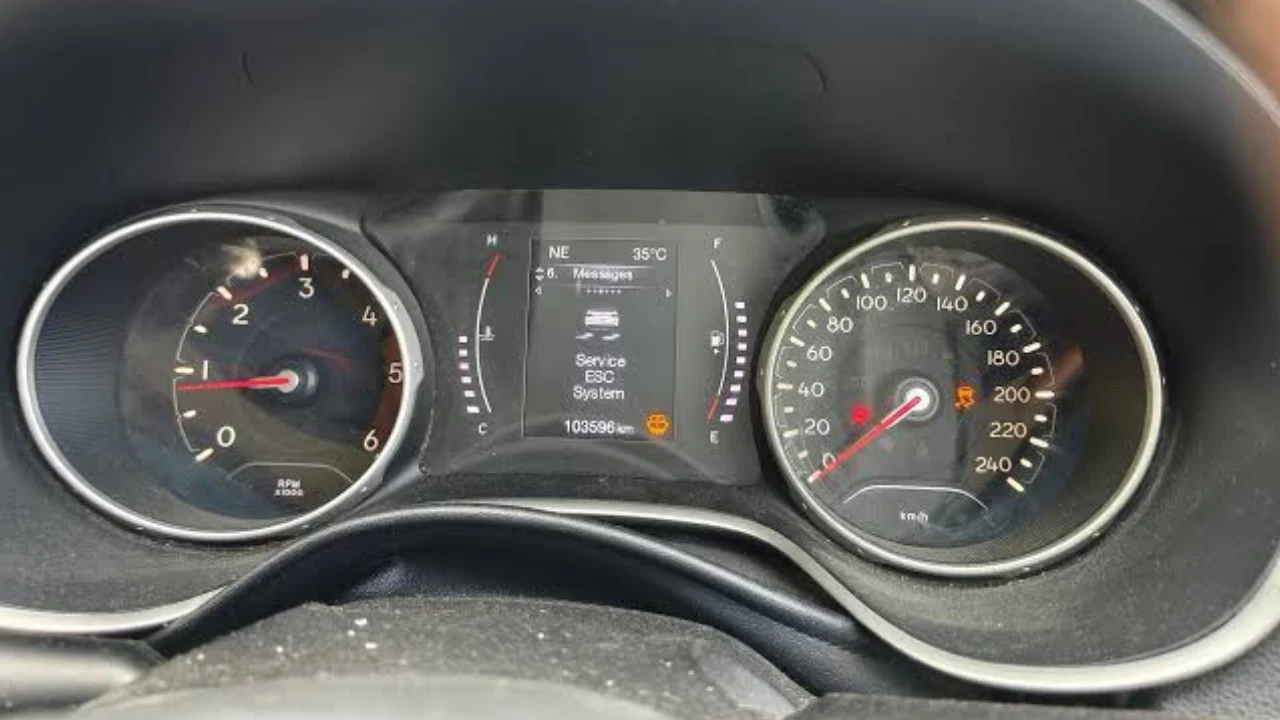
The “Service ESC System” warning on your Jeep Compass signals a fault in the electronic stability control system. Common causes include a weak battery, a failed wheel speed sensor, wiring corrosion, or a steering angle sensor error. Normal braking typically still works, but stability assist may be reduced or disabled. Read trouble codes first, inspect battery voltage, then address the specific component causing the fault.
Table of Contents
- What the Service ESC System Warning Means on a Jeep Compass
- Common Symptoms That Appear Along With the Warning
- Most Common Causes of the Service ESC Warning
- How to Diagnose the Problem Step by Step
- Safe First Actions Before You Drive or Tow the Vehicle
- DIY Checks You Can Perform at Home
- Repairs That Usually Fix the Service ESC Warning
- Repair Costs and What Influences Them
- How to Prevent ESC Warnings From Returning
- When to See a Mechanic or Dealer
- Common Diagnostic Mistakes to Avoid
- FAQ
What the Service ESC System Warning Means on a Jeep Compass
The “Service ESC System” warning means the Jeep Compass has detected a fault in its electronic stability control system or one of its inputs. ESC is a safety system that uses wheel-speed data, steering inputs, and brake pressure to keep your vehicle stable during skids or sudden maneuvers. When a fault appears, the system may disable itself to avoid incorrect interventions. Normal braking usually continues to work, but you lose the added layer of active stability protection.
According to the Jeep Compass owner’s manual, the warning indicator should illuminate briefly at startup as a self-check, then extinguish. If it stays on, the system has detected a malfunction and needs attention.
The Compass owner’s manual for the 2024 model year further confirms that a persistent light after the self-check cycle indicates a stored fault code and recommends professional diagnosis if the warning does not clear after a few drive cycles.
What Does ESC Stand For?
ESC stands for Electronic Stability Control. It’s a federally mandated active safety feature on all vehicles sold in the United States since 2012. The system monitors yaw rate, lateral acceleration, individual wheel speeds, and steering angle simultaneously, then applies selective braking or reduces engine torque to prevent skidding.
Is It Safe to Drive With This Warning On?
Short trips on familiar roads at moderate speeds are generally tolerable. Aggressive driving, highway speeds in rain, and off-road use are not. The system that catches a slide is no longer active.

CREDIT: Reddit.com
Common Symptoms That Appear Along With the Warning
The Service ESC warning rarely appears alone. Understanding which other warnings or behaviors accompany it narrows the likely cause significantly before you touch a scan tool.
Several warning lights tend to cluster together when ESC is triggered by a shared root cause. You might see the ABS light, traction control light, and ESC warning all illuminated at once. That pattern strongly suggests a shared sensor input — most often a wheel speed sensor — rather than an isolated ESC module failure.
Reduced power or Jeep Compass limp mode can accompany the warning when the fault is severe enough that the powertrain control module enters a protective state. If the engine feels sluggish, acceleration is limited, and the ESC light is on, treat the situation as urgent.
Symptoms That Suggest Battery Trouble
- ESC warning appears immediately after a cold start
- Multiple unrelated warning lights appear together
- Slow cranking or hesitation before engine fires
- Warning clears after driving 10–15 minutes, then returns
Battery-related ESC warnings often behave intermittently. Low voltage at startup causes modules to misread sensor data, triggering false faults that disappear once the alternator raises system voltage.
Symptoms That Suggest Sensor or Module Trouble
- Warning stays on regardless of temperature or time of day
- ABS and traction control lights are both active
- Specific trouble codes point to one wheel position
- Steering feels normal, but stability assist is confirmed disabled
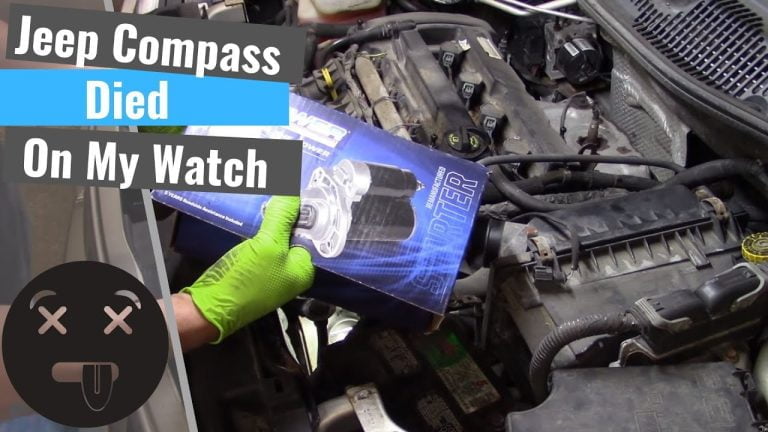
A no-start or no-crank condition alongside the ESC warning points directly to an electrical system fault. If your Compass won’t crank at all, the starter or battery is likely the root cause — and it’s worth reviewing how to replace a Jeep starter if cranking symptoms are present.
Most Common Causes of the Service ESC Warning
Understanding electronic stability control warnings requires knowing which component failed and why. The ESC system depends on accurate data from multiple sensors and stable electrical power. A fault in any one area cascades into a system-wide alert.
Here are the five primary causes, ranked by frequency in real-world Compass owner reports.
1. Weak Battery or Charging System
Battery voltage below approximately 12.4 volts at rest — or below 13.8 volts under load — stresses control modules. The ESC module is particularly sensitive to voltage drops. A failing alternator producing inconsistent output causes the same problem under different conditions.
Battery issues account for a disproportionate share of first-time ESC warnings. Replacing a five-year-old battery often clears the fault permanently.
2. Wheel Speed Sensor Failure
Each wheel carries a sensor that reports rotational speed to the ABS and ESC modules. A faulty sensor sends incorrect or missing data. The ESC module can’t calculate wheel slip accurately and disables stability control as a precaution. Debris, corrosion on connectors, or physical damage to the sensor or its tone ring are the most common failure modes.
3. Steering Angle Sensor Error
The steering angle sensor sits in the steering column and measures wheel position. ESC uses this data to determine the driver’s intended direction versus actual vehicle path. A miscalibrated or failed steering angle sensor generates ESC faults even when all other inputs are healthy.
4. Wiring Harness and Connector Corrosion
Wheel-area connectors are exposed to road salt, water, and debris. Oxidation at a connector increases electrical resistance, which the module reads as a sensor fault. The actual sensor may be working perfectly. Cleaning the connector often restores normal operation.
5. ESC Module or Brake System Fault
Module failures are the least common cause. They typically appear after other electrical faults have been ignored for extended periods. Brake fluid contamination, low brake fluid levels, or hydraulic system pressure irregularities can also trigger ESC-related codes, since brake pressure is a direct input to stability calculations.
| Cause | Warning Pattern | DIY Fixable? | Calibration Needed? |
|---|---|---|---|
| Weak battery | Intermittent, clears with warm-up | Yes | No |
| Wheel speed sensor | Persistent, ABS light present | Often yes | Rarely |
| Steering angle sensor | Persistent, no ABS light | Partially | Yes |
| Wiring/corrosion | Intermittent, position-specific | Yes | No |
| ESC module | Persistent, multiple codes | No | Yes |
| Brake system fault | Persistent, brake light present | Partially | Possibly |
How to Diagnose the Problem Step by Step
Following a structured approach saves time and prevents unnecessary parts replacement. Use the “Start, Scan, Inspect, Confirm” framework — each step informs the next.
Use the ESC troubleshooting steps from this practical guide to supplement your scan data with physical inspection results.
Step 1: Attempt a Normal Start
Does the vehicle start? If not, the fault is electrical first and ESC second. A dead battery or failed starter explains both conditions simultaneously. Address the starting issue before diagnosing stability control.
Step 2: Read OBD-II Trouble Codes
Connect a scan tool to the OBD-II port under the driver’s-side dashboard. Read all stored and pending codes — not just powertrain codes. ESC faults often store in the ABS module or chassis control module, which budget code readers may not access. A bidirectional scan tool or Autel MaxiCheck-series scanner gives full system access.
Step 3: Interpret the Code Categories
- C0031–C0051: Wheel speed sensor circuits — inspect the specific wheel indicated
- C0710: Steering angle sensor — often needs recalibration after suspension work
- U codes (U0121, U0415): CAN bus communication faults — check battery and wiring
- B codes: Body module faults — may indicate voltage irregularity
Step 4: Test Battery Voltage
Check resting voltage with a multimeter. A healthy battery reads 12.6 volts or above at rest. Crank the engine; voltage should not drop below 10.5 volts during cranking. With the engine running, measure at the battery terminals — 13.8 to 14.7 volts indicates a healthy alternator.
Step 5: Inspect the Indicated Component
Go directly to the wheel, sensor, or connector the code identified. Look for cracked sensor bodies, damaged harness routing, corroded connector pins, or debris packed around the tone ring. Physical inspection catches faults that a scan alone cannot fully characterize.
Step 6: Repair and Confirm
Make the repair. Clear stored codes. Drive at least 15–20 minutes across varied speeds and turns. Check for code recurrence. A clean drive cycle with no returning codes confirms the fix.
What Live Data Can Reveal
Use live data mode on your scan tool to watch wheel speed sensor readings in real time. All four readings should track within 1–2 mph of each other at any given speed. A sensor showing zero, erratic values, or a flat line while others read normally identifies a faulty unit precisely.
Safe First Actions Before You Drive or Tow the Vehicle
The moment the Service ESC warning appears, your first decision matters. Don’t ignore it and don’t panic.
Reduce speed immediately if you’re already driving. Avoid sudden lane changes, sharp curves, and wet or slippery roads. The ESC system that would normally catch a slide is offline.
If the vehicle is stationary and won’t start, don’t crank continuously. Repeated cranking drains the battery further and can damage the starter motor. Attempt one full crank cycle, wait 30 seconds, try once more. If it still won’t start, stop and diagnose.
For Compass owners whose vehicle enters reduced-power mode alongside the ESC warning, the guide on how to get Jeep Compass out of limp mode explains the recovery sequence and when it’s safe to attempt a restart.
When Short Drives Are Acceptable
- Warning appeared once and hasn’t returned
- Vehicle starts and drives normally
- No companion warning lights are present
- Weather conditions are dry, and road speeds are moderate
When Towing Is the Safer Choice
- Warning is persistent and accompanied by ABS or brake lights
- Vehicle enters limp mode or loses acceleration
- No-start condition after two crank attempts
- You’re in adverse weather or high-traffic conditions
DIY Checks You Can Perform at Home
You don’t need a lift or specialized tools to perform meaningful first-pass diagnostics. These checks take 30–60 minutes and often identify the problem.
Tools You’ll Need
- Multimeter (basic digital type)
- OBD-II scan tool (full-system preferred)
- Flashlight and mirror
- Battery terminal cleaner or wire brush
- Electrical contact cleaner
Battery and Terminal Inspection
Remove both terminal clamps. Check the terminal posts for white or blue corrosion buildup. Clean thoroughly with a wire brush. Check that the clamps grip tightly — a loose negative terminal causes intermittent voltage drops that mimic sensor faults.
Measure resting battery voltage. Anything below 12.4 volts on a battery more than four years old suggests replacement before further diagnosis.
Wheel Sensor and Harness Visual Check
Inspect each wheel well. Look at the sensor body where it mounts to the hub or knuckle — they’re typically held by a single bolt. Trace the wiring harness from the sensor back toward the chassis. Look for chafed insulation, pinch points, or connectors that show rust or green oxidation.
Signs of Corrosion or Harness Damage
- Green or white residue at connector pins
- Insulation cracked or missing near flex points
- Harness routing changed from factory position
- Connector tabs broken, allowing moisture entry
Fuse Inspection
Check fuses related to the ABS and ESC systems using the fuse diagram in your owner’s manual. A blown fuse isn’t always the root cause, but it rules out a simple fix before you chase sensor codes.
Repairs That Usually Fix the Service ESC Warning
Most Service ESC warnings on the Jeep Compass resolve with one of five repairs. Start with the lowest-cost, highest-probability fix based on your code data.
Battery Replacement
If the battery is over four years old or tests below 12.4 volts, replace it. This is the single most common fix for intermittent ESC warnings that appear during cold starts. Group 47 (H5) or Group 48 (H6) batteries fit most Compass models — confirm fitment against your specific year and engine.
Wheel Speed Sensor Replacement
Wheel speed sensors on the Compass are typically held by a single bolt and use a plug-in connector. Replacement costs less than a steering angle sensor recalibration and resolves the majority of persistent ESC warnings with companion ABS codes. Replace only the sensor at the wheel position indicated by the fault code.
Connector Cleaning or Wiring Repair
Spray electrical contact cleaner into the connector, cycle it several times, and allow it to dry. If pins are bent or broken, the connector requires replacement. Damaged harness sections need proper splicing with heat-shrink connectors — tape repairs deteriorate quickly in wheel-well environments.
Steering Angle Sensor Recalibration
The steering angle sensor often doesn’t need physical replacement — it needs recalibration. After suspension repairs, alignment service, or battery disconnection, the sensor loses its stored center point. A scan tool with relearn capability or a dealer-level tool performs the recalibration in minutes. Some shops include this step during wheel alignment service.
ESC Module or Brake System Service
Module replacement is the most expensive repair and the least common. Confirm it’s necessary by ruling out all sensor, wiring, and battery causes first. Brake system faults — including low brake fluid, a failing brake pressure sensor, or hydraulic irregularities — sometimes require dealer diagnosis to separate from true module failure.
Repair Costs and What Influences Them
Repair costs vary significantly based on which component failed and whether calibration is required after the repair.
| Repair | Approximate Cost Range | DIY Possible? |
|---|---|---|
| Battery replacement | $120–$220 | Yes |
| Connector cleaning | $0–$50 | Yes |
| Wheel speed sensor | $80–$250 | Yes (moderate skill) |
| Wiring harness repair | $150–$400 | Partially |
| Steering angle sensor calibration | $80–$200 | Scan tool required |
| ESC module replacement | $400–$900+ | No — requires programming |
| Dealer diagnostic fee | $100–$175 | N/A |
Diagnostic fees are not wasted money. A dealer using Jeep’s StarSCAN or wiTECH diagnostic platform accesses calibration functions and live module data that aftermarket tools can’t replicate. Paying for accurate diagnosis prevents replacing a $250 sensor when the real fault is a $30 connector repair.
Multiple simultaneous warning lights increase diagnostic complexity and cost. Each additional code requires verification that the faults are related rather than independent — adding labor time even if parts costs stay low.
How to Prevent ESC Warnings From Returning
Prevention is straightforward. It requires consistent attention to the electrical system and wheel-area components.
Maintenance Habits That Reduce Repeat Faults
- Test battery load capacity annually, especially before winter
- Check alternator output during oil change appointments
- Inspect wheel-well harness routing after off-road use or body repairs
- Clean wheel speed sensor connectors during brake service
- Perform steering angle sensor recalibration after every alignment
Battery health is the highest-leverage preventive action. A strong, fully charged battery keeps all control modules reading accurate sensor data. Voltage drops below 11.5 volts during cold cranking stress every module simultaneously.
Seasonal Inspection Checklist
| Season | Action |
|---|---|
| Pre-winter | Battery load test; inspect and grease wheel connectors |
| Post-winter | Clean road-salt residue from sensor harnesses; check for corrosion |
| Spring | Inspect wheel-well harness for winter damage |
| Annual | Verify steering angle sensor calibration after any suspension work |
Address intermittent warnings immediately. A fault that appears once and clears doesn’t mean the problem is gone. It means the conditions that expose the fault weren’t sustained long enough to set a permanent code. Intermittent faults become permanent faults.
When to See a Mechanic or Dealer
Some ESC faults fall outside what DIY tools and home inspections can resolve. Recognize the boundary early.
See a professional when the warning persists after you’ve replaced the battery and confirmed clean connectors. A fault that survives basic electrical repairs requires live-data analysis and module-level scanning that consumer-grade tools don’t support.
Go to a dealer specifically when calibration is required. Steering angle sensor relearn, ESC module programming, and ABS module reset procedures require manufacturer-level software. Independent shops with Snap-on or Autel bidirectional tools can perform some of these, but Jeep’s wiTECH platform covers edge cases that aftermarket tools miss.
The ESC malfunction indicator section of the Compass user guide confirms that a persistent illumination after several drive cycles signals a malfunction requiring dealer-level diagnosis.
Questions to Ask the Shop
- Which specific module stored the fault code?
- Was live data used to verify the faulty component, or was a code alone the basis for the repair recommendation?
- Does the repair include a recalibration step?
- Will you clear codes and perform a verification drive before releasing the vehicle?
What Code Report to Request
Ask for a printed or emailed copy of all stored and pending codes before any work begins. The report should include the module name (ABS, chassis, or body), code number, code description, and whether it’s current or historical. This protects you from paying twice if the first repair doesn’t address the root cause.
Common Diagnostic Mistakes to Avoid
These are the errors that cost Compass owners time and money in the wrong order.
Replacing the ESC Module First
The ESC module is rarely the primary failure. Replacing it without first ruling out sensor, battery, and wiring faults results in a $400–$900 part that didn’t fix the problem.
Clearing Codes Without Identifying the Cause
Code clearing without repair resets the counter but doesn’t fix anything. The fault returns within one or two drive cycles. Worse, cleared codes erase freeze-frame data that would have identified the conditions under which the fault appeared.
Ignoring Companion Codes
An ESC code rarely tells the full story alone. A U0121 communication fault alongside a C0031 wheel speed sensor code suggests a wiring or voltage problem affecting the data bus, not two independent failures. Read everything.
Assuming Battery Is Fine Because the Car Starts
Starting ability doesn’t confirm battery health. A battery can crank an engine at 400 CCA while still dropping voltage low enough during the crank event to trigger ESC module faults. Test voltage during cranking — not just at rest.
Skipping Physical Inspection
Codes point to circuits, not always specific components. A code indicating “left front wheel speed sensor circuit” could mean the sensor itself, the harness, the connector, or the tone ring. Physical inspection identifies which one before you buy a part.
Performing Alignment Without Sensor Recalibration
Steering angle sensor recalibration is required after any alignment or suspension component change. Skipping this step guarantees a returning ESC warning within days of the repair.
Using a Basic OBD-II Reader for Full Diagnosis
Basic readers access powertrain codes only. ABS and chassis codes — where most ESC faults live — require a full-system scanner. Diagnosing ESC faults with an incomplete tool produces incomplete conclusions.
FAQ
What does “Service ESC System” mean on a Jeep Compass?
It means the Compass has detected a fault in the Electronic Stability Control system or one of its sensor inputs. The warning stores a trouble code in the ABS or chassis control module. Normal braking continues to function, but active stability correction is reduced or disabled until the fault is resolved.
Can a bad battery cause the Service ESC warning?
Yes. Battery voltage below 12.4 volts at rest — or significant voltage drop during cranking — disrupts module communication and sensor readings. The ESC module interprets this electrical noise as a system fault and illuminates the warning. Replacing a weak battery is often the complete fix for intermittent ESC warnings.
Is it safe to drive my Jeep Compass with the ESC light on?
Short, low-speed drives on dry roads are generally acceptable if no other warning lights are active and the vehicle drives normally. Avoid wet roads, aggressive cornering, and high-speed highway driving until the fault is diagnosed. The system designed to prevent skids is not functioning.
What sensor most commonly causes the ESC warning on a Jeep Compass?
Wheel speed sensors are the most frequent cause. Each wheel carries one, and the sensors are exposed to road debris, moisture, and salt. A single faulty sensor disrupts the data the ESC module needs to calculate wheel slip, triggering the warning and disabling stability control.
How much does it cost to fix the Service ESC warning?
Costs range from under $50 for a connector cleaning to over $900 for ESC module replacement. Battery replacement runs $120–$220. Wheel speed sensor replacement typically costs $80–$250 depending on labor rates. Dealer diagnostic fees average $100–$175 but are worth paying before authorizing major repairs.
Will clearing the codes fix the Service ESC warning?
No. Clearing codes removes the stored fault and turns off the warning light temporarily, but the underlying fault remains. The light returns within one to two drive cycles if the root cause isn’t repaired. Clearing codes before diagnosis also erases freeze-frame data that would have helped identify the failure conditions.
Do I need to go to a Jeep dealer to fix the ESC warning?
Not always. Battery replacement, wheel speed sensor replacement, and connector cleaning are legitimate DIY repairs. However, steering angle sensor recalibration, ESC module programming, and complex wiring faults require professional scan tools. A dealer is the most reliable choice when the warning persists after basic repairs or when calibration steps are required.
Why do multiple warning lights come on at once with the ESC warning?
Multiple simultaneous warning lights — ESC, ABS, and traction control together — indicate a shared input failure. Wheel speed sensors, battery voltage, and CAN bus communication all feed multiple systems simultaneously. When one fails, every system that depends on it responds. This cluster pattern is diagnostic information, not evidence of multiple separate failures.
Conclusion
The Service ESC System warning on your Jeep Compass is a fault alert, not an emergency. It means the stability control system detected something wrong and disabled itself rather than intervene incorrectly. Your brakes still work. Your job is to identify the cause before that situation changes.
Start with the battery. Scan for codes. Inspect the component the codes point to. Repair and confirm with a clean drive cycle.
Most fixes — battery replacement, wheel speed sensor swap, connector cleaning — are accessible to any owner willing to spend an afternoon and a basic scan tool. Module replacement and calibration are the exceptions, not the rule.
If you want to go deeper on specific related topics:
- For vehicles showing reduced power alongside the ESC warning, read → how to get Jeep Compass out of limp mode
- For no-start symptoms alongside ESC faults, read → how to replace a Jeep starter
Don’t replace parts based on guesswork. Read codes, inspect physically, and repair what the data confirms. That approach fixes the real problem the first time.
Last Updated: September 2026