Why Your Jeep Compass Is Overheating: Complete Diagnosis and Solutions

Engine overheating destroys engines within minutes. When your Jeep Compass temperature gauge enters the red zone, you must act immediately. This guide explains what causes overheating, how to identify the problem, and which fixes work best—from $50 DIY checks to professional repairs.
How Your Cooling System Works
Your cooling system circulates coolant through the engine to absorb heat. The water pump pushes coolant. The thermostat controls coolant flow. The radiator releases heat. The cooling fan accelerates cooling during idle or high-demand periods.
When one component fails, heat builds without escape. Your temperature gauge reflects this failure. The 2.4-liter MultiAir engine in many Compass models proves especially vulnerable to cooling failures.

Recognize Overheating Symptoms Early
Catching overheating early determines repair costs. Ignoring early warnings turns $300 fixes into $4,000+ engine work.
The temperature gauge’s behavior signals trouble first
Your gauge should stay near the middle during normal driving. A rising needle during stop-and-go traffic or when the air conditioner runs shows a problem. Some owners report the gauge climbing to three-quarters, then dropping when they turn off the AC and open windows. This pattern points to thermostat or fan failure.
Check engine lights identify specific failures
Code P0128 shows a thermostat malfunction. Codes P0117, P0118, and P0119 indicate coolant temperature sensor failure. Code P0480 signals cooling fan control circuit problems. These codes eliminate guesswork.
Physical symptoms demand immediate attention
White smoke or steam from under the hood means pressurized coolant is escaping—likely from a crack, loose hose, or failed seal. The sharp smell of overheating coolant differs from normal engine odors. Difficulty starting after overheating suggests head gasket damage.
Longer warm-up times feel unusual
A working thermostat opens around 203 degrees on most Compass engines. If warm-up stretches from 30 seconds to 2-3 minutes, your thermostat is stuck open.
Cause #1: Low Coolant Levels
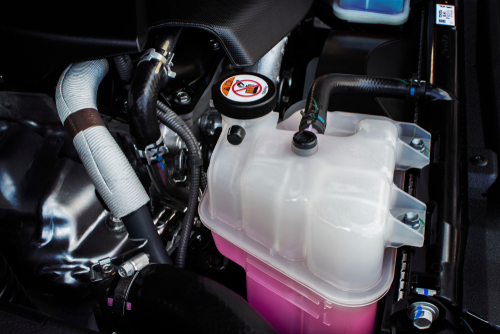
Insufficient coolant ranks as the single most common overheating cause. Without enough coolant, the system cannot absorb and transport heat effectively. Air pockets develop where coolant should be, creating hot spots in cylinder heads.
Check your coolant level when the engine is completely cool. Hot coolant under pressure can spray out dangerously. Find the overflow reservoir under your hood—typically a translucent plastic bottle with minimum and maximum lines. Coolant must reach the maximum line when cold.
Gradual coolant loss indicates a leak. Small leaks cause slow volume reduction over weeks or months. Park on a white surface overnight and look for colored drips beneath your Compass. Green, orange, or pink colors match coolant and signal system breaches.
Rapid coolant loss points to active pressurized leaks. High-risk locations include radiator hose connections, the water pump seal, and the intake manifold. One 2020 Compass owner found both upper and lower radiator hoses cracked severely. The vehicle lost coolant from near-empty to completely dry within weeks.
Inspect the overflow bottle base carefully. Many Compass models develop small leaks where the plastic connects to the bottle base. Plastic becomes brittle from heat cycles. A pressurized system reveals these leaks during inspection.
Add the correct coolant type. Your Compass requires either Hoat (Hybrid Organic Acid Technology) or Oat (Organic Acid Technology) coolant, depending on the model year. Mixing types creates gel that clogs the entire system. Check your owner’s manual or call a dealership for your specific type.
Cause #2: Thermostat Failure
The thermostat acts as your engine’s temperature valve. It opens around 203 degrees, allowing coolant to flow through the radiator where heat dissipates. A failing thermostat either stays open or stays closed.
A stuck-open thermostat allows constant coolant flow. The engine runs cool. Check engine code P0128 illuminates. This seems harmless, but it causes poor fuel economy and warning lights.
A stuck-closed thermostat prevents all coolant flow. Severe overheating occurs immediately. This failure demands urgent attention.
Your Compass uses two thermostats, not one. Most vehicles have one thermostat. Your Compass includes separate water and bypass thermostats. Both can fail independently. If you replaced one thermostat and problems persist, the second one likely needs replacement.
A scan tool confirms thermostat failure. Monitoring engine coolant temperature (ECT) versus gauge readings reveals the problem. If your gauge shows 220 degrees but the outside air is 55 degrees, the sensor is providing false information. A failed thermostat disrupts normal cooling flow.
Replacement takes 1-4 hours, depending on skill level. For the 2.4 MultiAir engine, the thermostat sits near the cylinder head. Experienced DIY mechanics complete this in 1-2 hours. First-time mechanics spend 3-4 hours and risk trapping air in the system if they don’t bleed properly.
Costs break down clearly. The thermostat assembly costs $40-$100. Independent shop labor runs $150-$300. Dealerships charge $300-$500. This repair costs far less than water pump replacement or engine work.
Cause #3: Radiator Fan Failure
Your cooling fan pulls air through the radiator when the engine runs hot. Without fan assistance during idle or AC use, airflow drops and cooling fails. Overheating during stop-and-go traffic or parking lot AC sessions points directly to fan problems.
Test the fan by starting your engine. Look at the fan immediately. The fan should rotate. Record a video of your engine bay. If the fan never spins or spins weakly, it needs replacement.
Two systems work together to activate the fan. The coolant temperature sensor detects heat. The cooling fan relay energizes the fan motor when the sensor signals high temperature. If the sensor reads cold (due to a stuck-open thermostat or sensor failure), the relay never activates the fan. Replacing the fan alone won’t help if the thermostat stays open.
Electrical failures exceed mechanical failures. The fan fuse blows more often than the motor fails. Check your fuse box. Look for fuse numbers 6 and 7—both control cooling. A blown 60-amp fuse (number 6) requires replacement. If it blows again immediately, the fan motor is internally shorted and needs replacement.
Fan assembly replacement requires basic skills. Remove the radiator overflow tank, disconnect wiring harnesses, and unclip mounting brackets. Video mechanics complete this in 15-20 minutes on camera—count on spending an hour your first time. Professional replacement costs $200-$600, including parts and labor.
Cause #4: Radiator Cap Degradation
A faulty radiator cap hides as the most overlooked cooling problem. This component regulates system pressure, allowing coolant to reach higher boiling points. A non-functional cap pressurizes the system too much, forcing coolant into the overflow bottle.
Modern Compass radiator caps hold 18 psi. This pressure rating increases the coolant boiling point by 3 degrees per psi. Without adequate pressure, coolant boils at lower temperatures. Vapor pockets form. Cooling fails.
Test the radiator cap with a pressure tester. A mechanic’s cooling system pressure tester connects to the radiator cap. If the system fails to hold 15-18 psi and bleeds pressure slowly, the cap has failed. Replacement costs $20-$50.
Replace the cap before assuming major failure. One Compass owner spent $500 for dealership radiator cleaning, but still experienced overheating. Replacing the radiator cap solved the problem completely. The cap costs less than a meal and requires no tools to install.
Rubber seals degrade from heat exposure. O-rings on both ends of the cap harden over time. Salt corrosion in cold climates speeds degradation. If your Compass has 80,000+ miles and has never had a cap replacement, degradation is likely.
Cause #5: Coolant Leaks and System Breaches
Leaks represent the second-most-concerning cause after low coolant. Unlike a simple top-off, leaks require finding the breach point before refilling.
Upper and lower radiator hoses crack with age. Rubber hoses become brittle from heat cycling. After 100,000 miles or 10+ years, splits develop and weep coolant. One 2020 Compass owner found both hoses cracked severely at just 100,000 miles—suggesting a possible manufacturing defect.
The water pump seal fails gradually. This engine-driven pump circulates coolant throughout the system. When the seal wears, small drips appear first. Then leaking accelerates. Water pump replacement costs $400-$800, including labor.
Radiator fins corrode and develop pinholes. Once coolant finds a tiny breach, the leak persists and worsens. Some Compass models report radiator clogging with debris and bugs after just 67,000 miles. Replacement costs $300-$600.
The intake manifold area can leak slowly. One owner’s 2020 Compass lost coolant with no visible leak beneath the vehicle. Investigation found a slow seep where coolant passages enter the intake manifold. Under pressure, the system lost a quart over 100 miles.
Pressure testing isolates leak sources. A technician applies air pressure equal to the cap rating. Visual inspection then pinpoints where coolant escapes. This diagnostic costs $50-$100 and prevents expensive parts replacement for the wrong component.
Cause #6: Air Pockets After Cooling Work
Overheating emerges after thermostat, radiator, or water pump repairs when the cooling system isn’t bled properly. Air pockets prevent coolant circulation. These bubbles create overheated zones, triggering temperature gauge spikes and potential head gasket failure.
Your Compass cooling design requires precise bleeding. Modern Compass models have bleeder valves on the thermostat housing and multiple air-trap locations. Following the wrong procedure leaves pockets that cause immediate or delayed problems.
The correct bleeding process has five steps. First, open the bleeder valve on the thermostat housing slightly. Add coolant slowly—rushing introduces more air. Second, start the engine and watch the temperature gauge. The thermostat won’t open until reaching 203 degrees. Keep coolant topped as the system circulates. Third, when the fan activates (you’ll hear it), check that steady coolant flows from the bleeder valve. Once constant flow appears without sputtering, close the valve. Fourth, turn off the engine and let it cool completely. Check the coolant level when cold and top off. Fifth, run the engine again with the heater on maximum to circulate coolant through the heater core.
Squeeze upper radiator hoses during operation. While the engine runs and while cooling, squeeze the upper radiator hose firmly. If hard resistance doesn’t exist, air pockets remain. Squeezing dislodges trapped air toward the bleeder valve. Some technicians repeat this multiple times across several heat cycles.
Expect the overflow tank to surge initially. When your freshly-cooled system reaches temperature, coolant expands and flows into the overflow. This is normal. When cold the next morning, check both the radiator and overflow levels. Both should reach full marks.
Multiple heat cycles beat impatience. Some air pockets only release after several warm-ups. If you bleed, drive 10 miles, then overheat, return to the bleeding process. Repeat until the temperature gauge remains stable.
Cause #7: Coolant Temperature Sensor Malfunction
The engine control module relies on coolant temperature data to adjust fuel mixture, ignition timing, and fan activation. A failed sensor sends incorrect readings, causing wrong computer decisions.
Three trouble codes indicate sensor problems.
- P0117: Sensor reports unusually low temperatures
- P0118: Sensor reports abnormally high readings
- P0119: Sensor produces intermittent false readings
All three trigger the check engine light and disrupt normal operation.
Temperature gauge confusion reveals sensor failure. Your gauge might show 230 degrees while the car runs fine and no fan activates. The sensor is reporting false information to both the gauge and engine computer. Actual temperature may be normal, but false signals prompt inappropriate responses.
Corrosion on sensor connectors creates intermittent failures. The sensor plugs into a wiring harness. Moisture and road salt corrode connection pins over time. One mechanic found wet coolant pooled on the male pins—proof that corrosion allowed liquid contamination.
Replacement takes 15-30 minutes if accessible. The sensor lives in a coolant-filled port near the thermostat housing. Removing it allows coolant to drip. Have a drain pan ready. Refill the system afterward. Replacement costs $100-$200 including parts and labor.
Test the sensor before replacing it. With the ignition on and engine off, measure sensor voltage. A properly functioning sensor provides 5 volts when unplugged. If the reading differs, the sensor is bad. This confirmation prevents unnecessary parts replacement.
Cause #8: Radiator Blockage and Restriction
Debris accumulation inside radiator fins restricts coolant flow. External blockage from bugs and dirt prevents air passage through the radiator core.
External blockage occurs rapidly in some climates. One 2022 Compass owner discovered radiator blockage at just two years of age during summer stop-and-go traffic. The dealership power-washed the radiator. Overheating returned within months. Further investigation revealed bugs and debris clogged the radiator front again.
Mineral buildup happens inside radiators. Hard water deposits create internal restrictions. Using distilled water mixed with your coolant reduces this problem. Running a cleaning flush every 30,000 miles maintains your radiator.
Flow measurement confirms restriction. If radiator hoses feel significantly warmer on the inlet than the outlet, full coolant flow isn’t occurring. Limited flow means limited heat rejection—a formula for overheating.
Complete Diagnostic Flowchart
Start with the simplest checks before assuming major failure. Most overheating stems from problems costing under $100 to fix.
Step 1: Check coolant level when completely cool. Add coolant to the maximum line if low. Drive 20 miles on varied roads and observe the temperature gauge. If it stays stable, you’re done. If it climbs, continue to step 2.
Step 2: Inspect your radiator cap. Feel the rubber seal for hardness. Look for cracks or corrosion on the spring. Replace the cap ($25-$50) and test again. This single component causes overheating in many cases.
Step 3: Watch the cooling fan activate. With the engine running and warmed up, the fan should activate audibly. If not, check the 60-amp fuse (number 6) in your fuse box. A blown fuse needs replacement. If it blows again, the fan motor is internally shorted.
Step 4: Confirm actual temperature. Note what the temperature gauge shows. Use a scan tool or ask a mechanic to monitor actual engine coolant temperature through the engine computer. If these numbers differ significantly, the coolant temperature sensor has failed.
Step 5: Check for visible leaks. Look beneath the vehicle for colored drips. Inspect all radiator hose connections, the water pump area, and the radiator itself. Tighten any loose hose clamps. Use a pressure tester to identify small leaks.
Step 6: Suspect air pockets if recent work preceded overheating. If thermostat or water pump work happened recently, return to the bleeding procedure above.
Step 7: Request professional diagnostics if steps 1-6 don’t identify the cause. A cooling system pressure test ($75-$150) and computer scan ($50-$100) pinpoint the failure with certainty.
DIY Repairs vs. Professional Service
Knowing what you can safely fix yourself prevents costly mistakes.
Safe for experienced DIY mechanics:
- Coolant cap replacement
- Fuse replacement
- Coolant top-off
- Radiator external cleaning
- Hose clamp tightening
- Basic troubleshooting
Possible for skilled DIYers with proper tools:
- Thermostat replacement
- Radiator fan replacement
- Water pump replacement
- Sensor replacement
- Cooling system bleeding (requires patience and correct procedure)
Requires professional service:
- Pressure testing and leak diagnosis
- Cylinder head work
- Head gasket replacement
- Internal engine cleaning
- Transmission cooler issues
- Engine overhaul or replacement
Thermostat replacement gone wrong costs $200-$400 in additional repairs. Failed pressure test diagnosis on a head gasket might mean $8,000 in unnecessary engine work. Know your limits before starting.
Prevention: Maintaining Your Cooling System
Most overheating is preventable through simple maintenance.
Change coolant per manufacturer intervals. Your owner’s manual specifies the drain-and-refill schedule. Most Compass models require change every 30,000 miles or three years. Coolant degrades over time, losing corrosion protection and thermal efficiency.
Use the correct coolant type for your year. Mixing coolant types creates gel that clogs your system. Write down which type your specific model year requires. Buy only that type for top-offs.
Inspect hoses annually. Squeeze radiator hoses when the engine is cool. They should feel firm but slightly flexible. Cracks, splits, or mushy spots mean replacement is coming soon.
Listen for fan activation. When your AC turns on or the engine fully warms, the cooling fan should engage. If you’ve never heard it activate, it may have never worked. A functioning fan makes a distinctive whooshing sound.
Monitor temperature gauge behavior. Normal operation keeps the needle at the midpoint. Spikes during idle or unusual readings warrant investigation before failure occurs.
Keep the radiator clean. Annually rinse the front of the radiator with low-pressure water to clear bugs and dust. This 10-minute task prevents debris blockage.
Real Owner Experiences
Learning from others guides your decisions.
One 2020 Compass owner ignored early temperature gauge warnings. By the time he addressed the issue, the dealership quoted $9,989 for repairs including engine removal. Investigation revealed severely cracked upper and lower radiator hoses. He replaced them himself with parts totaling under $100.
Another owner’s 2022 Compass experienced repeated overheating despite dealership radiator cleaning. The diagnosis was thermostat failure—a $300 repair that should have happened initially instead of the $500 radiator cleaning.
A third owner discovered that simply replacing the radiator cap solved overheating that had persisted despite adding coolant repeatedly. The cap cost $35 and required five seconds to install.
These experiences highlight that overheating diagnosis works best when following a systematic approach rather than guessing at the most complex solutions first.
When to Seek Dealership Service
Dealerships excel at diagnosis requiring manufacturer-specific knowledge, recall information, or warranty coverage.
Go to the dealership if your Compass remains under manufacturer warranty. Overheating repairs covered by warranty should be completed by authorized service. If overheating stems from a defect—like radiator clogging at low mileage—the dealership may cover repairs under warranty extension.
For models experiencing known cooling issues, dealership service ensures the correct fix. Confirm through owner groups or recall databases whether your model year has a documented cooling system problem. Jeep may have issued a service bulletin describing the proper repair.
Independent mechanics cost less but lack access to manufacturer technical service bulletins. These hidden documents describe specific diagnostic steps for common issues that prevent misdiagnosis. Dealerships have this information.
Summary: Getting Your Compass Running Cool Again
Jeep Compass overheating stems from a handful of common failures. Low coolant, failing thermostats, non-functioning fans, degraded radiator caps, and system leaks account for the vast majority of cases. Many fixes cost under $200 and require basic troubleshooting.
Start simple: check coolant level, inspect the radiator cap, confirm the fan operates, and look for visible leaks. These steps eliminate 60% of causes without any specialized tools.
If basic checks pass, move to slightly more complex diagnostics like pressure testing and code scanning. Address overheating immediately. Ignoring climbing temperatures trades a $300 thermostat repair for a $4,000+ head gasket or engine job. Your Compass will reward cooling system attention with reliable, cool-running performance.