
Jeep Gladiator 3.5-Inch Lift With 35s: Complete Fitment & Buying Guide

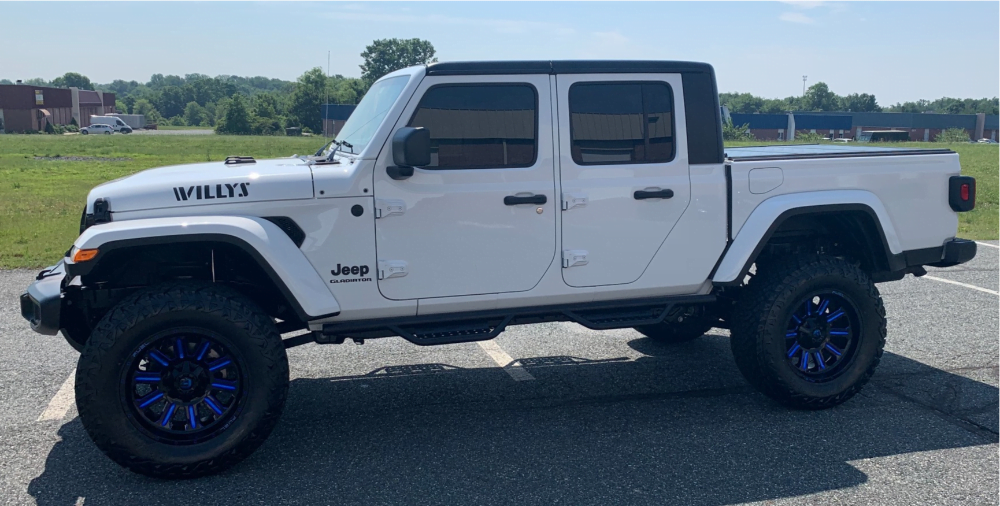
A 3.5-inch lift gives your Jeep Gladiator JT genuine clearance for 35-inch tires across every trim level. But it’s more lift than most Gladiators strictly need just to run 35s on the street. Rubicon and Mojave owners can often fit 35s with a leveling kit or 2.5-inch lift, while Sport and Overland trims benefit from the extra height—provided the rest of the suspension geometry gets corrected too.
Will 35-Inch Tires Fit a Jeep Gladiator With a 3.5-Inch Lift?
Yes. A 3.5-inch suspension lift provides solid clearance for 35-inch tires on the Gladiator JT. But “fits” and “doesn’t rub” aren’t the same thing.
Static clearance—what you see parked in the driveway—tells you very little. What matters is clearance at full steering lock, full suspension compression, and full articulation on the trail. According to the 35-inch tire fitment on the Gladiator JT, tire width, wheel offset, bump-stop length, and axle travel all shape the actual result more than lift height alone.
Tire sizing isn’t uniform either. That’s worth remembering.
35×11.50 vs. 35×12.50 Tires
A 35×11.50R17 is roughly 1 inch narrower than a 35×12.50R17. That inch matters at full lock and full compression. Narrower tires clear inner fenders, control arms, and sway-bar links more easily. Wide 35s look aggressive, but they demand more careful wheel offset selection and sometimes bump-stop trimming.
Street Fitment vs. Full-Articulation Fitment
Street fitment means the tire clears everything while driving normally. Full-articulation fitment means it also clears at maximum droop and compression on uneven terrain. A 3.5-inch lift handles both cases well—but only when the wheel offset, bump stops, and geometry correction are dialed in correctly.
Why Lift Height Alone Doesn’t Guarantee Clearance
Fender design, axle centering, and wheel backspacing all affect the outcome. A poorly centered axle causes uneven clearance side to side. Wrong backspacing pushes the tire into the fender or the suspension. Lift height sets the stage; everything else determines whether the performance actually delivers.
Is a 3.5-Inch Lift Necessary for 35s?
Not always. That’s the honest answer.
Gladiator Rubicon and Mojave models have factory suspension tuned for larger tires, wider fender clearance, and more suspension travel. Many owners run 35s on these trims with stock suspension or a small leveling kit—especially for street and light trail use. The Jeep Gladiator lift-kit fitment guide confirms that the Rubicon’s factory setup already provides meaningful clearance advantages over base trims.
Sport and Overland trims typically need 2 to 2.5 inches of lift at minimum for 35s, plus attention to fender clearance. A 3.5-inch lift becomes the right choice when you want articulation room, plan to carry extra weight from bumpers and armor, or intend to run 37s later. If you’re also building a trail-protection setup, pairing the lift with Jeep Wrangler rock rails is worth considering alongside the suspension work.
| Setup | Best For | Main Advantage | Main Limitation |
|---|---|---|---|
| Stock or leveling kit | Rubicon/Mojave street use | Lowest cost, least geometry change | Limited compression clearance |
| 2.5-inch lift | Mixed street and trail use | Balanced clearance and drivability | Less room for aggressive articulation |
| 3.5-inch lift | Serious trail and overland builds | More clearance and suspension travel | Requires more supporting components |
A taller lift increases cost and complexity. Choose 3.5 inches because your use case demands it—not simply because 35s are on the shopping list.
Trim-Specific Fitment: Sport, Willys, Overland, Rubicon, and Mojave
Trim level is one of the most overlooked variables in Gladiator lift decisions. The Gladiator JT tire-fitment recommendations make this clear: applying Rubicon fitment advice to a Sport Gladiator is a common and expensive mistake.
Sport and Overland
These trims have narrower factory fender clearance and less suspension travel than the Rubicon. Running 35s on stock Sport suspension risks rubbing at full compression. A 2.5 to 3.5-inch lift with bump-stop extensions and fender consideration gives you clean fitment. Aftermarket Jeep Wrangler fender options translate directly to Gladiator-compatible solutions that can reduce lift requirements by opening up fender space.
Willys
The Willys sits between Sport and Rubicon in factory clearance. It runs 32-inch tires from the factory with a suspension tuned for light trail work. Moving to 35s on a Willys generally needs 2 to 3.5 inches of lift depending on wheel choice and intended use. It responds well to a complete lift kit with geometry correction.
Rubicon
The Gladiator Rubicon carries Dana 44 axles, Fox shocks, electronic sway-bar disconnect, and factory 33-inch tires. Many owners fit 35s with a leveling kit alone for street use. A 3.5-inch lift on a Rubicon makes most sense for serious off-road articulation or preparing for future 37-inch tires.
Mojave
The Mojave uses a high-speed desert suspension tune with Fox 2.5-inch shocks and internal bypass dampers. It’s built for fast off-road travel, not rock crawling. A 3.5-inch lift can work on the Mojave, but it changes the high-speed handling character. Check compatibility carefully—Mojave-specific components may be required.
What Should a Complete 3.5-Inch Lift Kit Include?
This is where most buyers go wrong. Advertised lift height doesn’t tell you whether the kit corrects your suspension geometry. A box that raises the truck 3.5 inches without addressing axle centering, caster, or bump travel is incomplete.
For broader suspension-selection context across Jeep platforms, the guide to Jeep Wrangler lift-kit basics covers many of the same component principles—though Gladiator kits must be JT-specific due to the longer wheelbase and truck rear structure.
Springs and Shocks
Springs establish your ride height. Shocks control how the suspension moves through that height. A 3.5-inch lift needs shocks valved specifically for the new travel range. Reading about Jeep Wrangler shocks and suspension control gives useful context on shock selection—the same principles apply to Gladiator builds.
Track Bars and Axle Centering
When you lift a Gladiator, the front axle shifts laterally. An adjustable front track bar recenters the axle under the vehicle. Without it, the steering wheel won’t center properly and tire clearance becomes uneven side to side. This part is non-negotiable for trail use.
Control Arms and Caster
Lifting the truck changes caster angle, which affects steering return and high-speed stability. Adjustable control arms let you restore correct caster after installation. Some budget kits skip these entirely. That’s a problem.
Bump Stops and Brake Lines
Bump-stop extensions limit suspension compression and prevent tire contact at the top of the suspension’s travel. Without them, 35s can contact the fender or suspension components at full compression. Brake-line extensions are kit-dependent—confirm whether your specific kit requires them before installation.
Sway-Bar and Driveline Components
Sway-bar links may need relocation or replacement to maintain proper geometry at the new height. Driveshaft upgrades become relevant with significant articulation, added payload, or extreme use. Verify this requirement against your specific kit and intended driving conditions.
| Component | Status for 3.5-Inch Lift | Why It Matters |
|---|---|---|
| Matched shocks | Required | Controls suspension at the new ride height |
| Springs or lift components | Required | Establishes ride height |
| Adjustable front track bar | Strongly recommended | Recenters the front axle |
| Control arms | Recommended | Restores caster and geometry |
| Bump-stop extensions | Recommended | Controls compression and tire clearance |
| Brake-line extensions | Kit-dependent | Maintains safe line travel |
| Driveshaft upgrade | Use-dependent | Addresses increased operating angles |
| Re-gearing | Use/drivetrain-dependent | Recovers acceleration with larger tires |
Wheel, Offset, and Tire Choices for 35s
Wheel selection can make or break a 35-inch fitment. Most Gladiator owners run 17-inch or 18-inch wheels with 35-inch tires. The critical numbers are width, backspacing, and offset.
For most builds, a wheel with 4.5 to 5.0 inches of backspacing (approximately -12mm to +6mm offset) works well with 35-inch tires on a lifted Gladiator. More negative offset pushes the tire outward toward the fender. More positive offset pushes it inward toward suspension components. Both extremes cause clearance problems.
The Jeep Gladiator tire-size guide covers Rubicon, Mojave, and base trim configurations with specific offset notes. Use it to cross-reference your planned wheel against your trim’s suspension geometry.
Narrow 35s vs. Wide 35s
A 35×11.50 tire fits more easily on most lifts and works with a wider range of wheel offsets. A 35×12.50 looks better and provides more traction contact, but demands careful inner and outer clearance checks. Don’t choose tire width by appearance alone.
Backspacing, Offset, and Inner Clearance
At full lock and full compression, the inner sidewall of a wide 35 can contact the control arm or track bar. Checking this clearance before finalizing your purchase saves significant headaches. Ask your tire and wheel supplier for fitment data specific to the JT Gladiator.
Spare-Tire Fitment
Your full-size spare must match the mounted tires. Confirm that the tailgate hinge and spare-tire carrier support the weight of a 35-inch tire and your chosen wheel. Heavier wheels and wide tires can stress factory carriers.
For broader tire budgeting, the guide to Jeep Wrangler tire-size costs provides useful price benchmarks. Comparing options for best all-terrain tires for Jeep helps narrow down which compound and tread pattern suits your primary terrain.
Best 3.5-Inch Lift Configurations for 35s
Three setups cover most Gladiator owners building for 35-inch tires. Each trades cost against capability.
The Rough Country 3.5-inch Gladiator lift kit is one of the most visible budget-to-mid-range options, advertised with N3 shocks, an adjustable front track bar, and clearance rated for up to 37-inch tires. Verify current component inclusions, model-year compatibility, and drivetrain fitment before purchasing.
| Configuration | Best For | What to Verify | Main Tradeoff |
|---|---|---|---|
| Basic 3.5-inch spring and shock kit | Budget street/trail builds | Track bars, bump stops, brake lines | May need additional geometry parts |
| Complete kit with control arms | Regular trail use | Arm adjustability and alignment range | Higher cost and install time |
| Premium adjustable system | Hard articulation and long builds | Joint quality, warranty, serviceability | Most expensive |
| 3.5-inch system built for 37s | Owners planning an upgrade | Driveline, gearing, axle needs | May be excessive for permanent 35s |
Budget-oriented setup: A basic 3.5-inch spring and shock kit from Rough Country or Teraflex covers the lift height but often requires separate track bars and bump stops. Plan for $800 to $1,400 in parts, plus alignment labor.
Balanced daily-driver setup: A complete kit from ReadyLIFT or Zone Offroad with matched shocks, an adjustable track bar, and sway-bar links runs $1,500 to $2,500. This is the right call for most owners who split time between street and moderate trails.
Premium trail-oriented setup: Fox or King coilover conversions with adjustable control arms from Metalcloak or GenRight handle serious articulation and long-term builds. Expect $3,000 to $5,500 before installation. Overkill for permanent 35s, but ideal if 37s are in the future.
Never treat an advertised maximum tire size as a guarantee of rubbing-free performance with every wheel and trim combination. Always verify with your specific offset and tire width.
Alignment, Drivability, and Installation Requirements
A professional alignment is mandatory after any lift installation. Don’t skip it. The key checks are caster, toe, steering-wheel centering, axle centering, and driveshaft angles.
Recheck all fasteners after the first 500 miles. Components settle after initial driving and trail use. Inspect brake lines, shocks, sway-bar links, and tire clearance at full compression before the first serious trail run.
Taller lifts affect highway handling. A 3.5-inch lift raises the center of gravity and changes steering feel compared to stock. Proper caster correction through adjustable control arms helps restore steering return and high-speed stability.
If you’re building a loaded overland vehicle with a winch, bumpers, and armor, the Jeep Wrangler towing capacity chart offers relevant load context. Added payload lowers effective ride height and increases suspension demand—factor that into your shock and spring selection.
When a Driveshaft Upgrade May Be Needed
Heavy articulation, significant payload, or extreme lift can increase driveshaft operating angles beyond factory tolerances. If you’re regularly using the suspension’s full travel off-road, a driveshaft upgrade reduces vibration and extends component life. This is use-dependent, not automatic.
Frequently Asked Questions About a Gladiator 3.5 Lift With 35s
Can a stock Jeep Gladiator fit 35s?
Rubicon and Mojave trims can run 35-inch tires on stock suspension for street use, particularly with a 33×12.50 or 35×11.50 tire and a compatible wheel offset. Sport and Overland trims generally need at least 2 inches of lift and fender attention for clean clearance.
Is 3.5 inches too much lift for 35s?
Not too much—but it may be more than you need for 35s alone. A 3.5-inch lift makes more sense when you prioritize full articulation clearance, carry significant added weight, or plan to move to 37-inch tires. For a daily-driven Gladiator staying on 35s, a 2.5-inch kit may be sufficient.
Do 35s require re-gearing?
Moving from factory 32s or 33s to 35-inch tires increases effective gear ratio and reduces acceleration and towing performance. Re-gearing to 4.56 or 4.88 ratios helps recover lost performance. The Jeep Wrangler re-gearing guide covers costs and drivetrain considerations in detail. It’s not required, but it’s worth serious consideration for towing or frequent off-road use.
Will 35s rub with a 3.5-inch lift?
With correct wheel offset (4.5 to 5.0 inches of backspacing) and proper bump-stop extensions, 35-inch tires should clear cleanly at most lift heights of 3 inches or more. Wide 35×12.50 tires need more careful verification at full lock and full compression.
Do I need adjustable control arms?
Adjustable control arms aren’t always included in budget kits, but they significantly improve caster correction and alignment range at 3.5 inches of lift. For regular trail use, they’re worth the added cost.
Will a 3.5-inch lift affect highway handling?
Yes, noticeably. The higher center of gravity and changed caster affect steering feel and body roll. Proper alignment, quality shocks, and caster correction minimize the impact. Most owners adapt quickly; the difference from stock is real but manageable.
Final Recommendation
For most daily-driven Gladiators running permanent 35s, a complete 2.5-inch lift kit with matched shocks and an adjustable track bar is the balanced choice. It provides clean fitment across most trim levels without the added complexity of a taller lift.
Choose a complete 3.5-inch system when you regularly articulate off-road, carry significant added payload, want compression clearance at full travel, or plan to move to 37-inch tires in the future. Always select a Gladiator-specific kit—Wrangler kits don’t account for the JT’s longer wheelbase, truck rear structure, or payload requirements.
Before buying, confirm these five things:
- Trim level and factory suspension design
- Tire dimensions: actual width (35×11.50 vs. 35×12.50)
- Wheel offset and backspacing for your chosen rim
- Kit completeness: shocks, track bar, control arms, bump stops
- Intended use: street, trail, loaded overland, or future 37-inch upgrade
Get the geometry right. The lift height is just the starting point.