What Does CJ Stand For in Jeep? Complete History and Guide in 2026

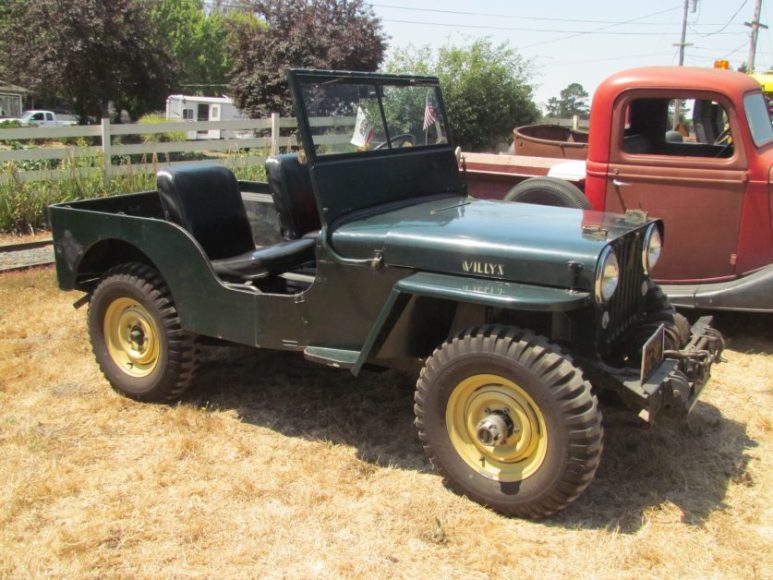
CJ stands for “Civilian Jeep,” the iconic designation Willys-Overland gave to its post-WWII consumer vehicles adapted from military origins. From 1945 to 1986, the CJ series evolved through multiple generations, establishing the blueprint for modern Jeep Wranglers and cementing the brand’s off-road legacy.
Origins of the CJ Name
The CJ designation emerged directly from Willys-Overland’s wartime success in producing military Jeeps during World War II. The company manufactured over 359,000 Willys MB units for Allied forces, alongside Ford’s GPW variant, creating what became the most recognizable military vehicle in history. As the war ended in 1945, Willys recognized civilian demand for a rugged, go-anywhere utility vehicle.
The term “Civilian Jeep” distinguished these new models from their military predecessors, the MB and GPW. While many assume “GP” meant “General Purpose,” historical evidence suggests it actually referenced the vehicle’s military supply catalog designation. The “CJ” moniker clearly communicated the vehicle’s peacetime purpose while maintaining a connection to its proven military pedigree.
Willys developed the first CJ prototype in 1944, before the war officially concluded. Engineers modified the military design by adding a tailgate for easier cargo access, relocating the spare tire to the rear, and strengthening the drivetrain for civilian agricultural and industrial work. The CJ-1 prototype never reached production, but it established the framework for the CJ-2 that followed.
In 1945, Willys launched the CJ-2A as the first mass-produced civilian Jeep, marketed as the “Universal Jeep”. This model featured a side-mounted spare tire, larger headlights than military versions, and a more comfortable driver position. Farmers, ranchers, and rural workers immediately embraced the vehicle’s versatility, purchasing over 200,000 units before production ended in 1949.
Evolution of CJ Models (1945-1986)
The CJ lineage spanned four decades with continuous improvements to engines, comfort, and capability. Each generation built upon its predecessor while maintaining the core characteristics that defined the Civilian Jeep concept.
The CJ-3A (1949-1953) refined the original formula with a one-piece windshield and improved ventilation. Willys then introduced the CJ-3B in 1953, featuring a taller hood to accommodate the more powerful “Hurricane” F-head four-cylinder engine producing 75 horsepower. This marked the first significant engine upgrade in the CJ series.
The CJ-5 became the longest-running and most popular model, produced from 1954 to 1983. Based on the military M38A1, the CJ-5 featured a rounded body style and a longer wheelbase (81 inches) that improved stability. Over its 30-year production run, manufacturers built more than 600,000 CJ-5 units, making it synonymous with the Jeep brand. The CJ-5 received numerous powertrain options throughout its life, including V6 and V8 engines after American Motors Corporation (AMC) acquired Jeep in 1970.
Kaiser introduced the CJ-6 in 1955 as a stretched version with a 101-inch wheelbase, providing 20 additional inches of cargo space. Though less common in the United States, the CJ-6 gained popularity internationally and remained in production until 1981.
The CJ-7 (1976-1986) represented the final evolution of the Civilian Jeep. With a 93.4-inch wheelbase, the CJ-7 offered improved on-road manners while retaining off-road capability. Key innovations included an optional automatic transmission, molded plastic doors, and the choice of a removable hardtop or full steel top. The CJ-7 introduced the Quadra-Trac full-time four-wheel-drive system, making it more user-friendly for everyday drivers.
AMC discontinued the CJ series in 1986 to make way for the Jeep Wrangler YJ, which launched for the 1987 model year. The Wrangler maintained the CJ’s spirit but featured square headlights (controversial among purists), improved safety equipment, and modern comfort amenities.
CJ vs. Later Jeep Wrangler Models
Understanding how CJ compares to subsequent Wrangler generations clarifies Jeep’s evolution. The internal code system that began with YJ continues today, though these designations don’t follow the acronym pattern of “CJ”.
The Wrangler YJ (1987-1995) marked the transition from CJ to modern Jeep design. While maintaining body-on-frame construction and removable tops, the YJ featured wider track width, improved suspension geometry, and rectangular headlights. Many CJ purists initially rejected these changes, but the YJ proved significantly more stable on highways.
The Wrangler TJ (1997-2006) reintroduced round headlights and added coil-spring suspension, dramatically improving ride quality without sacrificing off-road prowess. The TJ represented the first major mechanical departure from CJ-era leaf springs.
Subsequent models—JK (2007-2018), JL (2018-present), and JT Gladiator pickup (2020-present)—continued adding size, technology, and comfort. Unlike “CJ” (Civilian Jeep), these letter codes are internal platform designations without specific meanings.
| Model | Years | Wheelbase | Key Distinction |
|---|---|---|---|
| CJ-7 | 1976-1986 | 93.4″ | Last traditional CJ; leaf springs |
| YJ | 1987-1995 | 93.4″ | Square headlights; wider track |
| TJ | 1997-2006 | 93.4″ | Coil springs; round headlights return |
| JK | 2007-2018 | 95.4″-116″ | Four-door option; modern safety |
| JL | 2018-present | 96.8″-118.4″ | Turbocharged engines; advanced tech |
Common Questions About Jeep CJ
What does GPW stand for on WWII Jeeps?
The military Ford variant used “G” for government contract, “P” for 80-inch wheelbase, and “W” for Willys design. Ford produced these under license during the war, with identical specifications to Willys MB models.
Why was the CJ discontinued?
Chrysler (which acquired AMC in 1987) replaced the CJ with the Wrangler to meet updated federal safety regulations and modernize the platform. The CJ’s basic design had reached the limits of contemporary safety and emissions standards.
How much do vintage CJ Jeeps cost today?
Restored CJ models range from around $15,000 for driver-quality examples to over $50,000 for fully restored, low-mileage specimens. Original CJ-5s and CJ-7s in excellent condition command premium prices among collectors. Unrestored project vehicles can be found starting around $5,000-$10,000, depending on condition and completeness.
Which CJ model is most collectible?
The CJ-5 remains most sought-after due to production volume and parts availability, though early CJ-2A and CJ-3B models attract serious collectors. Limited-edition CJ-7 models like the Golden Eagle and Renegade packages also command strong collector interest.
Are CJ parts still available?
Extensive aftermarket support exists for CJ-5 and CJ-7 models, with many reproduction parts readily available. Earlier CJ-2A and CJ-3A models have more limited but still adequate parts availability through specialty suppliers and Jeep clubs.
CJ Legacy in Modern Jeep Culture
The CJ established design language and capability standards that define Jeep identity in 2026. Every Wrangler produced since 1987 traces its DNA directly to CJ innovations: removable tops, fold-down windshields, and go-anywhere four-wheel-drive systems.
The vintage Jeep restoration community thrives today, with specialized shops, clubs, and events dedicated to preserving CJ models. Online forums and social media groups connect thousands of CJ owners who share technical knowledge, parts sources, and restoration tips. Annual Jeep events like the Easter Jeep Safari in Moab, Utah, regularly feature pristine CJ examples alongside modern Wranglers.
CJ values have steadily appreciated as collectors recognize these vehicles’ historical significance. Well-maintained examples represent tangible connections to American automotive heritage, combining military pedigree with civilian innovation. The CJ’s influence extends beyond Jeep—it established the template for the entire sport utility vehicle category that dominates today’s automotive market.
The ongoing popularity of Jeep Wranglers, consistently ranking among America’s best-selling SUVs, validates the CJ’s enduring design philosophy. Modern buyers still seek the same attributes CJ buyers valued in 1945: capability, simplicity, and adventure-ready versatility. The “CJ” may no longer roll off production lines, but its spirit lives on in every Wrangler conquering trails worldwide.