
What Is the Smallest Jeep Model? Complete Specifications Guide

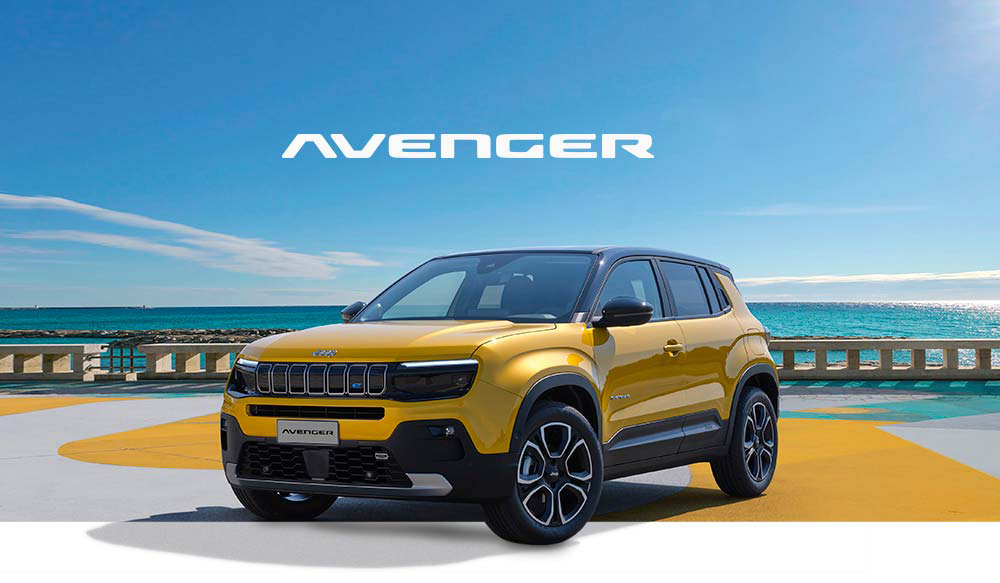
The Jeep Avenger is the smallest Jeep ever produced. It measures 148.4 inches long with 200mm ground clearance and Trail-capable off-road performance. However, North American buyers cannot purchase the Avenger—the Renegade becomes your only compact Jeep option. The Renegade measures 166.6 inches long and delivers Trail Rated certification, making it the smallest Jeep available in the US and Canada.
Understanding Jeep’s Smallest Offering: The Avenger
The Jeep Avenger launched in 2023 as a European-focused subcompact crossover. Dimensions are precise: 4.08 meters (148.4 inches) length, 1.77 meters (69.7 inches) width, and 1.53 meters (60.2 inches) height.
The Avenger weighs 1,257 kilograms (2,772 pounds) in base form. This weight is 138-353 kilograms lighter than comparable Renegade models. Lighter weight directly improves fuel efficiency and off-road traction.
Jeep manufactures the Avenger in Poland using the STLA Small platform. Production reaches Europe, Turkey, Morocco, Japan, and South Korea. North America remains excluded from all markets.
Ground clearance measures 200mm (7.9 inches). Approach angle reaches 20 degrees while departure angle extends to 32 degrees. Both measurements enable confident trail navigation despite compact dimensions.

The Renegade: Compact Jeep for North American Markets
The Renegade launched in 2015. Dimensions measure 4.24 meters (166.6 inches) in length, 1.80 meters (74.2 inches) in width, and 1.67 meters (66.5 inches) in height.
The Renegade weighs 1,395-1,610 kilograms depending on powertrain selection. It costs $29,445-$37,000 across US trim levels.
Jeep manufactures the Renegade globally, ensuring availability across North American, European, Asian, and South American dealerships. This broad distribution establishes the Renegade as the smallest Jeep practically accessible to most buyers.
The standard ground clearance reaches 8.7 inches (220mm). The Trailhawk trim increases this to 10.8 inches. Approach angle measures 30.5 degrees while departure angle reaches 34.3 degrees—both exceed the Avenger’s specifications.
Physical Size Comparison
Length difference: The Renegade adds 16 centimeters (18 inches) to the Avenger’s footprint. This extra length extends the cargo area rather than the passenger cabin.
Width difference: The Renegade gains 3 centimeters (2.5 inches) across the body. Passenger shoulder room increases marginally but noticeably for rear-seat occupants.
Height difference: The Renegade stands 14 centimeters (6.3 inches) taller. This reduces low-clearance anxieties when passing under structures.
Wheelbase: Both vehicles share virtually identical wheelbase—2.56 meters (Avenger) versus 2.57 meters (Renegade). The 1-centimeter difference proves negligible for handling characteristics.
Weight: The Avenger’s lighter weight improves acceleration and braking response. The Renegade’s additional weight reduces body roll during cornering.
| Metric | Avenger | Renegade | Advantage |
|---|---|---|---|
| Length | 148.4″ | 166.6″ | Avenger (compact) |
| Width | 69.7″ | 74.2″ | Renegade (space) |
| Height | 60.2″ | 66.5″ | Avenger (low center) |
| Wheelbase | 100.8″ | 101.2″ | Identical |
| Weight | 2,772 lbs | 3,075-3,550 lbs | Avenger (lighter) |
| Ground Clearance | 7.9″ | 8.7-10.8″ | Renegade (higher) |
Cargo Space and Interior Dimensions
Avenger Cargo Capacity:
- Seats up: 355 liters (12.5 cubic feet)
- Seats folded: 1,297 liters (45.8 cubic feet)
Renegade Cargo Capacity:
- Seats up: 351 liters (12.4 cubic feet)
- Seats folded: 1,297 liters (45.8 cubic feet)
Both vehicles deliver identical maximum cargo space. The Avenger’s more vertical interior architecture maximizes usable space despite its lower roofline. The Renegade’s additional length distributes cargo weight further from the rear axle.
Legroom Measurements:
- Front legroom: 41.2 inches (both vehicles)
- Rear legroom: 35-36 inches (both vehicles)
Headroom Measurements:
- Front headroom: 41.1 inches (both vehicles)
- Rear headroom: 36-37 inches (both vehicles)
The Renegade’s greater width provides 2-3 additional inches of hip room and shoulder room. For three-passenger rear seating, the Renegade proves more comfortable on extended drives.
Both vehicles now feature 10.3-inch touchscreens with wireless charging. Apple CarPlay and Android Auto come standard across both lineups. The Renegade carries a longer software iteration history, meaning fewer bugs and stability improvements from extended real-world testing.
Off-Road Capabilities and Trail Rating
The Renegade Trailhawk earns official Trail Rated certification. This means Jeep validated off-road performance across five measurable criteria:
- Ground clearance: 10.8 inches (Trailhawk only)
- Approach angle: 30.5 degrees
- Departure angle: 34.3 degrees
- Water fording: 19 inches
- Articulation: 21:1 crawl ratio with Active Drive Low
The Avenger lacks the current Trail Rated designation. However, the Avenger 4xe hybrid delivers surprising capability through dual electric motors. This system produces 1,900 newton-meters (1,400 foot-pounds) of rear-axle torque—exceeding all Renegade gasoline engine outputs.
Real-world Avenger capabilities:
- Climbs 40-percent inclines on unpaved surfaces
- Maintains traction when front wheels contact 0-grip terrain
- Selec-Terrain system adjusts power delivery for Normal, Eco, Sport, Snow, Mud, and Sand modes
Real-world Renegade advantages:
- Hill Descent Control prevents brake fade during rocky downslopes
- Active Locking Rear Differential (available) maximizes traction across all four wheels
- Proven Trail Rated validation enables confident trip planning
The Renegade’s angle advantages emerge on boulder fields and steep embankments. A 30-degree departure angle marks the threshold where angles become problematic. Both vehicles exceed this threshold, though the Renegade provides 2-4 additional degrees of clearance.
Engine Options and Real-World Fuel Economy
Avenger Powertrain Options:
- 1.2-liter turbocharged petrol: 100 horsepower, 130 newton-meters torque. Real-world economy: 5.5 liters per 100 kilometers (approximately 42 miles per gallon).
- All-electric variant: 156-horsepower electric motor, 54 kWh battery. Range extends 400 kilometers (approximately 250 miles) per WLTP test cycle.
- Plug-in hybrid 4xe: 145 horsepower combined output with 1,900 newton-meters rear-axle torque.
Renegade Powertrain Options:
- 1.3-liter turbocharged petrol: 130-150 horsepower depending on tune. Real-world economy: 23 city/29 highway miles per gallon.
- 1.6-liter diesel: 110-130 horsepower with higher torque delivery. Range extends 500+ miles between fill-ups on a single 66-liter tank.
- Plug-in hybrid 4xe: 240 horsepower combined output (only available with higher-output gasoline engine configuration).
The Avenger achieves superior efficiency in European testing cycles. Its 5.5-5.7 liters per 100 kilometers (40+ miles per gallon equivalent) advantage reflects lighter weight and aerodynamic optimization.
The Renegade compensates with larger fuel tanks—55 liters (standard) versus 66 liters (diesel)—extending range despite lower economy ratings. A 2,000-pound towing capacity enables light trailer work that the Avenger cannot perform.
Market Pricing and Value Comparison
Jeep Renegade North America:
- Base Sport (FWD): $29,445
- Limited AWD: $32,000-$34,000
- Trailhawk 4×4: $35,000-$37,000
- Plug-in hybrid 4xe: Add $6,000-$8,000 to equivalent trim
Jeep Renegade India:
- Base trim: ₹10 lakh (approximately $12,000 USD)
- Top-tier variant: ₹16 lakh (approximately $19,200 USD)
Jeep Avenger Europe:
- Base Longitude petrol: €25,049 (approximately £27,578)
- Summit trim: €30,000+
- All-electric variant: €28,000+
- Plug-in hybrid 4xe: €32,000+ (projected)
North American buyers face no real pricing alternative—only the Renegade exists. European buyers benefit from competitive pricing between the two vehicles. The Avenger’s lower starting price appeals to budget-conscious city drivers. The Renegade’s additional space justifies a higher cost for families.
Five-year or 75,000-mile warranties cover both vehicles. This standard coverage lags Toyota’s ten-year commitments but matches mainstream automotive industry practice.
Choosing Between the Avenger and Renegade
Choose the Avenger if:
- You live in Europe, Turkey, Morocco, Japan, or South Korea
- Urban commuting represents 80%+ of your driving
- Parking in tight city spaces matters to your daily routine
- Maximum fuel efficiency drives your purchasing decision
- Electric vehicle adoption interests you (electric Avenger available)
Choose the Renegade if:
- You live in North America, South America, or the Asia-Pacific region (outside Japan)
- Off-road trail work appeals to you
- Your family needs maximum cargo flexibility
- You tow light trailers or boat launches
- Trail Rated certification validates your purchase decision
Consider both equally if:
- You evaluate ownership across 100,000+ miles (Avenger’s efficiency wins)
- You want proven reliability from extended market testing (Renegade advantages)
- Budget represents your primary constraint (pricing varies regionally)
- You prioritize different capabilities equally (both handle typical daily demands)
Frequently Asked Questions
Which is technically the smallest Jeep vehicle?
The Jeep Avenger measures 148.4 inches in length. It holds the record as the smallest production Jeep ever manufactured. The Renegade measures 166.6 inches, making it North America’s smallest Jeep.
Can both vehicles handle off-roading?
Both exceed expectations for compact off-roader capability. The Renegade Trailhawk earns Trail Rated certification through third-party validation. The Avenger 4xe delivers 1,900 newton-meters of rear-axle torque and climbs 40-percent grades without Trail Rated badge recognition.
Which delivers better fuel economy?
The Avenger achieves 5.5-5.7 liters per 100 kilometers (42+ miles per gallon) in European testing. The Renegade base gasoline achieves approximately 6.5+ liters per 100 kilometers in comparable conditions. The Renegade 4xe plug-in hybrid matches Avenger efficiency when battery charges remain optimized.
How much cargo space do they provide?
Both deliver 351-355 liters with rear seats upright. Maximum capacity reaches 1,297 liters when the 60:40 split second row folds completely. The Renegade’s additional length distributes cargo weight further from the rear axle.
Which costs less?
Renegade pricing: $29,445+ in North America, ₹10 lakh in India. Avenger pricing: €25,049+ in Europe. Regional taxation and import duties create variable effective costs. European buyers find both vehicles similarly priced. North American buyers have no alternative—only Renegade availability exists.
Why isn’t the Avenger sold in the United States?
Stellantis manufactures the Avenger in Poland, targeting European Union emissions standards and market demand. North American consumer preferences favor larger vehicles with towing capacity. The Renegade serves the North American compact SUV demand more profitably for Jeep’s business model.
What year did Jeep introduce the Renegade?
Jeep revealed the Renegade at the 2014 Geneva Motor Show. Production began in 2015. Model years 2022-2023 introduced significant reliability improvements addressing earlier automatic transmission concerns.
Does the Renegade have a two-door option?
The Renegade comes exclusively in a five-door configuration. The Wrangler offers two-door variants for buyers seeking convertible-style driving. The Wrangler measures longer than the Renegade despite occasional misconceptions about its size class.
What’s the towing capacity of each vehicle?
Renegade towing capacity reaches 2,000 pounds with proper equipment. The Avenger lacks official towing capacity, though European specifications occasionally reference 1,500-kilogram capabilities in draft form. Verify manufacturer specifications before towing—regulatory approval varies by market.
Which vehicle holds its resale value better?
The Renegade maintains stronger resale value in established markets (North America, Europe) due to longer production history and proven reliability improvements. The Avenger’s newer status limits resale data, though early indicators suggest strong demand despite limited supply.