Where Is the Catalytic Converter on a Jeep Wrangler? Model-by-Model Location Guide

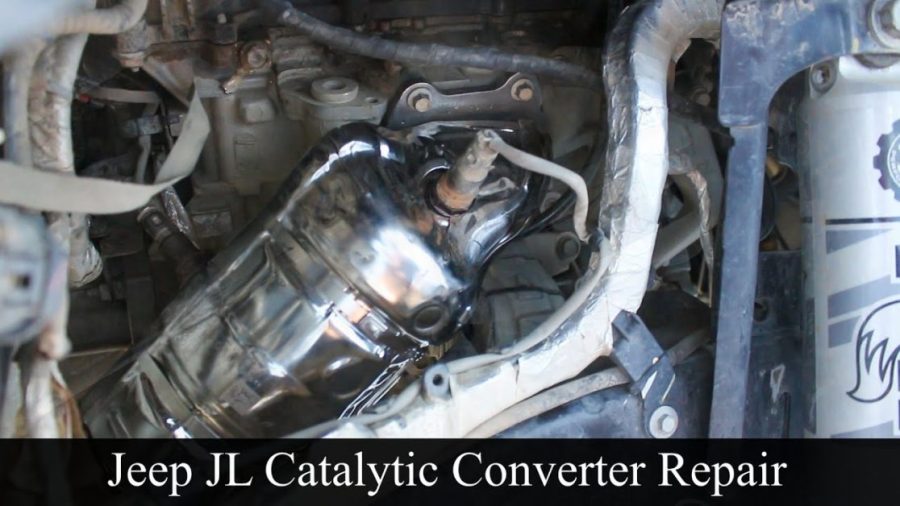
Finding the catalytic converter on a Jeep Wrangler takes less than five minutes once you know where to look. The exact position depends on your year, generation, and engine — not every Wrangler is the same. This guide breaks it all down by model, engine type, and visual cues so you can find it quickly and safely.
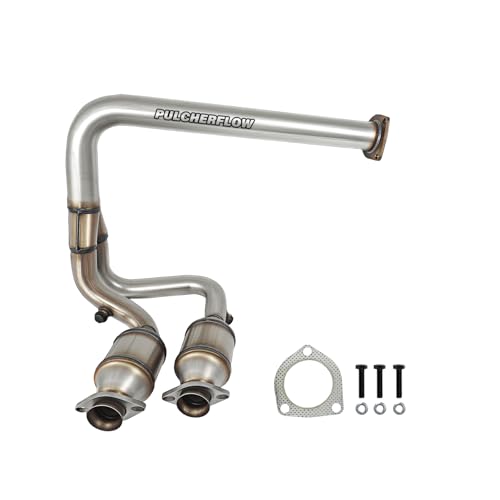
Quick Answer: Where the Catalytic Converter Is on a Jeep Wrangler
The catalytic converter on a Jeep Wrangler sits in the exhaust system, underneath the vehicle, between the exhaust manifold and the muffler. On most modern Wranglers, it’s positioned close to the engine — within the first few feet of the exhaust path. You’ll find it by following the exhaust pipe rearward from the engine.
Some Wranglers have two catalytic converters. The JK with the 3.8L V6 and the JL with the 3.6L Pentastar, for example, can have front and rear converters depending on trim and emissions package. Knowing your year matters before you start looking.
One quick visual shortcut: look for a bulging metal canister with one or two O2 sensor bungs screwed into it. If you’re already doing underbody maintenance, check out the best Jeep Wrangler oil filter options while you’re under there.
How Jeep Wrangler Catalytic Converter Placement Varies by Generation
Every Wrangler generation handles exhaust routing differently. That’s why forum answers often conflict — someone with a TJ is describing a completely different setup than a JL owner. Check out best all-terrain tires for Jeep owners who also research their Wrangler generation thoroughly before buying parts.
TJ Wrangler Catalytic Converter Location (1997–2006)
The TJ uses the 4.0L inline-six engine. Its catalytic converter sits farther downstream than modern setups — roughly 12 to 18 inches from the exhaust manifold, under the passenger-side floor. It’s a single converter in most cases. You can see the full Jeep Wrangler catalytic converter install steps for the TJ to get a clear picture of how it’s positioned and accessed.
JK Wrangler Catalytic Converter Location (2007–2018)
The JK is more complex. It came with the 3.8L V6 (2007–2011) and the 3.6L Pentastar V6 (2012–2018). Both setups can include two converters — one on each side of the V6 exhaust, or a front and rear arrangement. The converters sit under the Jeep, close to where the exhaust headers merge. They’re not visible from above.
JL Wrangler Catalytic Converter Location (2018–Present)
The JL uses the 3.6L Pentastar or the 2.0L turbocharged four-cylinder. Both layouts place the catalytic converter(s) close to the engine. On the 3.6L, expect dual converters positioned just after the Y-pipe. On the 2.0T, the single converter sits very near the turbocharger outlet — it runs hotter and sits tighter to the engine block.
| Generation | Engine | Converter Count | General Position |
|---|---|---|---|
| TJ (1997–2006) | 4.0L I6 | 1 | Under passenger floor, mid-exhaust |
| JK (2007–2011) | 3.8L V6 | 2 | Under engine, both sides |
| JK (2012–2018) | 3.6L V6 | 2 | Just below Y-pipe, underbody |
| JL (2018–present) | 3.6L V6 | 2 | Close to engine, post Y-pipe |
| JL (2018–present) | 2.0L Turbo | 1 | Near turbo outlet, tight to engine |
How to Spot the Catalytic Converter Under the Jeep
This is where most beginners get confused. The muffler, resonator, and heat shield all look similar from a distance. Here’s how to tell them apart.
Visual Signs of a Catalytic Converter
The converter has a slightly wider, oval or rectangular housing compared to the exhaust pipe. It’s denser and heavier than a resonator. You’ll almost always see one or two O2 sensors threaded into ports on its body. A heat shield — a thin metal plate — typically wraps around or surrounds it.
Follow this sequence:
- Start at the exhaust manifold, where pipes exit the engine
- Trace the pipe 6–24 inches rearward
- Look for a widened section with sensor ports
- Check for a heat shield bolted around it
- Confirm it’s not the muffler (which sits closer to the rear)
What Parts It’s Often Mistaken For
The muffler is larger and sits near the rear of the vehicle. The resonator is smaller and cylindrical without sensor ports. Neither has O2 sensor bungs. If you see threaded ports with sensors screwed in — that’s your converter.
Catalytic Converter Location by Engine Type
Engine size directly affects where the converter sits and how hard it is to reach. Reviewing the Jeep Wrangler towing capacity chart also shows you how engine configuration affects powertrain layout across trims.
3.6L Pentastar V6 Layout
This engine has two exhaust banks. Each bank gets its own converter, positioned just after the Y-pipe joins them. Access is moderate — you’ll need to get under the Jeep, but there’s reasonable clearance. The Jeep Wrangler catalytic converter parts listing on AutoZone clearly labels front and rear positions for this engine.
2.0L Turbo Layout
The single converter sits very close to the turbocharger — often within 8 to 12 inches. This placement keeps it hot enough to function efficiently even at cold start. Access is tighter than on the 3.6L. For 2.0T owners, using the correct oil helps protect the engine and emissions system — see best oil for Jeep Wrangler 2.0 turbo for engine-specific guidance. MagnaFlow and other manufacturers list fitment by engine on their Wrangler catalytic converter fitment by model page.
Older 4.0L and 3.8L Layouts
The 4.0L (TJ era) has one converter, positioned mid-exhaust under the passenger floor. The 3.8L (early JK) has two converters, mounted close to the engine. Both are easier to access than the 2.0T setup.
Step-by-Step: How to Inspect the Catalytic Converter Safely
Don’t rush this. A hot exhaust causes serious burns.
Safety Gear and Tools
Gather these before you start:
- Flashlight or work light (a phone torch works)
- Jack stands if you need to raise the Jeep
- Safety glasses
- Gloves (heat-resistant if the engine ran recently)
Never work under a vehicle supported only by a floor jack. Always use stands. If you’re already comfortable with underbody work, the process is similar to tasks like how to replace a Jeep starter. For tire clearance while working underneath, knowing your Jeep Wrangler tires and maintenance situation can also help with lift height planning.
Where to Look First
Let the Jeep cool for at least 30 minutes. Then:
- Crouch or slide under the vehicle near the driver-side door
- Find the exhaust pipe exiting the engine
- Trace it toward the rear, looking for a swollen canister section
- Check for O2 sensors — they look like spark plugs with wires
- That’s your converter
What to Check If You Still Can’t Find It
Heat shields sometimes fully cover the converter housing. Look for the shield’s bolted edges and gently trace the pipe through it. On JK and JL models, both converters may sit close together, making them easy to miss as two separate units.
Common Problems That Make Drivers Search for the Converter
Most people search for the converter because something went wrong. That’s understandable.
Signs of a Clogged Converter
A clogged converter causes reduced power, poor fuel economy, and sometimes a sulfur or rotten egg smell. The check engine light often triggers codes P0420 or P0430, which point directly to converter efficiency. These codes are your clearest signal.
Signs of a Damaged or Stolen Converter
Theft is a real concern. Jeep Wranglers sit high off the ground, giving thieves easy access. A stolen converter creates an immediate, loud roaring exhaust sound the moment you start the engine. The Jeep Wrangler catalytic converter replacement cost can range from $500 to $2,500 depending on year and engine. Questions about broader ownership reliability are worth reviewing — see are the Jeep Wranglers reliable? for context on common exhaust and emissions issues.
When to Look at the O2 Sensors and Heat Shields
O2 sensors are your roadmap to the converter. They’re mounted directly into it.
Upstream vs Downstream Sensor
The upstream sensor sits before the converter (closer to the engine). The downstream sensor sits after it. Both plug into the converter body. If you locate either sensor by tracing its wire, you’ve found the converter — it’s right there.
Why Heat Shields Matter
Heat shields don’t cover random exhaust parts. They protect the converter specifically because it generates extreme heat — often exceeding 1,200°F during normal operation. If you see a heat shield, the converter is directly beneath it.
FAQ: Jeep Wrangler Catalytic Converter Location Questions
Is the catalytic converter on a Jeep Wrangler under the hood?
No. It sits under the vehicle, in the exhaust line below the floorboards.
Do all Jeep Wranglers have more than one catalytic converter?
Not all. TJ models have one. Most JK and JL V6 models have two. The JL 2.0T has one.
Can you see it without raising the Jeep?
On some JK and JL models, yes — if you crouch beside the vehicle with a flashlight. Raising it gives a much clearer view.
Can you drive with a bad catalytic converter?
Short distances, yes — but it’s not recommended. A failing converter can reduce performance sharply and may trigger limp mode on some JL models. For reference on catalytic converter replacement estimate costs, YourMechanic provides service quotes by zip code. If you’re also comparing general ownership repair costs, see how much is it to paint a Jeep Wrangler to benchmark similar Wrangler cost considerations.
Conclusion: Confirm the Right Part Before Repairs or Replacement
On a Jeep Wrangler, the catalytic converter is under the vehicle, in the exhaust line between the manifold and muffler. Always check your year and engine before buying a replacement — a TJ part won’t fit a JL. Use the O2 sensors as a guide; they sit directly in the converter body. If the layout still looks unclear after inspecting it yourself, have a mechanic confirm the position before ordering parts. Getting it right the first time saves both time and money.