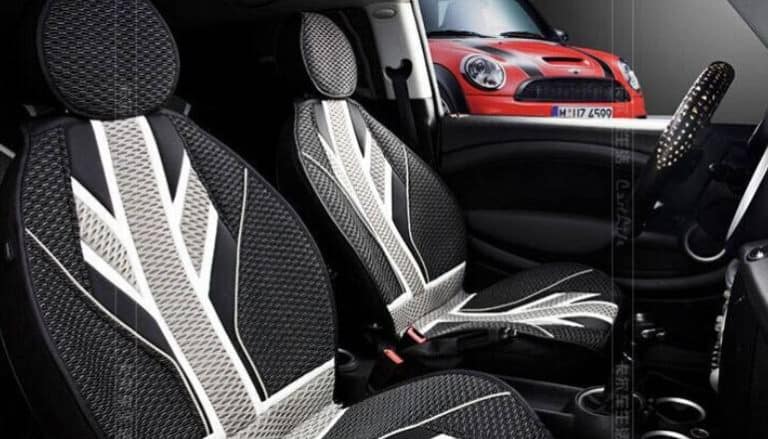
Best Mini Cooper Exhaust Systems 2026: Complete Guide to Sound, Performance & Value

Mini Cooper owners choose exhaust upgrades for three core reasons: acoustic personality, performance gains, or visual aggression. Factory systems restrict airflow. Aftermarket solutions eliminate these limitations. This guide identifies which systems deliver real value based on your generation, budget tier, and driving goals.
Why Upgrade Your Mini Cooper Exhaust
Factory Mini exhausts prioritize emissions compliance over performance. Manufacturers use restrictive muffler designs, reduced piping diameters, and resonators that suppress sound. The result: horsepower leaves unrealized on the table.
Aftermarket exhausts address these constraints through four specific mechanisms:
Mandrel-bent piping: Eliminates turbulence from factory crush-bent pipes. Smooth internal curves maintain exhaust velocity.
High-flow mufflers: Replace stock restrictive units with tuned chambers. Sound character develops through intentional acoustic design.
Larger pipe diameter: Performance systems use 2.5-3 inch piping versus 1.75-2 inch factory sizing. Reduced backpressure allows exhaust gases to exit efficiently.
Weight reduction: Quality systems save 9-15 pounds compared to factory designs. On a 2,800-pound car, this improves acceleration and handling balance.
Real-world benefits arrive across multiple dimensions. Throttle response sharpens noticeably. Power delivery feels more linear through the RPM band. Cold starts deliver rumbling character instead of whisper-quiet silence. Highway cruising transforms from silent to purposeful. Deceleration produces pops and burbles that confirm the upgrade.
Durability improvements compound over time. T-304 stainless steel construction resists corrosion across automotive climates. Factory-aluminized steel corrodes within 3-5 years in regions with road salt or humidity. A stainless upgrade protects your investment for 10+ years.
Cat-Back vs. Axle-Back: Understanding Your Options
This distinction determines your performance expectations and budget allocation.
Cat-Back Exhaust Systems
Cat-back systems replace everything from the catalytic converter rearward: mid-pipes, resonators, mufflers, and tailpipes. This scope matters because mid-pipes and resonators create significant backpressure in stock systems.
Cat-back upgrades tackle this directly. Real-world horsepower gains reach 5-20 horsepower depending on engine tuning and supporting modifications. Dyno testing shows premium cat-back systems produce up to 31 percent flow improvements across the RPM band.
Trade-offs exist. Installation requires 2-4 hours, sometimes professional service. Systems cost significantly more than axle-back alternatives. You’re replacing a larger system section, demanding careful fitment verification.
Axle-Back Exhaust Systems
Axle-back systems replace only the section behind the rear axle—the muffler and tailpipes. The catalytic converter and mid-pipe remain unchanged. This strategy prioritizes affordability and simplicity.
Installation takes under one hour with basic tools. No professional service needed. Cost remains 50-60 percent below cat-back options.
However, performance gains stall. Dyno testing reveals zero to minimal measurable power improvements because the mid-pipe restriction stays intact. Exhaust backpressure remains elevated. You’re purchasing a sound upgrade, not a performance upgrade.
Best for: Daily drivers who want acoustic character without mechanical improvements. Budget-conscious owners. Anyone skeptical about installation complexity.
Top Mini Cooper Exhaust Systems Ranked
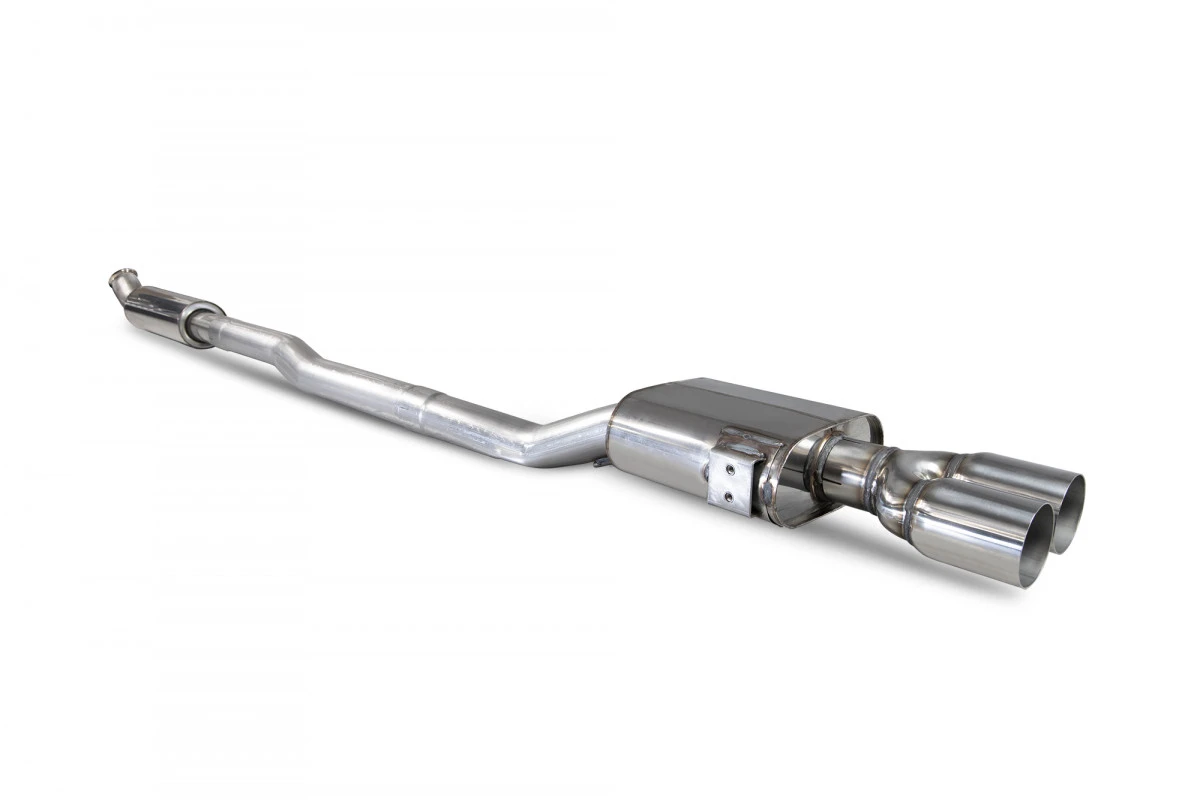
credit: xlr8performance.com
1. Scorpion Challenge: Best Overall for Enthusiasts
The Scorpion Challenge represents the gold standard among Mini performance enthusiasts. This system generates devoted loyalty within the Mini racing community, where it remains the preferred choice for serious competitors.
Craftsmanship quality stands first. Every weld passes inspection with zero imperfections. CNC mandrel bending eliminates turbulence across all piping sections. The result: sharp throttle response with measurable BHP increases.
Weight savings prove substantial. Fully configured Scorpion systems save 14 pounds compared to factory designs. Optional resonator deletion adds another weight reduction of 7 pounds. On track days, these pounds translate directly to improved acceleration.
Customization flexibility addresses different noise preferences. The resonated version tames the drone while maintaining deep idle burbles. Remove the resonator, and the sound transforms dramatically—louder and more aggressive. This dial-able approach lets you control whether the exhaust suits weekend racing or daily commuting.
Cost-to-value calculus tips strongly in favor. Scorpion delivers equivalent quality to competitors charging 25-40 percent more. Available in 2.75-inch and 3-inch diameter configurations, the system grows with future modifications like turbo upgrades.
Fitment: F56 JCW models and Cooper S variants. Scorpion offers solutions for the F54 Clubman and older R-series generations.
Sound profile: Customizable from civilized (resonated) to rowdy (non-resonated). Pronounced pops and burbles without oppressive volume.

Credit: www.millteksport.com
2. Milltek F66: Best for Latest Generation Owners
The 2024+ F66 Mini Cooper features new emissions hardware and a completely different exhaust geometry. Milltek Sport engineered the first dedicated F66 solution, establishing itself immediately as the authority for new Mini owners.
Compatibility drives primary appeal. The F66 doesn’t accept older F56 exhausts. Milltek created its system specifically for the new platform. Direct fitment occurs without adaptation or modification.
Material quality mirrors Scorpion’s standards. Milltek uses 304L stainless steel (superior to standard 304) with full 3-inch diameter piping throughout. CNC robotic manufacturing ensures precision matching OEM tolerances.
Multiple configurations address different ownership priorities:
The resonated OPF/GPF-back system delivers a rich tone while maintaining emissions compliance. The non-resonated variant produces a louder character without the restrictive resonator. Milltek provides multiple tip styles: hidden downturn tips maintain factory stealth, or you can upgrade the rear bumper diffuser panel to accommodate dual exit tips.
Critical compatibility note: The F66 changed the exhaust exit configuration. Factory models lack cutouts for visible tips unless fitted with the JCW rear bumper. Milltek’s downturn design works with stock bumpers. Visible tips require additional modifications.
Fitment: 2024+ F66 Mini Cooper and F66 Cooper S only. Not backward compatible with F56/F55.
Sound profile: Refined European-sports-car character. Louder than factory but proportionate to daily driving comfort.
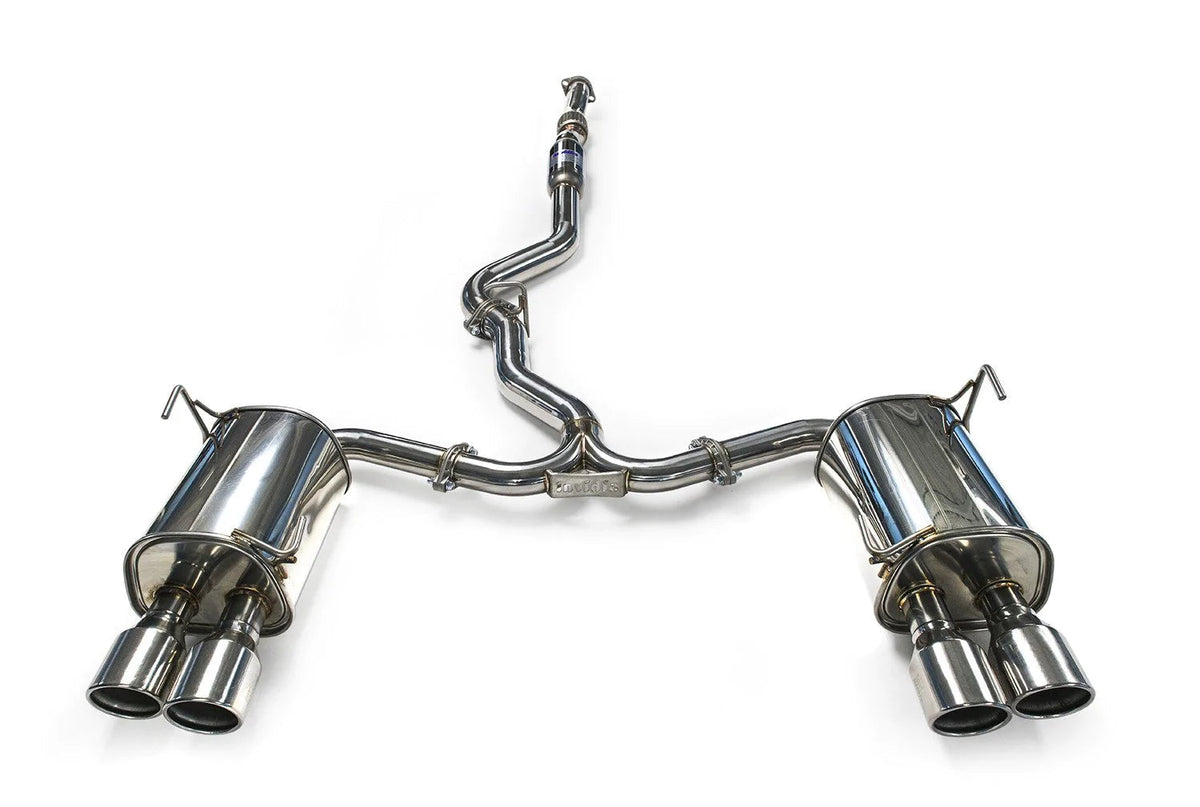
credit: subiesupplyco.ca
3. Invidia Q300: Best for Balanced Sound
The Invidia Q300 dominates mid-range preferences because it delivers genuine sound improvements without excessive volume.
The flat-bottom muffler design distinguishes this system. This engineering improves high-speed aerodynamic performance while producing a tone that sounds professional rather than cheap. Owners consistently praise the rich, deep character that enhances natural engine acoustics.
Flow improvements arrive through 2.5-inch mandrel-bent 304 stainless construction. The tuned muffler targets a specific acoustic sweet spot: aggressive enough to confirm the upgrade, refined enough for highway cruising without fatigue.
Value proposition favors affordability. The Q300 typically costs significantly less than premium handmade systems—roughly 50 percent below top-tier options. Titanium tip options exist for owners wanting visual aggression.
Real-world feedback validates the sound profile. The Q300 produces noticeable burbles and pops on deceleration, though less extreme than non-resonated systems. Highway drone remains minimal. At full throttle, the system delivers a satisfying presence without offending nearby drivers.
Caveat: Some owners consider the Q300 slightly quieter than expected for a performance exhaust. If maximum volume matters, larger-diameter systems (3-inch) deliver more aggressive output. The Q300 suits owners wanting personality without provocation.
Fitment: F56/F57 Mini Cooper S (2014-2024). Confirm specific year compatibility before purchase.
Sound profile: Refined aggression. Deep tone with noticeable pops. Daily-driver appropriate.
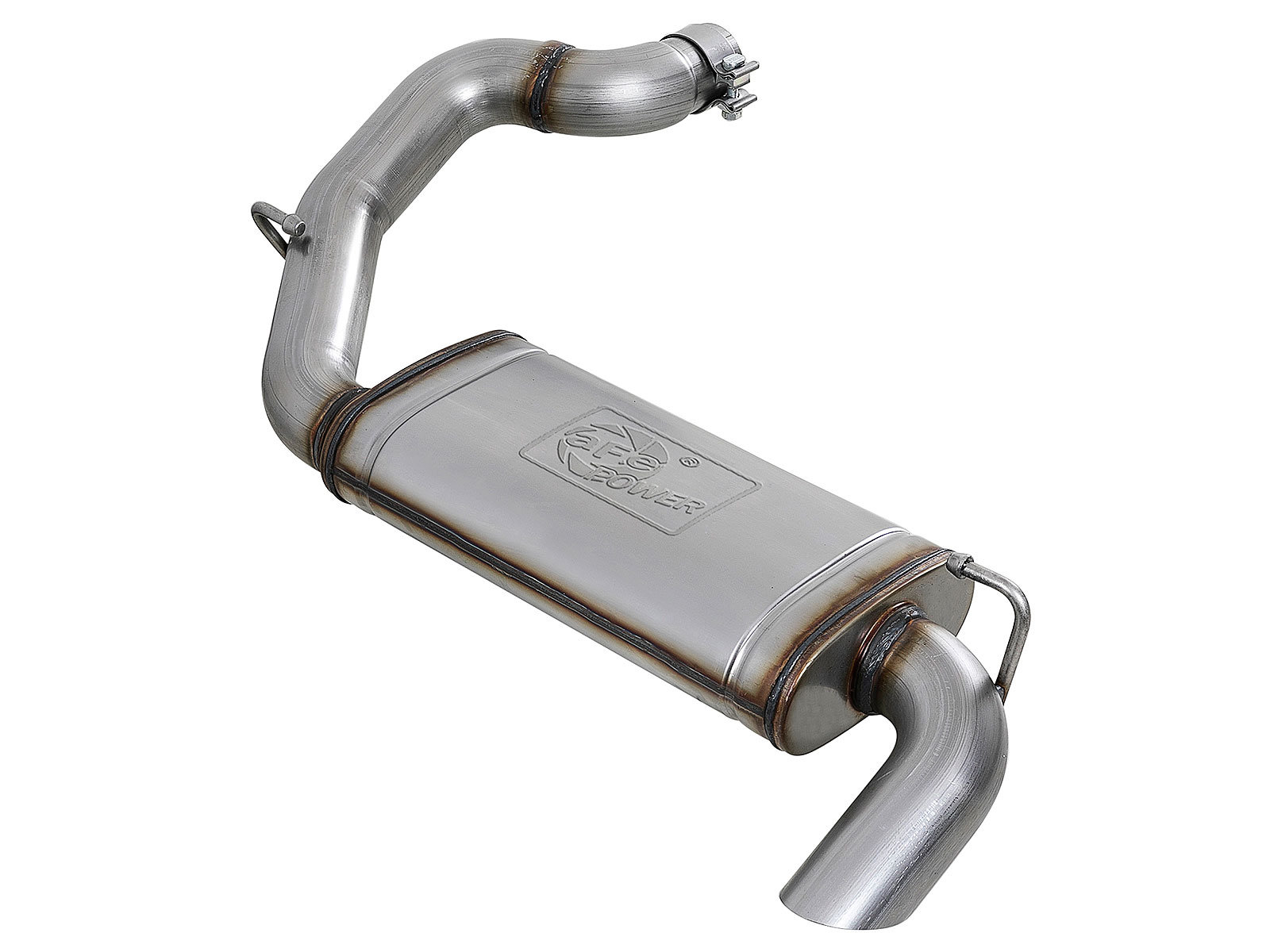
credit: www.quadratec.com
4. aFe MACH Force-Xp: Best for DIY Installation
The aFe MACH Force-Xp attracts owners prioritizing straightforward installation and American manufacturing.
Performance metrics document real gains. Dyno testing shows up to 31 percent flow improvement across the RPM band. On F56 platforms, real-world horsepower gains reach 9-16 horsepower—measurable through sharper throttle response and improved mid-range punch.
The 14-inch stainless muffler eliminates drone effectively. This balancing act succeeds. The system produces deep character without objectionable low-frequency resonance during highway cruising.
Manufacturing quality reflects mid-range production standards. aFe produces all systems in Corona, California, using TIG-welded mandrel-bent 304 stainless tubing. Dual 3.5-inch black stainless tips receive laser-etched logos. Solid craftsmanship without artisanal hand-building characterizes this system.
Installation prioritizes DIY accessibility. Utilizes factory mounting locations for direct bolt-on fitment. No cutting, no welding, no modification required. Enthusiasts complete installation in 1.5-2 hours. All hardware ships included.
Fitment: 2014-2024 F56 Mini Cooper S hatchback and F57 convertible.
Sound profile: Moderate exterior volume, soft interior sound. Balanced aggression suitable for daily driving.

credit: quicksilverexhausts.store
5. Quicksilver Sport (Sound Architect): Best for Customization
Quicksilver distinguishes itself through valved sound architecture controlled via a smartphone application. This innovation addresses a genuine ownership pain point: you cannot modify exhaust sound on the fly with fixed systems.
The Sound Architect valve system allows adjusting the exhaust character instantly. Mild for commuting, wild for weekend spirited driving, all without removing components. The valve adjusts the exhaust flow path, directing gases through different internal routes. Engineering actually delivers real sound variation, not marketing hype.
Material construction matches premium competitors. Quicksilver uses high-grade stainless steel throughout. Welding quality meets Scorpion standards. The finished product feels and looks expensive.
Practical appeal prevents post-purchase regret. This flexibility eliminates the common dilemma: the exhaust sounded perfect in videos, but it’s unbearable daily. Quicksilver adapts sound to your current circumstances.
Trade-offs require acknowledgment. Premium positioning reflects technology integration. Quicksilver exhausts cost measurably more than non-valved competitors. The smartphone control requires compatible hardware. The valve mechanism adds maintenance complexity over passive systems.
Fitment: Primarily F56 Cooper S variants. Confirm availability before committing.
Sound profile: Range from civilized to aggressive, depending on valve position.

Credit: mvpmotorsports.com
6. Borla Type S: Best Value Under Mid-Range Pricing
Borla holds a reputation for performance exhaust quality across automotive categories. The Mini-specific Type S system delivers serious sound character at an accessible cost.
Owner testimonials describe perfectly pitched acoustics. Not droney on highways (a major complaint about many systems), but distinctly vocal during spirited driving. Sound progressively increases with RPM. Below 3,500 RPM, the system remains contained. Above that threshold, volume and character climb noticeably.
Burble and pop characteristics appeal to owners wanting social media-worthy audio. Deceleration produces crackling sounds that video footage captures beautifully. Cold starts offer a deep rumbling character.
The technical approach relies on proven methodology. 2.5-inch mandrel-bent 304 stainless piping with Borla’s signature muffler design. Dual center exit 4-inch tips receive polished stainless or black powder-coat finishes. Installation follows standard bolt-on procedure.
Value reality checks favorably. Borla’s cost positioning suggests something costing 25 percent more. Quality construction delivers confidence in longevity.
Fitment: 2014-2024 F56 Mini Cooper S two-door and convertible. Also available for F55 4-door variants.
Sound profile: Balanced tone with moderate volume progression. Limited drone. Excellent pop and burble on deceleration.
Sound Quality Deep Dive: Finding Your Acoustic Preference
Exhaust sound becomes your Mini’s auditory signature. The right choice enhances ownership joy. The wrong choice breeds daily regret.
Critical Variables Shape Final Tone
Piping diameter affects fundamental character. 2.5-inch systems deliver balanced aggression. 3-inch systems enter true performance territory—considerably louder, more aggressive, less street-traffic-compatible. On modest turbocharged Minis (200 horsepower Cooper S), oversized piping can reduce mid-range punch through excessive backpressure reduction. Experienced tuners compensate through ECU adjustment.
Resonator inclusion dramatically impacts the drone. Factory systems include resonators to eliminate low-frequency highway vibration. Removing them (non-resonated configurations) increases interior noise fatigue. Resonated options retain drone-elimination while sacrificing minimal aggression. Smart buyers prioritizing comfort resonate. Drivers chasing maximum character select non-resonated.
Muffler design determines high-RPM character. Straight-through designs produce louder, more open sound. Chamber-based designs refine character through acoustic tuning. Neither approach proves objectively superior. Preference becomes personal.
Real-World Sound Rankings by Personality
Most aggressive:
- Scorpion Challenge (non-resonated)
- 3-inch Milltek non-resonated
- Modified systems with resonator deletion
Balanced aggression:
- Invidia Q300
- Borla Type S
- aFe MACH Force-Xp
- Scorpion Challenge (resonated)
Civilized performance:
- Quicksilver Sport (valve closed)
- MagnaFlow Touring Series
- Stock-replacement systems
Model Compatibility & Fitment Guide
Mini Cooper generations don’t share exhaust components. Fitment accuracy prevents expensive mistakes.
Generation-Specific Compatibility
R53 (2002-2007): Supercharged 1.6-liter engine. Limited modern aftermarket options exist. Invidia, JCW OEM, and vintage systems remain most available. Older platforms restrict upgrade choices considerably.
R56/R57/R58/R59 (2007-2015): Turbocharged engines (N12/N14/N18 variants). Most aftermarket options target this generation since ownership remains high. Scorpion, Invidia Q300, aFe MACH Force-Xp, and Borla systems support these variants. Verify year and engine code explicitly.
F56/F57 (2014-2023): Current-generation turbocharged platform (B48 engine). Broadest aftermarket support exists here. Most systems mentioned in this guide fit F56/F57.
F55 (2015-2023): Four-door variant on F56 platform. Most F56 exhausts adapt to F55 with minor fitment adjustments. Confirm compatibility explicitly.
F66 (2024+): New generation platform. Only Milltek, Scorpion, and Remus offer dedicated systems currently. Older exhausts don’t fit. F66 owners must wait for platform-specific solutions.
Critical Fitment Points
Never assume cross-generation compatibility. R56 exhaust geometry differs significantly from Mini One designs. They won’t interchange despite both being older generations.
Turbocharged vs. naturally aspirated engines require different systems. Confirm engine displacement (1.6L versus 2.0L) and turbo designation match the exhaust specification.
Two-door vs. four-door models often accept the same exhausts with fitment verification. However, some systems specify two-door exclusivity. Always verify current listings.
Installation: DIY vs. Professional
DIY Installation Viability
Axle-back systems suit enthusiasts with basic tool sets. Installation takes 15-30 minutes. Unbolt three fasteners, slide out old components, slide in new ones, re-torque bolts. No special equipment necessary. Success rate approaches 100 percent.
Cat-back bolt-on systems remain accessible for DIY installation. You’ll need basic hand tools, a jack, jack stands, and potentially a creeper. Installation spans 1.5-2 hours. Failure rates remain low.
Systems requiring cutting or welding demand professional fabrication shops. Labor costs run $200-$400 on top of parts. Investment reflects genuine complexity.
Installation Steps for Typical Cat-Back Systems
Raise your vehicle safely on jackstands. Remove belly pan fasteners. Disconnect existing hangers (typically rubber isolators). Support the current exhaust with a second jack.
Unbolt muffler and pipe connections—usually 2-4 bolts per connection point. Guide the old system away carefully.
Position the new system, ensuring clearances from suspension components and brake lines. Connect to mid-pipe first, torque fasteners to specification (typically 30-40 ft-lbs). Work rearward, installing hangers and connecting remaining segments.
Start your vehicle and listen for unusual vibrations or noises indicating contact issues. Test acceleration, deceleration, and highway cruising. Investigate any leaks or unusual sounds immediately.
Most installations succeed on the first attempt when planning precedes execution. Professional shops charge reasonable labor rates for guaranteed results.
Key Features to Evaluate When Selecting
Material Quality Determines Longevity
T-304 stainless steel rates as the minimum acceptable standard. This material resists corrosion across automotive climates and lasts 10+ years. Lower-tier exhausts use aluminized steel, which corrodes within 3-5 years in regions with road salt. The cost difference pales against replacement expense.
Pipe Diameter Balances Performance and Practicality
2.25-inch piping suits naturally-aspirated engines and conservative tuning. 2.5-inch represents the sweet spot for modern turbocharged Mini Cooper S models. 3-inch piping enters performance territory requiring supporting modifications (ECU tune, upgraded fuel system) to avoid lean-running conditions.
Muffler Design Shapes Acoustic Character
Straight-through construction produces maximum volume and low-frequency aggression. Chambered designs refine sound through resonance tuning. Neither approach proves superior objectively.
Resonator Inclusion Affects Daily Usability
Non-resonated systems produce aggressive personalities but introduce drone on highway cruising. Resonated variants add mild weight and slight restriction while virtually eliminating low-frequency annoyance. Daily drivers gain better long-term satisfaction with resonated configurations.
Tip Styling Completes Visual Transformation
Stainless steel tips oxidize gradually to silvery-gray patina. Polished finishes require periodic maintenance. Black powder-coat or titanium finishes demand less attention. Carbon fiber tips offer premium aesthetics. Tip selection rarely impacts performance.
Warranty Provisions Indicate Manufacturer Confidence
Premium systems typically include lifetime warranties on stainless steel construction. Budget options sometimes offer limited 3-5 year coverage. Warranty comprehensiveness matters for long-term ownership beyond 100,000 miles.
Maintenance & Durability Expectations
Stainless Steel Exhaust Care
Visual inspections every 12,000 miles catch potential issues early. Look for corrosion (unlikely on quality systems), loose hanger connections, or cracks from vibration. Interior exhaust smell indicates potential leaks allowing toxic gases into the cabin.
Polish stainless tips occasionally to maintain appearance. Soot accumulates naturally. Gently wipe with appropriate metal polish every few months. Avoid abrasive pads that scratch finish.
Heat shield vibration occasionally develops after 30,000+ miles. Listen for rattling from under your vehicle at idle. Locate the loose shield and tighten mounting bolts. Dealerships typically charge modest fees for this simple fix.
Quality Degradation Patterns by Price Tier
Premium systems show minimal degradation over 10+ years with proper maintenance. Mid-range options remain perfect for 8 years, then experience occasional minor issues. Budget exhausts often develop rust spots or loose connections by year 4-5.
This longevity difference justifies premium positioning when calculating cost-per-year ownership expense. A system lasting 10 years costs significantly less annually than a system lasting 4 years.
Matching Systems to Driving Profiles
Track day warriors: Scorpion Challenge (non-resonated, 3-inch) or Milltek non-resonated. Prioritize maximum flow without daily comfort requirements.
Weekend spirited drivers: Invidia Q300, Borla Type S, or Scorpion Challenge (resonated). Seek balanced aggression without highway drone.
Daily commuters: Quicksilver Sport (valve closed), aFe MACH Force-Xp, or resonated Scorpion. Prioritize refinement over maximum volume.
Show and modify enthusiasts: Any system matching your visual and acoustic preferences. Performance tier matters less than personal satisfaction.
Final Selection Framework
The best Mini Cooper exhaust balances four competing priorities: sound personality, performance gains, installation complexity, and budget reality.
Start by identifying your primary goal. Are you chasing acoustic gratification? Scorpion Challenge and Invidia Q300 deliver satisfaction without compromise. Want measurable power with minimal drama? aFe MACH Force-Xp and Borla Type S excel. Seeking adaptability? Quicksilver Sport’s valved technology accommodates shifting preferences.
Verify generation compatibility obsessively. Older platforms (R56/R57) enjoy mature aftermarket options. Newest F66 models require careful research since few manufacturers offer solutions. Mid-cycle F56 models represent the sweet spot with abundant choices.
Prioritize material quality relentlessly. T-304 stainless steel costs incrementally more than alternatives but extends service life dramatically. Calculate total cost of ownership across typical ownership years—quality exhausts frequently win on dollars-per-year metrics.
Set realistic budget expectations. Exceptional systems deliver superior quality and durability. Budget options under certain price thresholds limit performance and longevity. Middle-tier options represent optimal value territory.
Test drive different sounds when possible. YouTube videos help but don’t replicate real-world acoustic experience in your specific vehicle. Understanding whether you’ll embrace aggressive daily exhaust presence prevents post-purchase regret.
Schedule professional installation unless mechanically proficient. Professional technicians ensure proper fitment and eliminate warranty complications. Most botched installations stem from misaligned hangers or over-tightened connections.
The right Mini Cooper exhaust investment pays dividends every time you start the engine. Your choice transforms the ordinary into the remarkable.