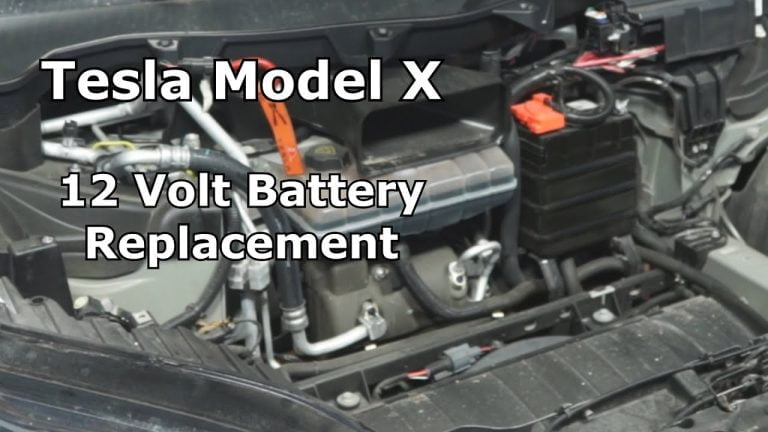
Best Extension Cord for Tesla Mobile Charger: 7 Safe Picks for Home Charging

Let’s be honest: the outlet in your garage is never quite where you need it.
Tesla owners constantly face this problem. The car parks three feet past the outlet’s reach, and the Mobile Connector cable falls short. An extension cord feels like the obvious fix — but this is one situation where “obvious” can be dangerous.
This guide gives you the safest options available if you decide an extension cord is your only practical solution. We’ve filtered every pick by wire gauge, amperage rating, outdoor certification, and EV compatibility. You’ll also find a clear framework for choosing by distance and use case, plus the honest warnings you need before plugging anything in.
> Safety notice: Tesla’s official documentation explicitly states that the Mobile Connector should not be used with an extension cord. Every recommendation below is a risk-managed fallback — not an endorsement of routine extension cord use.


Quick Verdict: The Best Extension Cord for Tesla Mobile Charger
Not all extension cords are equal. Most hardware store cords will overheat, arc, or degrade under sustained EV charging loads.
The picks below meet three non-negotiable standards: 10 AWG or thicker wire, an amperage rating of at least 30A, and UL or ETL safety certification. Length matters too — shorter cords lose less voltage and run cooler.
Our top overall pick is the Iron Forge Cable 10 AWG Heavy-Duty Extension Cord. It balances gauge, length, and build quality for most garage scenarios.
1. Iron Forge Cable 10 AWG Heavy-Duty Extension Cord — Best Overall
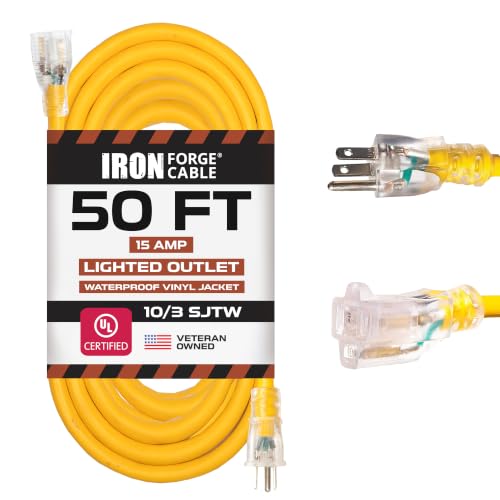
The Iron Forge 10 AWG cord is the most balanced choice for Tesla Mobile Connector use. It’s built for sustained high-current loads and handles the demands of overnight charging without the heat buildup that plagues thinner cords.
Key Features
- 10 AWG copper conductors reduce voltage drop across standard garage distances
- NEMA 14-30 and 14-50 compatible configurations available for outlet flexibility
- UL-listed construction meets safety standards for continuous electrical loads
- 15-foot and 25-foot lengths keep voltage loss within an acceptable range
Pros and Cons
Pros
- Heavy-gauge wire stays cool during extended charging sessions
- Durable jacket resists abrasion from garage floor contact
- Grounded three-prong design adds shock protection for outdoor-adjacent use
- Available in lengths short enough to limit voltage drop risk
Cons
- Heavier and stiffer than standard cords, making storage awkward
- Higher price point than general-purpose hardware store cords
Pricing
Mid-range pricing; expect to pay more than standard extension cords given the heavy gauge and safety certifications.
Our Verdict
The Iron Forge 10 AWG is the right pick for most Tesla owners who need a few extra feet in a typical garage setup. Its combination of gauge, certification, and manageable length makes it the safest widely available option. Choose a 15-foot version over the 25-foot wherever possible.
2. Parkworld 885288 NEMA 14-50 Extension Cord — Best Heavy-Duty 40A Option

Some Tesla owners charge on 40A or 50A circuits. Standard cords can’t handle that load safely. That’s where the Parkworld 885288 steps in.
This cord is purpose-built for EV charging scenarios. It uses 8 AWG conductors, which carry more current with less resistance than 10 AWG options. Understanding how many watts does a Tesla use during charging helps explain why this gauge matters — a single charging session can sustain 7,000–9,600 watts for hours.
Key Features
- 8 AWG conductors support up to 40A sustained draw without overheating
- NEMA 14-50 plug and receptacle matches the most common Level 2 home outlet
- STW-rated jacket handles both indoor and outdoor environments reliably
- Review the EV charger extension cable specifications for full gauge and amp rating details
Pros and Cons
Pros
- Handles higher-amperage circuits that thinner cords cannot
- Thicker insulation jacket reduces heat transfer during long charging sessions
- NEMA 14-50 terminations fit most wall-mounted EV charging setups
- Widely recommended in EV owner communities for safety margin
Cons
- Very stiff and heavy — difficult to coil or store compactly
- Overkill for standard 120V / 12A Level 1 charging scenarios
Pricing
Premium tier; reflects the heavier gauge copper and EV-specific connector design.
Our Verdict
Pick the Parkworld 885288 if you charge on a 40A or 50A NEMA 14-50 circuit. It’s the only option on this list with true headroom for high-amperage setups. Not for everyday Level 1 users.
3. Camco 55195 25-Foot PowerGrip Extension Cord — Best 25-Foot Option for Flexible Placement
Twenty-five feet covers most garage and driveway gaps without introducing severe voltage drop. Camco’s 55195 was originally designed for RV shore power — which runs the same sustained-load challenges as EV charging.
Key Features
- 10 AWG conductors at 25 feet keep voltage drop within 2–3% at standard charging loads
- Locking PowerGrip connector prevents accidental disconnection during overnight charging
- Outdoor-rated jacket handles moisture and temperature swings in open garages
- Stays flexible in cold temperatures, unlike cheaper PVC-jacketed alternatives
Pros and Cons
Pros
- 25-foot length solves most reach problems without going excessively long
- Locking connector reduces the risk of partial connections and arcing
- Weather-resistant construction suitable for covered outdoor outlets
- Shore-power heritage means it’s tested for multi-hour sustained loads
Cons
- NEMA 14-30 termination only — incompatible with NEMA 14-50 setups without an adapter
- 25 feet is approaching the limit for safe EV charging — don’t go longer
Pricing
Mid-range; competitive given the locking connector and weather-rated jacket.
Our Verdict
The Camco 55195 is the pick when your outlet is genuinely far from the car. Its RV-grade build and locking connector make it safer than most 25-foot alternatives. If 15 feet will solve your problem, use a shorter cord instead.
4. Conntek 14360 NEMA 14-30 Extension Cord — Best Budget-Friendly Option
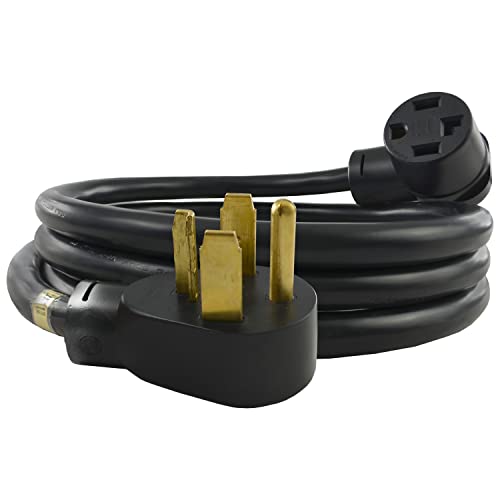
You don’t need to spend heavily to charge safely. The Conntek 14360 delivers the core requirements — correct gauge, correct plug type, and basic certification — without the premium price of heavier-duty alternatives.
Key Features
- 10 AWG wire meets the minimum gauge standard for 30A EV charging loads
- NEMA 14-30 plug and receptacle fits dryer-style outlets common in older homes
- ETL listed — the same standard as UL, recognized by authorities and inspectors
- Available in 15-foot and 25-foot configurations
Pros and Cons
Pros
- Budget-accessible without sacrificing the minimum required wire gauge
- ETL listing confirms independent safety testing and verification
- Compatible with NEMA 14-30 circuits, which are common in homes without dedicated EV outlets
- Lighter and easier to handle than 8 AWG heavy-duty alternatives
Cons
- Not rated for outdoor use — indoor or covered garage only
- 30A maximum means it won’t work on higher-amperage circuits safely
Pricing
Lower-cost tier; the most affordable certified option on this list.
Our Verdict
The Conntek 14360 suits Tesla owners on a tighter budget who charge on a NEMA 14-30 outlet indoors. Don’t use it outdoors, and don’t use it on a 40A or 50A circuit. Within those limits, it does the job.
5. Yodotek 50-Amp NEMA 14-50 Extension Cord — Best Premium Weather-Resistant Cord
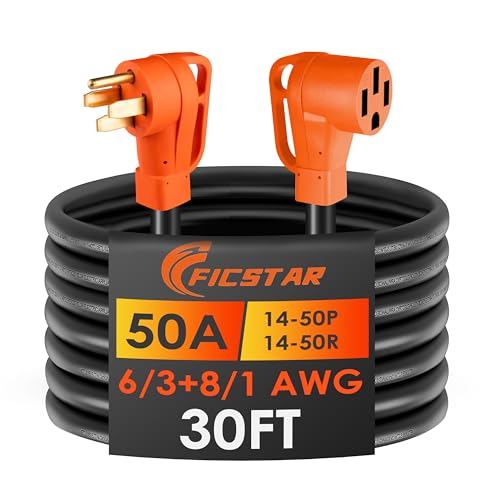
Outdoor charging adds a new layer of risk. Rain, UV exposure, and temperature cycling degrade cheap jackets quickly. The Yodotek 50A cord addresses all three. If you want to understand whether outdoor charging is safe at all, check out whether can Tesla charge in rain before setting up any outdoor extension.
Key Features
- 8 AWG copper conductors for full 50A capacity with minimal resistance heating
- Heavy-duty thermoplastic jacket rated for outdoor temperature extremes
- NEMA 14-50 plug and socket — direct fit for the most common EV Level 2 outlet
- UV-resistant outer sheathing protects against prolonged sun exposure
Pros and Cons
Pros
- Purpose-built for outdoor conditions — resists moisture, UV, and temperature swings
- 50A rating provides maximum safety margin for high-demand charging sessions
- Heavy thermoplastic jacket significantly outlasts standard rubber-jacketed cords
- Suitable for driveways, carports, and exposed outdoor outlet locations
Cons
- The heaviest and stiffest cord on this list — harder to store between uses
- Premium pricing reflects the outdoor-rated materials and heavy gauge
Pricing
Premium tier; priced above the mid-range options given the specialized outdoor construction.
Our Verdict
The Yodotek 50A is the right choice if your outlet is outside the garage or exposed to weather. Its outdoor-rated jacket and 8 AWG conductors make it the only pick here truly built for long-term exterior use. Don’t use a lighter cord in its place.
What to Look for in a Tesla Mobile Charger Extension Cord
Choosing wrong here isn’t just inconvenient. It’s a fire risk.
Refer to Tesla charging guidance before purchasing any accessory for your Mobile Connector. Then apply these criteria to every cord you consider.
Wire Gauge Is Non-Negotiable
- 8 AWG: Supports 40A–50A circuits; best for high-power setups
- 10 AWG: Supports 30A circuits; minimum safe gauge for EV charging
- 12 AWG or thinner: Do not use for Tesla charging — overheating risk is high
Understanding how many kWh does it take to charge a Tesla helps contextualize the sustained electrical demand on any cord you choose. Most models require 50–100 kWh for a full charge — that’s hours of continuous high current.
Length, Voltage Drop, and Certification
Longer cords drop more voltage and generate more heat. Keep to 15 feet where possible. Never exceed 25 feet with a 10 AWG cord. For gauge and safety standards, electrical safety guidance from the NFPA covers load handling for sustained current applications.
Look for UL certification or ETL listed marks on every cord you buy. These confirm independent safety testing — not just a manufacturer’s claim.
A home EV charging guide from the U.S. Department of Energy explains why dedicated circuits and proper wiring matter for safe long-term charging.
Knowing how much it costs to charge a Tesla and do Teslas come with charging adapters helps clarify exactly what equipment you already have and what your total setup investment looks like.
Quick-Reference Comparison Table
| Cord | Gauge | Max Amps | Length | Outdoor Rated | Certification |
|---|---|---|---|---|---|
| Iron Forge 10 AWG | 10 AWG | 30A | 15–25 ft | No | UL |
| Parkworld 885288 | 8 AWG | 40A | 25 ft | Yes | ETL |
| Camco 55195 | 10 AWG | 30A | 25 ft | Yes | UL |
| Conntek 14360 | 10 AWG | 30A | 15–25 ft | No | ETL |
| Yodotek 50A | 8 AWG | 50A | 25 ft | Yes | UL |
Tesla Mobile Charger Safety and Compatibility Notes
Read the Tesla Mobile Connector owners manual before using any extension cord. The warning is explicit. Tesla also reinforces this position in the Corded Mobile Connector manual — extension cords create resistance, heat, and potential arcing that standard cords aren’t built to handle.
Review extension cord safety basics from OSHA to understand overheating risk under continuous load. The electrical fire safety guidance from NFPA is equally relevant — sustained current through an undersized cord is a leading cause of electrical fires.
A dedicated 240V circuit is always the safer long-term solution. Check the cost to install Tesla charger to compare that investment against the ongoing risk of extension cord use. You can also learn whether can other cars use Tesla chargers if you’re evaluating your charging setup for multiple vehicles.
Never use a power strip, surge protector, or daisy-chained cord. Never use an ungrounded two-prong extension. And never use a cord indoors-only rated for outdoor exposure. For emergency power questions, the guide on can you charge a Tesla with a generator covers power-source safety in detail. Regular home upkeep, including understanding do Teslas need maintenance, helps you stay ahead of electrical wear on your charging setup.
FAQ About Tesla Mobile Charger Extension Cords
Can you use an extension cord with the Tesla Mobile Connector?
Tesla’s official documentation says no. If you do, use only a heavy-gauge, EV-compatible, certified cord at the minimum length needed.
What gauge is safest?
10 AWG minimum for 30A circuits. Use 8 AWG for 40A or 50A setups.
How long can the cord be?
Stay at 15 feet or under. Twenty-five feet is the practical maximum with a 10 AWG cord before voltage drop becomes a meaningful concern.
Do you lose charging speed with an extension cord?
Yes. Voltage drop increases with length and load, which can reduce charging rate and generate excess heat in the cord.
What plug types work with the Tesla Mobile Connector?
The Mobile Connector supports multiple adapters. NEMA 14-50 and NEMA 14-30 are the most common for home Level 2 charging.
Conclusion
An extension cord is never the ideal solution for Tesla home charging. But if relocating your outlet isn’t feasible right now, the five options above represent the safest fallback choices available.
Stick to 8 AWG or 10 AWG wire. Keep lengths at 15 feet where possible. Never exceed 25 feet. Always verify UL or ETL certification before buying.
If you charge daily, seriously consider consulting a licensed electrician about a permanent outlet installation. Check best Tesla Supercharger stations as an alternative for high-demand charging periods. The right infrastructure makes every charge safer, faster, and cheaper in the long run.