Do Jeep Compasses Hold Their Value? 2026 Resale Guide


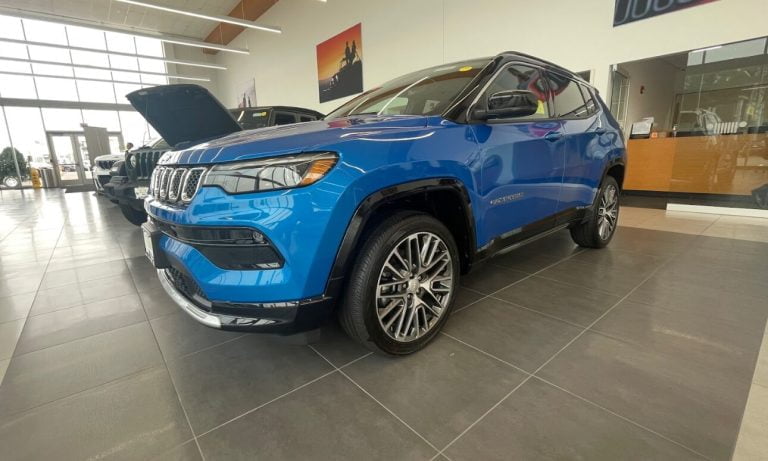
Jeep Compasses retain approximately 50–55% of their original value after five years. That places them in the mid-tier for compact SUV resale — not exceptional, but not poor either. Resale strength depends heavily on mileage, trim level, condition, and maintenance history.
If you’re deciding whether to buy or sell a used Compass, here’s what the data actually shows.
The Direct Answer
The Compass holds value moderately well. According to Kelley Blue Book and Edmunds depreciation data, a five-year-old Compass typically retains 50–55% of its purchase price. That’s competitive with the Mazda CX-5 but trails the Toyota RAV4 and Honda CR-V significantly.
Market demand for used Compasses stays steady. It doesn’t spike the way Wrangler resale does. If maximum resale return is your goal, the Compass won’t deliver it.
Jeep Compass Depreciation by Model Year
Here’s how Jeep Compass resale value tracks across model years, based on average used pricing data:
| Model Year | Est. Original MSRP | 5-Year Value | % Retained | Avg. Mileage |
|---|---|---|---|---|
| 2018 | $28,000 | $14,500 | 52% | 75,000 |
| 2019 | $29,500 | $15,200 | 51% | 65,000 |
| 2020 | $30,000 | $16,200 | 54% | 55,000 |
| 2021 | $32,000 | $17,600 | 55% | 40,000 |
| 2022 | $33,500 | $18,400 | 55% | 25,000 |
Post-2020 models hold value better. Stellantis updated the Compass’s infotainment and reliability profile, which buyers reward at resale.
Mileage and Condition Impact
Mileage matters enormously. Under 60,000 miles, depreciation stays predictable. From 60,000 to 100,000 miles, buyers apply a moderate discount. Over 100,000 miles, resale value drops sharply — often 15–20% below the market average for the same year.
Condition is equally critical. A clean Carfax report can add $1,500–$2,500 to your asking price on platforms like CarGurus or AutoTrader.
Trim Level Resale Differences
Trim level affects resale more than most owners realize. The Trailhawk and Limited trims retain value best. Base Sport models depreciate faster due to fewer standard features. Buyers shopping used Compasses actively seek the Trailhawk for its off-road capability, which sustains demand.
Factors That Hurt Jeep Compass Resale Value
Some issues hit Compass resale harder than others. Knowing them helps you avoid costly surprises.
Common Mechanical Red Flags
Transmission hesitation is a documented issue on 2017–2019 Compass models. Buyers checking NADA Guides or iSeeCars will flag these years as higher risk. Electrical glitches — particularly with Uconnect systems in older models — also reduce buyer confidence.
A Compass with known recall history and no documented repairs loses $1,000–$3,000 at resale. Fix issues before listing, not after.
How Modifications Affect Resale
Aftermarket modifications hurt more than they help. Non-OEM lift kits, custom wheels, and exterior wraps shrink your buyer pool. Most used Compass shoppers want a stock vehicle. Keep it original if resale matters to you.
If you want to explore modifications on a Jeep you don’t plan to sell, that’s a different calculation entirely — though even then, understanding how to get a Jeep Compass out of limp mode after aggressive driving is worth knowing.
Accident history is the single biggest value killer. A flood-damaged or rebuilt-title Compass can lose 40–50% of its clean-title value instantly.
How to Maximize Jeep Compass Resale Value
You can recover real money here. These steps make a measurable difference.
- Keep full maintenance records — service history is the top resale booster buyers ask for
- Stay under 15,000 miles per year — lower mileage preserves value at every model year
- Sell privately, not at trade-in — private sales typically return 10–15% more than dealer trade-ins
- Address minor issues first — brakes, belts, and fluids signal a cared-for vehicle
- Avoid selling in early fall — supply peaks then; wait for spring or late winter demand
- Detail the vehicle professionally — $150–$300 in detailing often returns $500–$1,000 at sale
If you’re considering selling a Jeep privately, the best way to sell a Jeep involves preparation, timing, and channel selection — all of which apply directly to the Compass.
Jeep Compass vs. Competitors: Resale Value Comparison
Here’s how the Compass stacks up against its closest rivals at the five-year mark:
| Model | 5-Year Value Retained | Notes |
|---|---|---|
| Toyota RAV4 | 60–65% | Best in class; strong brand loyalty |
| Honda CR-V | 55–60% | Excellent reliability perception |
| Mazda CX-5 | 54–58% | Closest competitor to Compass |
| Jeep Compass | 50–55% | Mid-tier; steady but not strong demand |
| Chevy Equinox | 48–52% | Slightly below Compass |
The RAV4 and CR-V outperform the Compass because of stronger reliability reputations and larger dealer networks. The Compass vs. CR-V resale gap is roughly 5–10 percentage points — real money on a $30,000 vehicle.
Mazda CX-5 is the closest competitor. The Compass actually beats the Equinox, which surprises many buyers.
Should You Buy a Used Jeep Compass?
The Compass is a reasonable used buy. It’s not a resale champion.
If you plan to own for three to five years and care about style, brand identity, and total cost of ownership, the Compass delivers good value. Budget-conscious buyers can find well-maintained used Compasses at attractive prices precisely because depreciation moves faster than the RAV4 or CR-V.
If maximizing resale return is your primary goal, look at a RAV4 or CR-V instead. The data is clear on that.
Buy a Compass because it fits your needs — not because you expect it to hold value like a Toyota. Go in with realistic expectations, and you’ll likely be satisfied with the outcome.