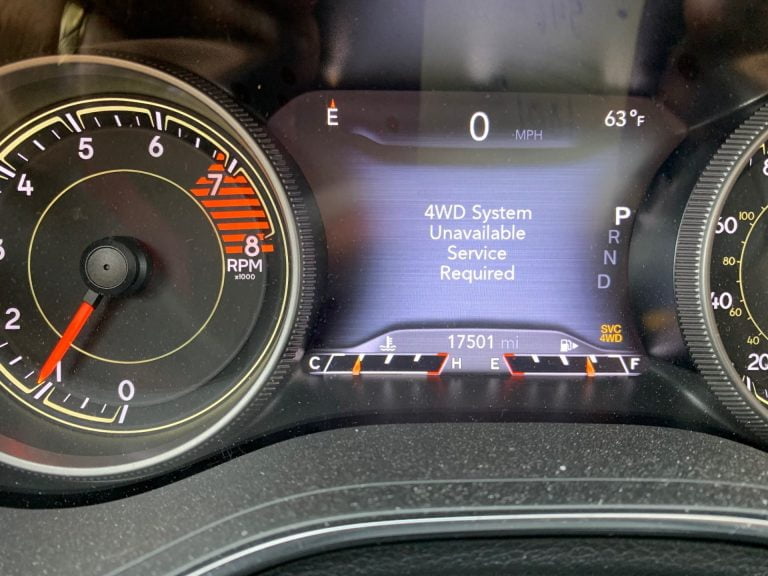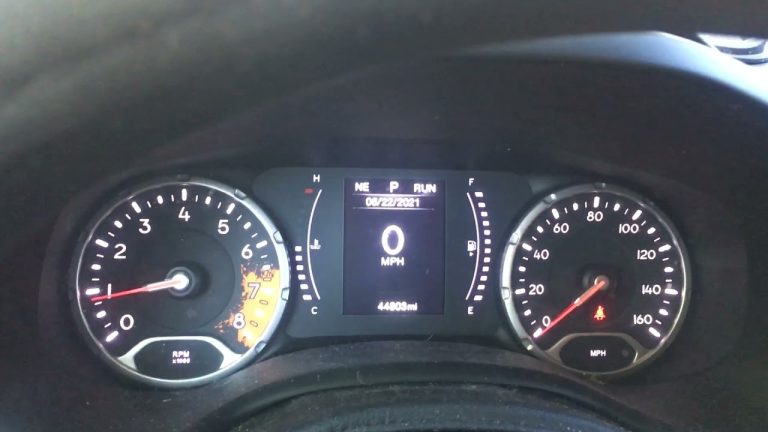
How to Fix “Service Passive Entry” on a Jeep Renegade

The “Service Passive Entry” warning on your Jeep Renegade almost always traces back to one of three things: a dead key fob battery, a weak vehicle battery, or a software glitch needing a reset. Most owners fix it in under 10 minutes. But if the warning returns after a reset, you’re dealing with something deeper — and this guide covers both paths.
You’ll learn the exact troubleshooting sequence, from the simplest DIY checks to the steps that require dealer intervention. No jargon. No guesswork.
What the “Service Passive Entry” Warning Means on a Jeep Renegade
Passive entry lets you unlock and lock your Renegade without pressing a button. The door handle sensors detect the key fob signal when you touch or approach the door. When the system detects a fault — weak fob signal, low power, sensor interference, or a software error — it throws the “Service Passive Entry” warning on the instrument cluster.
This warning appears on Renegade models from 2014 through 2024. It doesn’t mean the car won’t start. But it does mean the hands-free entry system is compromised.
The root cause matters. A fob battery fix costs $5. A module replacement can exceed $400. Start at the cheapest fix and work up. For broader are the Jeep Wranglers reliable context, electrical warning lights are common across the Jeep lineup and are usually minor.
Common Triggers at a Glance
| Symptom | Most Likely Cause |
|---|---|
| Warning appears after fob battery dies | Key fob battery |
| Warning after cold weather or long park | Vehicle battery or corrosion |
| Warning clears then returns | Software or module fault |
| Door handle unresponsive | Dirty sensor or hardware fault |
| Warning after software update | Uconnect software glitch |
Check the Key Fob Battery First
This is the fix that works most often. A dying CR2032 battery in the fob drops signal strength enough to confuse the passive entry sensors, even if the fob still unlocks the car at short range.
Replace the battery before doing anything else. You’ll need a small flathead screwdriver and a fresh CR2032 — available at any pharmacy or hardware store for under $5.
How to Open the Fob and Replace the Battery
- Locate the small slot on the fob’s edge.
- Insert the flathead and twist gently to separate the two halves.
- Pop out the old CR2032 with a fingernail.
- Insert the new battery with the positive (+) side facing up.
- Snap the fob back together and test at close range first.
If the door handles now respond and the warning clears after restarting the vehicle, you’re done. If the warning stays on, the fob battery wasn’t the problem.
Signs the fob battery is weak include inconsistent range, needing to hold the fob closer than usual, or the fob LED flashing dimly. If you’re also considering a replacement key altogether, check out the costs involved in getting a Jeep Wrangler replacement key — the pricing logic is similar across Jeep models.
Check the Vehicle Battery and Terminals
Low vehicle battery voltage triggers a cascade of electrical warnings. The passive entry module draws constant low-level power to stay active. When voltage drops below about 12.2 volts, the system can fault out and throw the warning.
Check the battery voltage with a multimeter. A healthy battery reads 12.6V or above at rest. Anything below 12.0V needs charging or replacement before you troubleshoot further.
How to Disconnect the Battery Safely
A battery disconnect resets control modules and often clears the passive entry fault if it’s software-driven.
- Turn the ignition off and remove the key.
- Locate the negative terminal (black cable, marked with “–”).
- Loosen the clamp bolt with a 10mm wrench.
- Pull the cable off and set it aside for 10–15 minutes.
- Reconnect, tighten the clamp, and restart the vehicle.
Follow battery safety guidance from NHTSA when handling vehicle batteries — avoid sparks near the terminal and remove rings or metal bracelets before working.
When Corrosion Matters
White or blue-green powder on the terminals creates resistance. Resistance means the module doesn’t get clean power.
Clean the terminals with a mixture of baking soda and water, scrub with an old toothbrush, and rinse with a small amount of water. Dry thoroughly before reconnecting. Renegade owner reports confirm that corrosion cleanup alone has cleared this warning on multiple occasions. Also consult car battery testing guidance from AAA if you’re not sure whether the battery needs a full replacement. For deeper electrical issues unrelated to the battery, our guide on how to replace a Jeep starter covers the next level of DIY repair.
Reset the Passive Entry System From Inside the Jeep
Your Renegade lets you toggle the passive entry system off and on through the Uconnect settings. Turning it off, waiting briefly, and turning it back on acts as a soft reset for the module.
Consult your Jeep Renegade owner’s manual for the exact menu path on your model year, as Uconnect versions differ slightly between 2014 and 2024 models.
Uconnect Settings Path (General)
- Tap Settings on the Uconnect touchscreen.
- Select Doors & Locks or Vehicle depending on your Uconnect version.
- Find Passive Entry and tap to toggle it Off.
- Step outside the vehicle and manually lock the doors using the fob button.
- Unlock using the fob button, then re-enter the vehicle.
- Return to the same menu and toggle Passive Entry back On.
- Restart the vehicle and check the warning.
This isn’t a permanent repair. It’s a soft reset that clears temporary software faults. If the warning returns within a day, the issue is hardware or deeper software.
Try the Ignition-Button Reset Procedure
This procedure works for software-related passive entry faults. It forces the passive entry module to re-initialize.
Do it in the exact order below. Skipping or reversing steps breaks the sequence.
Exact Reset Steps
- Sit inside the vehicle with the key fob present (don’t insert it anywhere).
- Make sure the ignition is fully Off.
- Press the Start/Stop button once — engine off, just accessories on.
- Press the brake pedal firmly.
- Press the Start/Stop button again to turn accessories off.
- Wait 5 full minutes without touching anything.
- Press the brake and start the vehicle normally.
- Check the instrument cluster for the warning.
Common Mistakes During This Reset
- Starting the engine during the wait period — this voids the reset.
- Not pressing the brake before the second button press.
- Performing this with the key fob outside the car.
If the warning clears but returns within a few days, move to the next steps. A temporary fix here points to a software or module issue.
Inspect Door-Handle Sensors and Nearby Obstructions
The passive entry sensors live inside or directly behind the door handles. Mud, moisture, ice, or debris can block the signal. This is the fix most guides skip entirely.
Dirty sensors. That’s often all it is.
Clean around each door handle with a damp microfiber cloth. Pay close attention to the recessed area around the handle mechanism. In winter, check for ice formation behind the handle. After cleaning, dry the area and test the door handles with the fob in your pocket.
If your Renegade has been through heavy rain or a car wash recently, moisture intrusion can cause a temporary fault. Give it 30 minutes in a dry environment and retest. Similar sensor-related faults on other Jeep models — like limp mode triggers — follow the same principle; check our guide on how to get Jeep Compass out of limp mode for comparison.
Look for Software or Module Issues
Persistent warnings after all the steps above point to either a software bug or a failing passive entry control module. This requires dealer-level tools.
Jeep dealerships can pull diagnostic trouble codes (DTCs) specific to the passive entry system. Common codes include B1A52 and related PATS/RKE module faults. A dealer technician will check Mopar service information for available software updates specific to your VIN before recommending hardware replacement.
Software updates have permanently resolved recurring passive entry alerts on Renegade models, particularly in the 2017–2020 range.
Signs It’s Software vs. Hardware
- Software: Warning appears randomly, clears with resets, no door-handle function issues.
- Hardware: Warning is constant, door handles don’t respond even with good fob/battery.
When to Stop Troubleshooting and Visit a Dealer
Stop DIY troubleshooting if any of these apply:
- The warning returns within 48 hours of every reset.
- The door handles stop responding entirely.
- The vehicle won’t recognize the fob even at inches away.
- You experience intermittent no-start conditions.
These symptoms suggest a module failure. A dealer diagnostic scan costs $100–$150 at most shops. Module replacement typically runs $300–$500 with labor. It’s worth the diagnosis cost to avoid replacing parts unnecessarily.
If you’re weighing repair costs against the broader cost of Jeep ownership, our guides on how much is a Jeep Wrangler oil change and how much are Jeep Wranglers give useful financial context across the Jeep lineup.
Call AAA or Jeep Roadside Assistance if the car becomes unreliable to start. Don’t wait on intermittent no-start symptoms.
FAQ
Can I drive with the “Service Passive Entry” warning on?
Yes. The warning doesn’t disable the engine or brakes. Your car starts and drives normally. You’ll just need to use the fob buttons to lock and unlock manually instead of the door-handle sensors.
Will disconnecting the battery erase the warning?
Sometimes. A battery disconnect resets the module and clears software-driven faults. If the underlying cause is hardware — a bad sensor or failing module — the warning returns after a short drive.
Does a dead key fob battery cause passive entry failure?
Absolutely. A weak CR2032 can’t maintain consistent signal strength. The door sensors interpret this as a system fault. Replace the fob battery first — it’s the most common fix.
Why does the warning come back after a reset?
Because the reset clears the symptom, not the cause. If the fob battery, vehicle battery, and sensors are all fine, a persistent warning points to a software bug or a failing passive entry module. That needs dealer diagnostics.
Can I permanently disable passive entry to stop the warning?
Yes, through the Uconnect settings. Disabling the feature removes the warning and lets you use the fob buttons only. It’s a valid workaround if you’re waiting on parts or a dealer appointment.
Start with the fob battery. It costs $5 and fixes the problem in most cases. If that doesn’t clear it, work through the vehicle battery, the reset procedures, and the sensor inspection before calling a dealer. For most Renegade owners, the warning disappears by step two or three. If it keeps coming back after everything above, book the diagnostic — catching a module fault early saves real money.