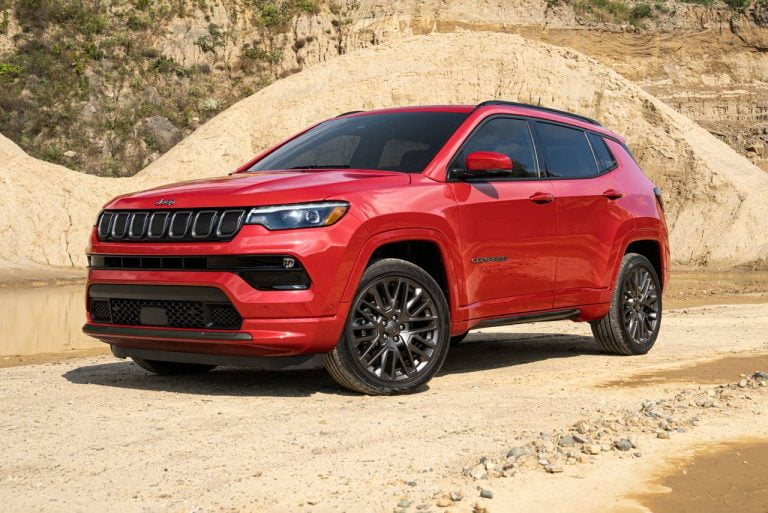
How Far Can a Jeep Compass Go on Empty? Distance & Safety Guide

A Jeep Compass can typically travel 25–50 miles on empty, depending on driving conditions, fuel gauge calibration, and your specific model year. That wide range surprises many owners. Here’s exactly what drives the difference — and what you should do about it.
Jeep Compass Fuel Reserve Range: The Direct Answer
Your Jeep Compass fuel tank holds approximately 14.5 gallons. The gauge reads “E” when roughly 2–3 gallons remain. That’s your reserve.
At the EPA combined rating of 23–26 MPG, a 2.5-gallon reserve gives you a theoretical range of 57–65 miles. Real-world results fall short. Stop-and-go traffic, hills, and load all cut that number down to 25–40 miles in most real driving situations.
The 50-mile figure applies under ideal highway conditions — steady 60 MPH, flat terrain, light load.
What “Empty” Actually Means on Your Jeep Compass
The low fuel warning light activates when the tank drops to about 2 gallons. The gauge itself reads “E” slightly before the tank is physically empty. Jeep builds in this buffer intentionally.
Don’t treat that buffer as free mileage. It’s a safety margin, not a driving allowance.
Factors That Affect Distance on Empty
Several variables shift your Jeep Compass empty tank range significantly.
Driving Style and Speed
Aggressive acceleration burns reserve fuel fast. Highway cruising at 60 MPH is the most fuel-efficient scenario. Pushing above 70 MPH increases drag and drops efficiency sharply.
City driving with frequent stops can cut your range to 25 miles or less. Steady highway driving can stretch it past 45 miles. The difference is real — and predictable.
Vehicle Load and Terrain
Heavy loads demand more fuel. Every extra 250 lbs reduces fuel economy by roughly 1–2%. Towing anything on reserve is a bad idea.
Hills matter too. Climbing grades burns reserve fuel faster than flat roads. Mountain driving on an empty gauge is a genuine risk.
Engine Size and Trim Variations
Most Jeep Compass models use a 2.4L four-cylinder engine. Older 4WD trims with different gearing may return slightly lower efficiency. The difference isn’t dramatic, but it adds up on a thin reserve.
Check your specific trim’s EPA rating. A Compass rated at 23 MPG combined gives you less reserve range than one rated at 26 MPG.
Safety and Best Practices
Running your Jeep Compass on empty isn’t just inconvenient. It’s damaging.
Why You Shouldn’t Run the Tank Dry
The fuel pump sits inside the tank and uses fuel itself as a coolant. When the tank runs dry, the pump overheats. Fuel pump replacement costs $500–$1,500 depending on labor and parts.
AAA recommends refueling when the gauge hits 1/4 tank. That’s not overly cautious — it’s standard practice to protect your fuel system.
Running on empty also increases your risk of getting stranded. If you experience any vehicle diagnostic issues alongside a low fuel warning, address both immediately. A stressed fuel system can trigger related warning lights.
What to Do If You Run Out of Fuel
Pull off the road safely. Turn on hazard lights immediately. Call roadside assistance — AAA, your insurance provider, or Jeep’s own roadside service covers fuel delivery in most plans.
Don’t try to push the vehicle far. Don’t start and stall repeatedly. Wait for fuel delivery, add at least 2 gallons, then drive directly to a station.
Jeep Compass Model-Year Considerations
Not all Compass models behave the same on reserve fuel.
Older vs. Newer Jeep Compass Models
The first-generation Compass (2007–2016) used a different fuel gauge system. Calibration was less precise, and owner reports suggest the low-fuel warning activated earlier relative to actual reserve. Effective range on empty was often shorter than newer models.
The second-generation Compass (2017–present) features a more accurate gauge and refined fuel system. Owners consistently report a more predictable reserve window.
If you drive a pre-2017 Compass, assume the lower end of the range — 25–30 miles — rather than 50. Consult your Jeep Compass owner’s manual for your specific model year’s reserve capacity specs.
Diesel variants sold in international markets have different tank sizes and efficiency figures. North American Compass models are all gasoline-powered.
Quick Tips to Manage Low Fuel Wisely
- Refuel at 1/4 tank — don’t wait for the warning light
- Slow down on the highway — 60 MPH beats 75 MPH for reserve range
- Reduce load — remove unnecessary cargo when fuel is low
- Plan routes — check gas station locations before long highway stretches
- Know your year — pre-2017 models have less predictable reserve behavior
The Bottom Line
A Jeep Compass goes 25–50 miles on empty, with highway conditions delivering the higher end and city traffic cutting it to 25 miles or fewer. The “empty” light isn’t a starting gun — it’s a warning.
Refuel at 1/4 tank to protect your fuel pump and avoid getting stranded. Check your owner’s manual for your specific model year’s reserve tank specs. Don’t gamble with a number that varies by 25 miles depending on how you drive.